It was a Tuesday in November, the kind where the sun sets before you even get to your car in the afternoon. I was standing in my kitchen, staring at a rotisserie chicken I’d bought on impulse and a bag of wilted spinach that had been hiding in the crisper drawer since Sunday. My brain was fried. I didn’t have the mental bandwidth to chop, sauté, or figure out what to do with half a onion. I just wanted to eat. I wanted to eat something that felt good, something that aligned with my Whole30 goals, but definitely didn’t require me to stand over a hot stove for an hour.
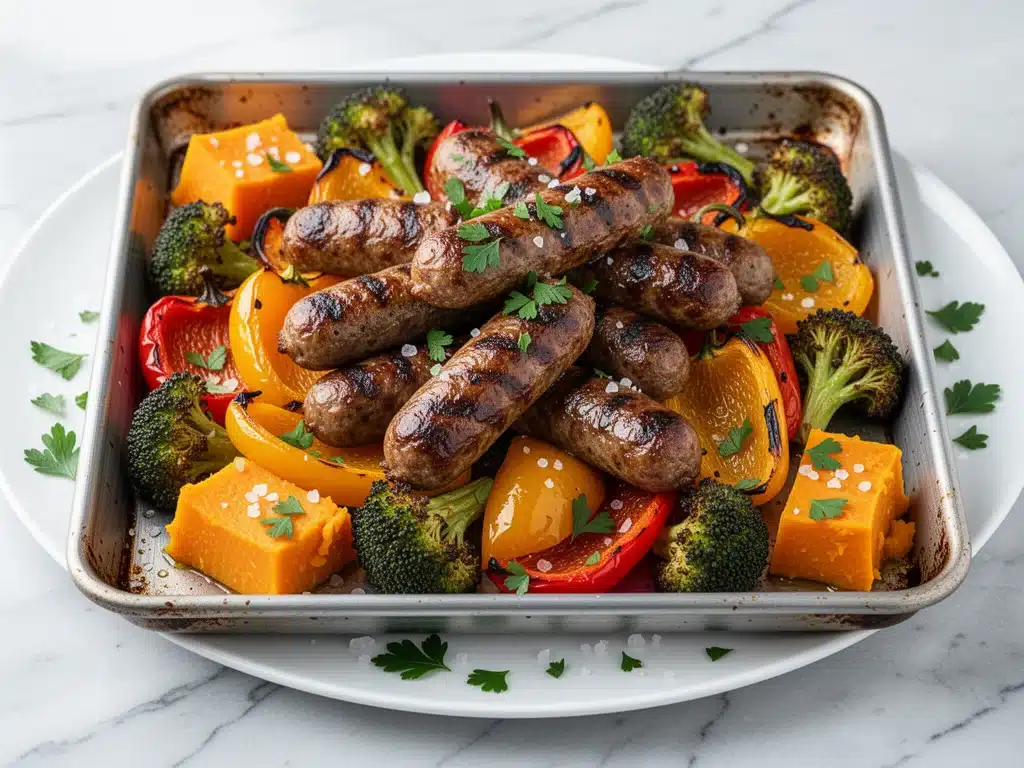
So I did what any exhausted parent does: I threw everything on a single baking sheet. I sliced up a whole30-compliant sausage, dumped on some broccoli, tossed on some bell peppers, and slid it into the oven. Thirty minutes later, I pulled out a pan that smelled like heaven. The sausages were browned and crispy, the veggies were caramelized and tender, and I hadn’t touched a single dirty pot or pan until the very end. It was delicious. It was easy. And it completely changed how I handle weeknight dinners.
That accidental Tuesday meal became the foundation for this Whole30 Sheet Pan Sausage with Roasted Vegetables. I’ve made it probably fifty times since then, tweaking the veggies, swapping the sausage brands, and experimenting with spice blends. And I can tell you with confidence: this is hands-down the best method for getting a healthy, protein-packed dinner on the table without the stress. If you’re tired of the “what’s for dinner?” panic or struggling to stick to Whole30 when you’re busy, this recipe is your new best friend.
The beauty of this approach isn’t just the convenience—it’s the flavor. Roasting brings out a sweetness in vegetables that boiling or steaming just can’t match. When you roast broccoli or carrots, the edges get slightly charred and nutty, which pairs perfectly with the savory, spiced snap of a good sausage. It’s simple, it’s clean eating at its finest, and it proves that healthy cooking doesn’t have to be complicated.
Why You’ll Love This Recipe
I’ve tried dozens of sheet pan dinners over the years, and most of them end up with steamed, soggy vegetables and rubbery meat. This Whole30 Sheet Pan Sausage with Roasted Vegetables is different. I’ve tested it with everything from bratwurst to chorizo, and the results are consistently amazing. Here’s why this recipe has earned a permanent spot in my weekly rotation:
- Zero Stress Cleanup — Seriously, this is the main selling point. One pan. Maybe a cutting board and a knife if you’re being fancy. I can handle the cleanup while my kids eat, which means I’m not the one stuck in the kitchen after dinner. It’s a game-changer for busy weeknights.
- Actually Tastes Good — I know, I know. “Healthy” and “tasty” don’t always go together. But roasting at 400°F (200°C) creates Maillard reaction magic. The veggies get crispy edges, the sausage gets a nice sear, and the olive oil helps everything brown beautifully. It doesn’t taste like diet food; it tastes like a restaurant meal.
- Pantry and Fridge Friendly — You probably have most of this already. Sausage, olive oil, salt, pepper, and whatever veggies are on sale. I keep a stash of Whole30-friendly sausages in the freezer because I know this recipe can be made on a whim. It’s the ultimate “I don’t know what to eat” solution.
- Meal Prep Gold — This recipe scales up beautifully. I often make a double batch on Sundays. The leftovers taste just as good cold or reheated the next day. I love packing this for lunch because it doesn’t get soggy in the fridge like pasta dishes do. It’s sturdy, flavorful, and keeps me from grabbing takeout.
- Flexible and Forgiving — Ran out of peppers? Use zucchini. Don’t like mushrooms? Skip them. This recipe is a template, not a rigid rulebook. As long as you stick to Whole30-compliant ingredients, you can customize it to what your family actually likes to eat.
This is my go-to when I need dinner to just work. No complicated techniques, no weird ingredients, just reliable, delicious food that makes everyone happy. It’s proof that you can eat clean without sacrificing time or taste.
Ingredients You’ll Need
Here’s the best part: you probably have most of this already. This Whole30 Sheet Pan Sausage with Roasted Vegetables relies on high-quality, simple ingredients. The fewer processed items, the better the flavor. Here’s what you need to grab from the store:
The Star: Sausage
Whole30-Compliant Sausage (1 to 1.5 pounds / 450-680g) — This is the most critical ingredient. You need to read labels carefully. Many sausages contain sugar, dextrose, or soy lecithin, which are not allowed on Whole30. I love chicken bratwurst or turkey Italian sausage. Look for brands like Alvarado Street, ButcherBox, or local butcher shop sausages that list only meat, spices, and casings. Slice them into bite-sized rounds or half-moons.
The Veggies
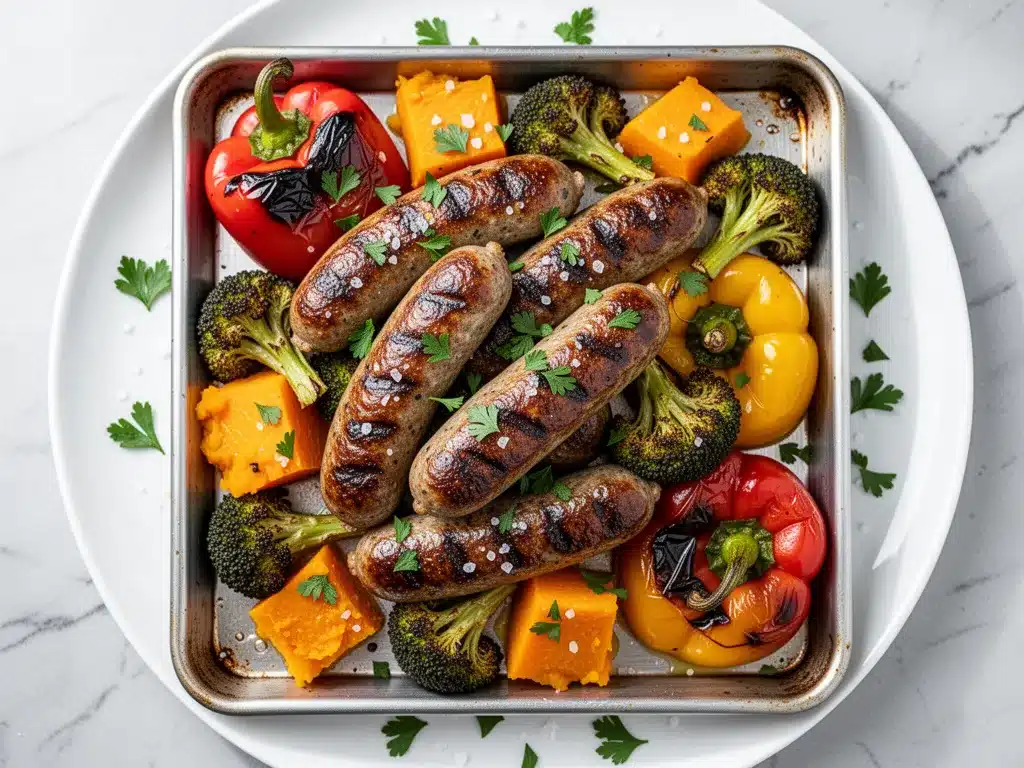
Broccoli Florets (2 heads / about 600g) — Broccoli holds up well to roasting and gets deliciously crispy. Cut the florets into even-sized pieces so they cook uniformly. I leave the stems on, peeled and sliced, because they’re sweet and tasty.
Red Bell Peppers (2 large, chopped / about 300g) — These add a nice sweetness that balances the savory sausage. Chop them into 1-inch chunks. If you’re sensitive to nightshades, you can swap these for zucchini or yellow squash.
Red Onion (1 large, sliced / about 200g) — Red onion caramelizes beautifully and adds a mild bite. Slice it into wedges, keeping the layers intact so they don’t fall apart in the oven.
Carrots (3 medium, sliced into rounds / about 200g) — Carrots add earthiness and color. Slice them into ¼-inch rounds. If they’re too thick, they’ll be raw when the sausage is done. Thin is better here.
The Flavor Boosters
Extra Virgin Olive Oil (3 tablespoons / 45ml) — Use a good quality oil here. It coats the veggies and sausage, helping them roast and brown. I use a robust olive oil for this because it stands up to the high heat.
Garlic Powder (1 teaspoon) — Adds a deep, savory background note. Fresh garlic can burn at 400°F, so powder is safer and more even here. If you love garlic, add 2 minced cloves after roasting.
Smoked Paprika (1 teaspoon) — This is my secret weapon. It adds a smoky depth that mimics grilling. It gives the dish a warm, rustic flavor that feels indulgent.
Dried Thyme (1 teaspoon) — Earthy and aromatic. Thyme pairs perfectly with sausage and roasted vegetables. If you don’t have it, oregano works too.
Sea Salt and Black Pepper (to taste) — Don’t skimp on the salt. It enhances the natural flavors of the veggies and meat. I use a flaky sea salt for finishing, but kosher salt for seasoning.
Optional Add-Ins
Mushrooms (8oz, quartered) — I love adding cremini mushrooms for an umami boost. They soak up the juices and become meaty and tender.
Cherry Tomatoes (1 cup) — Add these in the last 10 minutes of roasting. They’ll burst and add a bright, acidic contrast to the rich sausage.
Fresh Parsley or Cilantro (2 tablespoons, chopped) — A sprinkle of fresh herbs at the end brightens up the dish and adds a pop of color. I always keep a pot of parsley on my counter.
Equipment Needed
You don’t need fancy equipment for this. Here’s what I actually use, and what you can swap if you don’t have it.
Large Rimmed Baking Sheets — I use two half-sheet pans (18×13 inches). This is important. If you crowd the pan, the veggies will steam instead of roast. You want space between the pieces for air circulation. If you only have one pan, cook in two batches. Don’t skip this.
Sharp Chef’s Knife — For slicing the sausage and chopping veggies. A dull knife is dangerous and makes uneven cuts, which leads to uneven cooking.
Cutting Board — Any size works. I use a large wooden one for stability.
Mixing Bowls — I like to toss the veggies in a bowl before spreading them on the pan. It ensures even coating of oil and spices. Two medium bowls work well.
Measuring Spoons — For the spices. Precision helps, but a pinch here or there won’t ruin it.
Aluminum Foil or Parchment Paper — Optional but helpful. I line my pans with parchment for easy cleanup. If you use foil, spray it with olive oil to prevent sticking. The sausage juices can burn onto the pan, and nobody wants to scrub that.
Tongs — For tossing the veggies and turning the sausage halfway through. Tongs are much easier than a spatula for this.
How to Make It: Step-by-Step
Alright, let’s make this! I’m walking you through exactly how I do it, including the little tricks I’ve picked up over dozens of attempts.
Step 1: Prep Your Oven and Pans (5 minutes)
Preheat your oven to 400°F (200°C). This high heat is crucial for roasting. While it heats, line two large baking sheets with parchment paper or aluminum foil. This saves you from scrubbing pans later. I know it feels like extra waste, but the time saved on cleanup is worth it.
Step 2: Prep the Vegetables (10 minutes)
Wash and chop your veggies. Cut the broccoli into florets, slice the peppers into chunks, cut the onion into wedges, and slice the carrots into rounds. Try to keep the pieces roughly the same size so they cook evenly. Place the harder veggies (carrots, onions) in one bowl and the softer veggies (broccoli, peppers) in another. You’ll roast them in two stages because carrots take longer than broccoli.
Step 3: Season and Oil the Veggies (2 minutes)
Drizzle the harder veggies with 1 tablespoon of olive oil and sprinkle with half the spices. Toss to coat. Do the same for the softer veggies with the remaining oil and spices. Don’t be shy with the oil—it helps them brown. If you don’t use enough oil, the veggies will dry out instead of roast.
Step 4: Roast the Harder Veggies (15 minutes)
Spread the carrots and onions on one baking sheet in a single layer. Put them in the oven and roast for 15 minutes. This head start ensures they’re tender by the time everything is done.
Step 5: Prep the Sausage (2 minutes)
While the veggies roast, slice the sausage. I cut them into ½-inch rounds. If you’re using a link that’s very thick, you might want to split them lengthwise first. Arrange the sausage pieces on a second baking sheet. Drizzle with a little olive oil and season with a pinch of salt and pepper.
Step 6: Combine and Roast (15-20 minutes)
Remove the pan with carrots and onions from the oven. Add the broccoli and peppers to that same pan. Spread them out. Place the sausage pan in the oven alongside the veggie pan. Roast everything for 15-20 minutes, flipping the sausage and stirring the veggies halfway through. You’re looking for the sausage to be browned and cooked through, and the veggies to be tender and caramelized at the edges.
Step 7: Check and Finish (2 minutes)
Check the sausage with a meat thermometer if you’re unsure—it should reach 165°F (74°C). If the veggies aren’t tender enough, give them 5 more minutes. Once done, remove from the oven. Taste and adjust salt if needed. Garnish with fresh herbs if you’re using them.
Step 8: Serve
Serve immediately. I like to plate it straight from the pan for a rustic look. It’s perfect on its own, or over cauliflower rice if you want to stretch the meal further.
Total Time: About 30 minutes (10 minutes active, 20 minutes in the oven)
Expert Tips & Tricks
Here’s everything I’ve learned from making this dozens of times. These tips will save you from my mistakes.
Don’t Crowd the Pan
This is the #1 mistake people make. If the veggies are piled on top of each other, they steam. Steam makes them soggy. Soggy veggies are sad veggies. Use two pans if you have to. Give each piece space. If you’re roasting a small batch, you can use one pan, but make sure it’s not packed tight.
Start with the Hard Veggies
Carrots and onions take longer to cook than broccoli and peppers. Adding them all at once means the broccoli turns to mush before the carrots are tender. Roasting the harder veggies first ensures everything finishes at the same time. It’s a small step that makes a huge difference in texture.
Flip the Sausage
Don’t just throw the sausage in and forget it. Flip it halfway through. This ensures even browning on all sides. Unflipped sausage looks pale and unappetizing. Browned sausage looks appetizing and tastes better.
Use Fresh Herbs at the End
Dried herbs can handle the heat, but fresh herbs burn and turn bitter. Always add parsley, cilantro, or thyme leaves after you take the pan out of the oven. It preserves their bright flavor and color.
Check Your Sausage Labels
If you’re doing Whole30, you must be vigilant about hidden sugars. Some “natural” sausages use apple juice or honey as binders. Read every label. If you’re not doing Whole30, feel free to use whatever sausage you like, but the sugar content might cause more burning. Lower the oven temp to 375°F if using sugary sausage.
Variations & Substitutions
Once you’ve nailed the basic version, here’s how you can mix it up. I’ve tried all of these, and they all work.
Veggie Swaps
Zucchini and Yellow Squash — Add these in the last 10 minutes. They cook very fast and can get mushy if roasted too long. Slice them into half-moons.
Sweet Potatoes — Dice them into ½-inch cubes and roast them with the carrots. They add a nice sweetness and heartiness.
Asparagus — Toss with the broccoli in the second stage. It roasts quickly and gets deliciously crispy tips.
Protein Swaps
Chicken Thighs — Cut into bite-sized pieces and season with the same spices. Roast them alongside the veggies. Chicken thighs stay juicy and don’t dry out like breasts.
Steak Strips — Use skirt or flank steak, sliced thin. Marinate in olive oil and garlic powder for 10 minutes before roasting. It’s like a fajita sheet pan dinner.
Flavor Profiles
Italian — Use Italian sausage, add cherry tomatoes, and finish with fresh basil. Serve with a side of marinara for dipping.
Mexican — Use chorizo (check for Whole30 compliance), add bell peppers and onions, and finish with cilantro and lime juice.
Asian-Inspired — Use ginger, garlic, and tamari (if allowed) instead of paprika. Add broccoli and snap peas. Serve with sesame seeds.
Serving & Storage
How to Serve: I usually serve this straight from the skillet at the dinner table—it looks rustic and stays warm. But here are other ways I’ve enjoyed it:
- Over Cauliflower Rice — Makes it feel more like a stir-fry and adds volume without calories.
- With Avocado — Sliced avocado on top adds creaminess and healthy fats.
- With a Side Salad — A simple green salad with lemon vinaigrette balances the richness.
Storage: Store leftovers in an airtight container in the fridge for up to 4 days. The flavors actually meld and taste better on day two.
Reheating: Best method: Reheat in a skillet over medium heat with a splash of water to steam the veggies slightly. Microwave works too, but it can make the sausage rubbery. I prefer the skillet method for texture.
Freezing: This doesn’t freeze well. The veggies get mushy when thawed. Make it fresh or store in the fridge for up to 4 days.
Nutrition Information
I’m not a nutritionist, but here’s the breakdown if you’re tracking. Per serving (based on 4 servings):
- Calories: 450
- Protein: 25g
- Carbs: 15g (5g fiber)
- Fat: 32g
- Sodium: 600mg (varies by sausage brand)
It’s high in protein and healthy fats, low in carbs, and packed with vitamins from the veggies. It’s a balanced, satisfying meal that keeps you full for hours.
Final Thoughts
So that’s my go-to Whole30 Sheet Pan Sausage with Roasted Vegetables! I’ve probably talked your ear off at this point, but when you make a recipe this often, you have a lot to say about it. This has saved weeknight dinners more times than I can count. It’s my answer to “what’s for dinner” when I’m tired, don’t want takeout, and still want something that tastes really good. My kids are happy, my husband’s happy, and I’m happy because I’m not stressed about cooking.
Make it yours! Try different add-ins, swap in your favorite vegetables, adjust the spices. The best recipes are the ones you adapt to your family’s tastes. If you make this, drop a comment and let me know what you think! I love hearing how recipes turn out in your kitchen. And if something doesn’t work, tell me that too—I’m here to help troubleshoot.
Happy cooking! And I hope your kitchen smells half as good as mine does right now.
Frequently Asked Questions
Can I use any sausage?
If you’re doing Whole30, you must use compliant sausage. Look for no sugar, no soy, no preservatives. If you’re not doing Whole30, you can use any sausage you like, but watch for sugar content as it can burn.
Why did my veggies get soggy?
They were probably crowded on the pan. Give them space. Also, make sure your oven is fully preheated. A cold oven steams veggies instead of roasting them.
Can I make this ahead?
You can prep the veggies and slice the sausage the night before. Store them in containers in the fridge. When you’re ready, just toss with oil and spices and roast. It saves even more time on busy nights.
What if I don’t have two pans?
You can cook in batches. Roast the harder veggies first, then add the softer veggies and sausage in the last 15 minutes. It works fine, just requires a bit more attention.
Can I add cheese?
If you’re doing Whole30, no. Dairy is not allowed. If you’re not, a sprinkle of parmesan or feta after roasting is delicious. It adds a nice salty crunch.
How do I know when the sausage is done?
It should be browned on all sides and reach an internal temperature of 165°F. If you don’t have a thermometer, cut one open—it should be cooked through with no pink.
Can I use frozen vegetables?
I don’t recommend it. Frozen veggies release too much water and get mushy. Fresh is best for roasting. If you must use frozen, thaw and dry them thoroughly first, but the texture won’t be the same.
Pin This Recipe!
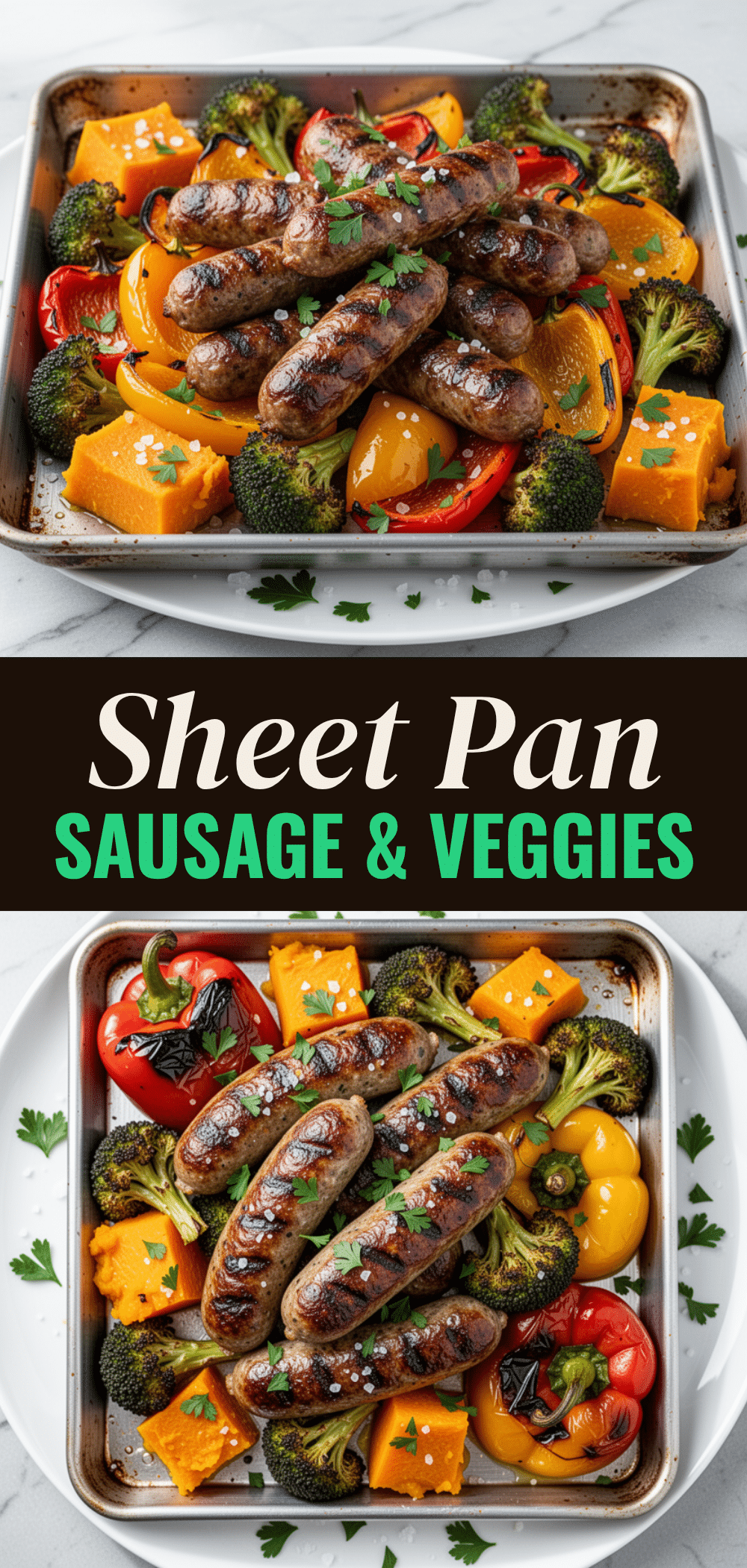
Whole30 Sheet Pan Sausage with Roasted Vegetables
- Total Time: 30 minutes
- Yield: 4 servings 1x
Description
A quick, stress-free 30-minute weeknight dinner featuring Whole30-compliant sausage and roasted vegetables on a single sheet pan. Perfect for meal prep and busy families.
Ingredients
- 1 to 1.5 pounds Whole30-compliant sausage (e.g., chicken bratwurst or turkey Italian)
- 2 heads broccoli, cut into florets (about 600g)
- 2 large red bell peppers, chopped into 1-inch chunks (about 300g)
- 1 large red onion, sliced into wedges (about 200g)
- 3 medium carrots, sliced into ¼-inch rounds (about 200g)
- 3 tablespoons extra virgin olive oil
- 1 teaspoon garlic powder
- 1 teaspoon smoked paprika
- 1 teaspoon dried thyme
- Sea salt and black pepper, to taste
- Optional: 8oz cremini mushrooms, quartered
- Optional: 1 cup cherry tomatoes
- Optional: 2 tablespoons fresh parsley or cilantro, chopped
Instructions
- Preheat oven to 400°F (200°C). Line two large rimmed baking sheets with parchment paper or aluminum foil.
- Wash and chop vegetables. Place harder veggies (carrots, onions) in one bowl and softer veggies (broccoli, peppers) in another.
- Drizzle harder veggies with 1 tablespoon olive oil and half the spices; toss to coat. Do the same for softer veggies with remaining oil and spices.
- Spread carrots and onions on one baking sheet in a single layer. Roast for 15 minutes.
- While veggies roast, slice sausage into ½-inch rounds. Arrange on a second baking sheet, drizzle with a little oil, and season with salt and pepper.
- Remove the veggie pan from the oven. Add broccoli and peppers to the same pan. Place the sausage pan in the oven alongside the veggie pan.
- Roast everything for 15-20 minutes, flipping the sausage and stirring the veggies halfway through, until sausage is browned (165°F) and veggies are tender and caramelized.
- Garnish with fresh herbs if using and serve immediately.
Notes
Do not crowd the pan; use two pans if necessary to ensure veggies roast rather than steam. Start with harder vegetables (carrots/onions) as they take longer to cook than softer ones (broccoli/peppers). Flip sausage halfway through for even browning. Add fresh herbs only after roasting to prevent burning. Do not freeze leftovers as vegetables will become mushy.
- Prep Time: 10 minutes
- Cook Time: 20 minutes
- Category: Main Course
- Cuisine: American
Nutrition
- Serving Size: Approximately 1/4 of
- Calories: 450
- Sodium: 600
- Fat: 32
- Carbohydrates: 15
- Fiber: 5
- Protein: 25
Keywords: Whole30, sheet pan dinner, healthy weeknight meals, meal prep, sausage and vegetables, gluten-free, dairy-free, quick dinner