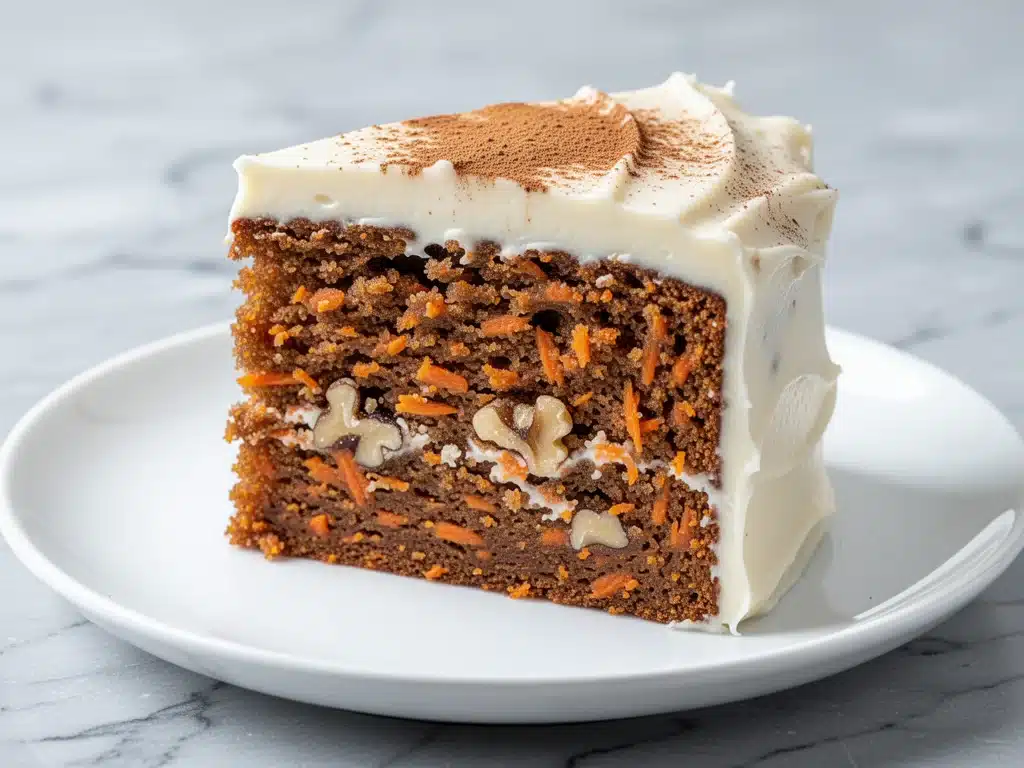
It started with a slice. Just one slice, really, but it led to a second, and then my husband was eyeing the plate like a hawk. That was three weeks ago, and now, every time I pull this carrot cake out of the oven, someone—friend, neighbor, or random guest at a dinner party—stops me mid-sentence to ask, “Is that the carrot cake?”
I’m not sure if it’s the spice blend, the way the cream cheese frosting cuts through the sweetness, or just the sheer moistness of it, but this cake has become my secret weapon. I’ve made it for birthdays, potlucks, and random Tuesday nights when I just need a hug in dessert form. It’s the kind of dessert that doesn’t need a special occasion. It just needs to exist.
I’ve tested this recipe probably a dozen times over the last few years. I’ve tweaked the oil-to-flour ratio, debated the merits of pineapple versus applesauce, and fought with my oven’s temperature consistency. Through all those trials, one thing has remained constant: this is hands-down the best homemade carrot cake I’ve ever made. And the frosting? Tangy, thick, and perfectly balanced. It’s not too sweet, which is usually my problem with store-bought versions.
Here’s the thing about carrot cake. A lot of people think it’s just a spiced sponge with veggies in it. But when you do it right, it’s a deeply textured, aromatic, comforting experience. It’s warm, it’s earthy, and it’s incredibly satisfying. I’m sharing the exact method I use—the one that keeps people coming back for seconds. No fancy equipment, no obscure ingredients, just solid, reliable baking that works every single time.
Why You’ll Love This Moist Carrot Cake
There are a hundred carrot cake recipes out there. So why this one? Why should you bother grating carrots and making frosting from scratch when you could just buy a box? Because this version is different. It’s not dry. It’s not overly sweet. And the texture is something else entirely.
Here’s why this cake earns its spot in your regular baking rotation:
Actually Moist — I’m serious. I’ve heard the complaints from other recipes (“it’s like eating a sponge”). This cake stays moist for days. I keep it in the fridge for four days, and it’s still tender on day five. The secret? A mix of oil and a touch of applesauce, plus those grated carrots releasing their natural juices during baking.
The Frosting Is Tangy, Not Just Sweet — Most cream cheese frostings are cloyingly sweet. This one has a sharp, tangy kick that balances the spices. It’s the kind of frosting that makes you close your eyes when you take a bite. Real talk: the tang is what makes it feel gourmet.
Perfect Texture — This isn’t mushy. It’s tender but holds its structure. You get little bursts of flavor from the cinnamon and nutmeg, with the crunch of walnuts (optional, but I’m team walnuts here) adding a nice contrast. It’s dense in the best way possible.
Make-Ahead Friendly — This cake actually tastes better the next day. The flavors meld together overnight. I often make it the night before a party, and it’s the star of the show. It’s also great for meal prepping dessert, which sounds weird until you realize how nice it is to have a slice ready in the fridge on a busy Wednesday.
Feels Special, But Isn’t Hard — You don’t need to be a pro baker. You just need to follow the steps. It looks impressive when you pull it out of the oven, with that beautiful golden top and the thick layer of frosting. But the work? It’s straightforward. Grate, mix, bake, frost. Done.
This is my go-to when I want to impress without stressing. It’s reliable, delicious, and always disappears.
Ingredients You’ll Need
Here’s the best part: you probably have most of this in your pantry already. Carrot cake is very forgiving with ingredients, but there are a few key items that make the difference between good and great.
For the Cake
All-purpose flour (2 cups / 250g) — Don’t use cake flour; it’ll be too tender. All-purpose gives it that perfect structure. I use Gold Medal or King Arthur. Just measure it correctly—spoon and level, don’t scoop!
Baking soda (1 teaspoon) — This is what makes it rise. Don’t substitute baking powder; the acid in the carrots and brown sugar needs the soda to react properly.
Baking powder (½ teaspoon) — Just a little extra lift. Don’t skip it.
Salt (1 teaspoon) — Essential. It brings out the sweetness and the spices. Don’t reduce it unless you’re using heavily salted butter.
Cinnamon (2 teaspoons) — Ground cinnamon. Freshly ground is best, but ground is fine. Don’t use sticks; they don’t infuse the batter.
Nutmeg (½ teaspoon) — Freshly grated is amazing, but pre-ground works. It adds that warm, cozy background note.
Cardamom (¼ teaspoon) — Optional, but I think it’s the secret weapon. It adds a floral, citrusy depth that cinnamon alone can’t do. If you don’t have it, skip it, but try to find it.
Granulated sugar (1 cup / 200g) — White sugar for structure and moisture.
Brown sugar (1 cup / 220g) — Light or dark, doesn’t matter. Dark adds more molasses flavor, which I like. This is key for the moistness.
Vegetable oil (1 cup / 240ml) — I use vegetable or canola. Oil keeps the cake moist longer than butter does. Butter tastes great, but it makes the cake denser and drier over time. Oil is the way to go for this texture.
Eggs (3 large) — Room temperature is best. They help emulsify the oil and sugar.
Vanilla extract (2 teaspoons) — Pure vanilla, not imitation. It makes a huge difference in flavor.
Carrots (3 cups / about 450g, grated) — This is the star. Use fresh carrots, not the bagged shredded ones. Bagged carrots are dry and pre-shredded, which affects the moisture. Peel them and grate them yourself using a box grater or food processor. Coarse grate is best.
Walnuts or Pecans (1 cup / 120g, chopped) — Optional, but recommended. Toast them first for extra flavor. If you hate nuts, skip them, but the texture will be different.
For the Cream Cheese Frosting
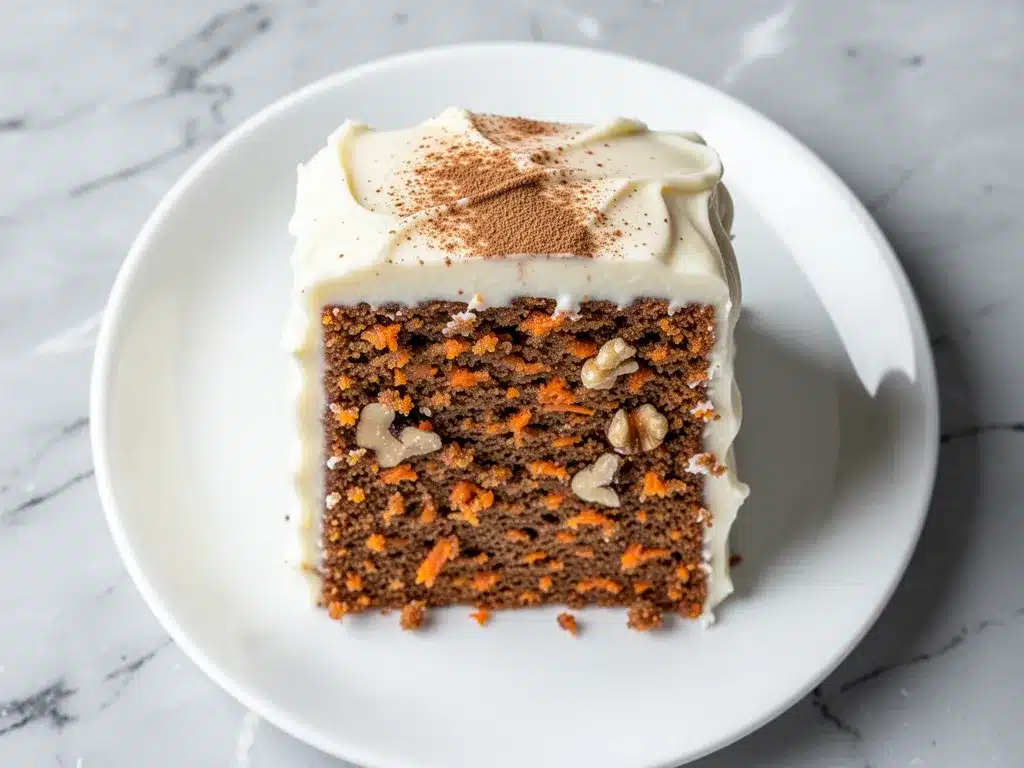
Cream cheese (16 oz / 450g) — Full-fat, brick-style. Not the spreadable kind in the tub. It has too much water and air. Block cream cheese is essential for a thick, stable frosting.
Butter (½ cup / 115g) — Softened, unsalted. Let it sit out for 30 minutes before you start.
Powdered sugar (4 cups / 480g) — Sifted. This is non-negotiable. Unsifted sugar will make your frosting lumpy. Use a fine-mesh sieve.
Vanilla extract (1 teaspoon) — For flavor.
Lemon juice (1 teaspoon) — Optional, but adds that tang I mentioned. Freshly squeezed. It cuts the sweetness and brightens the frosting.
Salt (¼ teaspoon) — Just a pinch to balance the sweetness.
Equipment Needed
You don’t need fancy gadgets for this. Here’s what I actually use in my kitchen:
Two 9-inch round cake pans — Grease and flour them, or line the bottoms with parchment paper. I always use parchment; it guarantees the cake won’t stick. You can also use one 9×13 pan, but you’ll need to adjust the baking time (it’ll be shorter).
Box grater or food processor — For grating the carrots. A box grater gives you more control over the size. A food processor is faster but can make the carrots too fine. I prefer the box grater for texture.
Mixing bowls — One large bowl for wet ingredients, one medium for dry. I use stainless steel; they’re durable and easy to clean.
Electric mixer — Handheld or stand mixer. You need to cream the butter and sugar thoroughly. Doing this by hand is possible but takes elbow grease. I use my KitchenAid for consistency.
Spatula — Silicone is best for scraping the bowl. You want to get every bit of batter.
Wire whisk — For mixing the dry ingredients.
Cooling rack — Essential. Never frost a warm cake. It’ll melt the frosting and make a mess. I use a wire rack from IKEA; it’s cheap and works perfectly.
Sifter or fine-mesh sieve — For the powdered sugar. Don’t skip this step.
How to Make It: Step-by-Step
Alright, let’s bake! I’m walking you through exactly how I do it, including the little tricks I’ve picked up over the years.
Step 1: Prep Your Pans and Oven (5 minutes)
Preheat your oven to 350°F (175°C). This is crucial. If your oven is off by 25 degrees, the cake can fail. Use an oven thermometer if you’re unsure. Grease your two 9-inch round pans with butter or non-stick spray, then dust with flour. Tap out the excess. Or, line the bottoms with parchment paper circles for easy removal. I always use parchment.
Step 2: Mix the Dry Ingredients (3 minutes)
In a medium bowl, whisk together the flour, baking soda, baking powder, salt, cinnamon, nutmeg, and cardamom. Whisk it well to distribute the spices evenly. You don’t want a bite of pure cinnamon. Set this aside.
Step 3: Cream the Wet Ingredients (4 minutes)
In a large bowl, beat the granulated sugar, brown sugar, and vegetable oil together. Wait, oil and sugar? Yes. Beat them for 2-3 minutes until the mixture looks pale and fluffy. This incorporates air, which helps the cake rise. Add the eggs one at a time, beating well after each addition. Stir in the vanilla extract. The mixture should be smooth and glossy.
Step 4: Combine Wet and Dry (2 minutes)
Gradually add the dry ingredients to the wet mixture. Use your mixer on low speed, or switch to a spatula. Mix just until combined. Do not overmix! Overmixing develops gluten, which makes the cake tough. You’ll see streaks of flour at first; keep mixing gently until it’s mostly gone. It’s okay if there are a few small lumps.
Step 5: Fold in the Carrots and Nuts (2 minutes)
Now, add the grated carrots and chopped nuts (if using). Fold them in gently with a spatula. Use a folding motion, not stirring. Just until the carrots are distributed. The batter will be thick and heavy. That’s normal.
Step 6: Bake the Cake (30-35 minutes)
Divide the batter evenly between the two prepared pans. Smooth the tops with a spatula. Bake for 30-35 minutes. How do you know it’s done? Insert a toothpick into the center. It should come out clean or with just a few moist crumbs. If there’s wet batter, bake for 2-3 more minutes. Don’t overbake, or it’ll be dry. The edges should pull away slightly from the pan.
Step 7: Cool Completely (1 hour)
Let the cakes cool in the pans for 10 minutes, then turn them out onto a wire rack to cool completely. This is the hardest part, but you must wait. If you frost a warm cake, the frosting will slide right off. I usually let them cool for an hour. You can speed it up by putting them in the fridge, but don’t rush it.
Step 8: Make the Frosting (10 minutes)
While the cakes cool, make the frosting. In a large bowl, beat the softened cream cheese and butter together until smooth and creamy. This takes about 2 minutes. Scrape down the sides of the bowl. Add the vanilla, lemon juice, and salt. Beat again.
Gradually add the sifted powdered sugar, one cup at a time, beating on low speed. Once all the sugar is in, beat on medium-high for 2-3 minutes until the frosting is light, fluffy, and thick. It should hold stiff peaks. If it’s too thin, add more sugar. If it’s too thick, add a teaspoon of milk or cream.
Step 9: Assemble the Cake (5 minutes)
Place one cake layer on your serving plate. Spread a generous layer of frosting on top. Place the second layer on top. Frost the top and sides of the cake. You can use a spatula for a smooth finish, or leave it rustic with swirls. I like swirls; they look homemade and inviting.
Refrigerate for at least 30 minutes before slicing. This sets the frosting and makes slicing clean.
Expert Tips & Tricks
Here’s everything I’ve learned from making this cake dozens of times. These tips will save you from my mistakes.
Grate Your Own Carrots
I cannot stress this enough. Bagged shredded carrots are dry and pre-shredded. They don’t release moisture the same way. Freshly grated carrots are juicy and add texture. Use the coarse side of a box grater. If you use a food processor, pulse it a few times so it doesn’t turn into mush.
Don’t Skip the Sifting
For the frosting, sifting the powdered sugar is non-negotiable. Lumpy frosting is a nightmare. If you’re in a rush, you can press it through a sieve with a spoon, but sifting is faster.
Room Temperature Ingredients
Make sure your cream cheese and butter are softened. If they’re cold, you’ll get lumps in the frosting that you can’t beat out. If you forget, microwave the butter for 10 seconds and cut the cream cheese into small cubes to soften faster.
Toast Your Nuts
If you’re using walnuts or pecans, toast them in a dry skillet for 3-4 minutes before chopping. It brings out their flavor and adds a nice crunch. It’s a small step that makes a big difference.
Chill Before Slicing
Carrot cake is dense, and the frosting is soft. Chilling the cake for 30 minutes before slicing ensures clean cuts. Warm cake slices can be messy. I know it’s tempting to dig in, but wait.
Storage is Key
This cake must be refrigerated because of the cream cheese frosting. Store it in an airtight container. It will last up to 5 days in the fridge. Let it sit at room temperature for 15 minutes before serving for the best texture.
Variations & Substitutions
Once you’ve nailed the basic version, here’s how you can mix it up. I’ve tried all of these.
Pineapple Version
Add ½ cup of crushed pineapple, drained very well. This is the classic “Dungeons and Dragons” carrot cake style. It adds moisture and a tropical twist. Make sure you drain it thoroughly, or the cake will be soggy.
Zucchini Carrot Cake
Replace 1 cup of carrots with grated zucchini. Zucchini has more water, so squeeze it in a towel to remove excess moisture. It makes the cake even moister and milder in flavor.
Gluten-Free
Use a 1:1 gluten-free flour blend. Make sure it contains xanthan gum, or add ½ teaspoon. The texture will be slightly different but still delicious. I’ve used Bob’s Red Mill and it works well.
Oil-Free
Replace the oil with applesauce or mashed banana. The cake will be denser and less moist, but it’s a healthier option. I don’t recommend this for the best texture, but it works if you need to avoid oil.
Dairy-Free Frosting
Use dairy-free cream cheese and vegan butter. There are good brands like Miyoko’s or Kite Hill. The texture might be slightly softer, so chill the cake longer. It’s still tasty!
Nut-Free
Simply omit the nuts. The cake will be softer, but still delicious. You can add raisins or dried cranberries for chewiness if you want.
Serving & Storage
How to Serve:
I usually serve this cake chilled, but let it come to room temperature for 15-20 minutes before cutting. This makes the frosting softer and the cake more tender. It’s perfect with a cup of coffee or tea.
Side Dishes:
This cake stands alone. It’s rich and satisfying. But if you want a contrast, serve it with a slice of sharp cheddar cheese or a dollop of whipped cream. I also like it with a strong black coffee to cut the sweetness.
Storage Instructions:
Refrigerator: Store in an airtight container for up to 5 days. The cake will stay moist. If you’re concerned about drying out, place a piece of bread in the container with the cake; the cake will absorb the moisture from the bread.
Freezing: You can freeze the unfrosted cake layers. Wrap them tightly in plastic wrap and then foil. Freeze for up to 3 months. Thaw in the fridge overnight before frosting. The frosting doesn’t freeze well; it can become grainy. Make it fresh when you’re ready to serve.
Pro Tip: If you’re making this ahead, bake the cakes the day before, cool them, and wrap them tightly. Assemble and frost the day of. This ensures the freshest taste and best texture.
Nutrition Information
I’m not a nutritionist, but here’s the breakdown if you’re tracking. Keep in mind this is an estimate based on standard ingredients.
Per Serving (based on 12 slices):
- Calories: 480
- Protein: 6g
- Carbs: 58g
- Fiber: 2g
- Sugar: 42g
- Fat: 26g
- Saturated Fat: 12g
- Cholesterol: 55mg
- Sodium: 320mg
What’s Good:
- Contains carrots, which add some vitamins and fiber.
- Walnuts provide healthy fats and protein.
- It’s a whole-food-based dessert, not processed.
What to Know:
- High in sugar and calories due to the frosting and sugar in the cake.
- Contains dairy and gluten.
- Portion control is key. A small slice is very satisfying.
My Take:
Look, this is a dessert. It’s meant to be enjoyed. It’s not a health food, but it’s better than most store-bought cakes because you control the ingredients. When I make it, I use less sugar in the cake and a lighter hand with the frosting. But usually? I just enjoy a slice and move on. Life’s too short for guilt-trip baking.
Final Thoughts
So that’s my go-to moist carrot cake! I’ve probably talked your ear off at this point, but when you make a recipe this often, you have a lot to say about it.
This cake has saved me more times than I can count. It’s my answer to “what’s for dessert?” when I want something homemade but don’t want to stress. My family loves it, my friends beg for the recipe, and I’m proud to share it with you.
Make it yours! Try different nuts, add pineapple, or skip the frosting if you’re feeling adventurous. The best recipes are the ones you adapt to your tastes. But start with this base. It’s solid.
If you make this, drop a comment and let me know what you think! I love hearing how recipes turn out in your kitchen. And if something doesn’t work, tell me that too—I’m here to help troubleshoot.
Happy baking! And I hope your kitchen smells half as good as mine does right now.
Frequently Asked Questions
Q: Can I use canned carrots instead of fresh?
A: You can, but the texture will be different. Canned carrots are softer and wetter. If you use them, drain them very well and pat them dry with paper towels. Fresh carrots give you that nice bite and moisture release. I prefer fresh, but canned works in a pinch.
Q: Why did my cake sink in the middle?
A: Usually, this means it was underbaked or you opened the oven door too early. Check the toothpick test again. If it comes out clean, it’s done. Also, make sure your oven temperature is accurate. An oven that runs too hot can cause the cake to rise too fast and then collapse.
Q: Can I make this in a 9×13 pan?
A: Yes! Use one 9×13 pan. The baking time will be shorter, about 25-30 minutes. Check it at 25 minutes. The cake will be thinner, so you might not need as much frosting. It’s a great option for feeding a crowd.
Q: How do I fix lumpy frosting?
A: If your frosting is lumpy, it’s usually because the cream cheese or butter was too cold, or the sugar wasn’t sifted. Keep beating it on medium-high speed for a few more minutes. If it’s still lumpy, you can press it through a sieve, but that’s tedious. Prevention is better: make sure ingredients are room temperature and sugar is sifted.
Q: Can I freeze the frosted cake?
A: It’s not recommended. Cream cheese frosting doesn’t freeze well. It can become grainy and separate when thawed. Freeze the unfrosted cake layers instead, and make fresh frosting when you’re ready to serve.
Q: What’s the best way to slice the cake?
A: Use a sharp knife and wipe it clean between cuts. Chill the cake first. If you want perfect slices, dip the knife in hot water and dry it before each cut. This helps the knife glide through the frosting and cake cleanly.
Q: Can I use butter instead of oil in the cake?
A: You can, but the cake will be denser and drier. Oil keeps the cake moist for days. If you want to use butter, melt it and let it cool slightly before adding. But I stick with oil for this recipe. It’s the secret to the moisture.
Pin This Recipe!
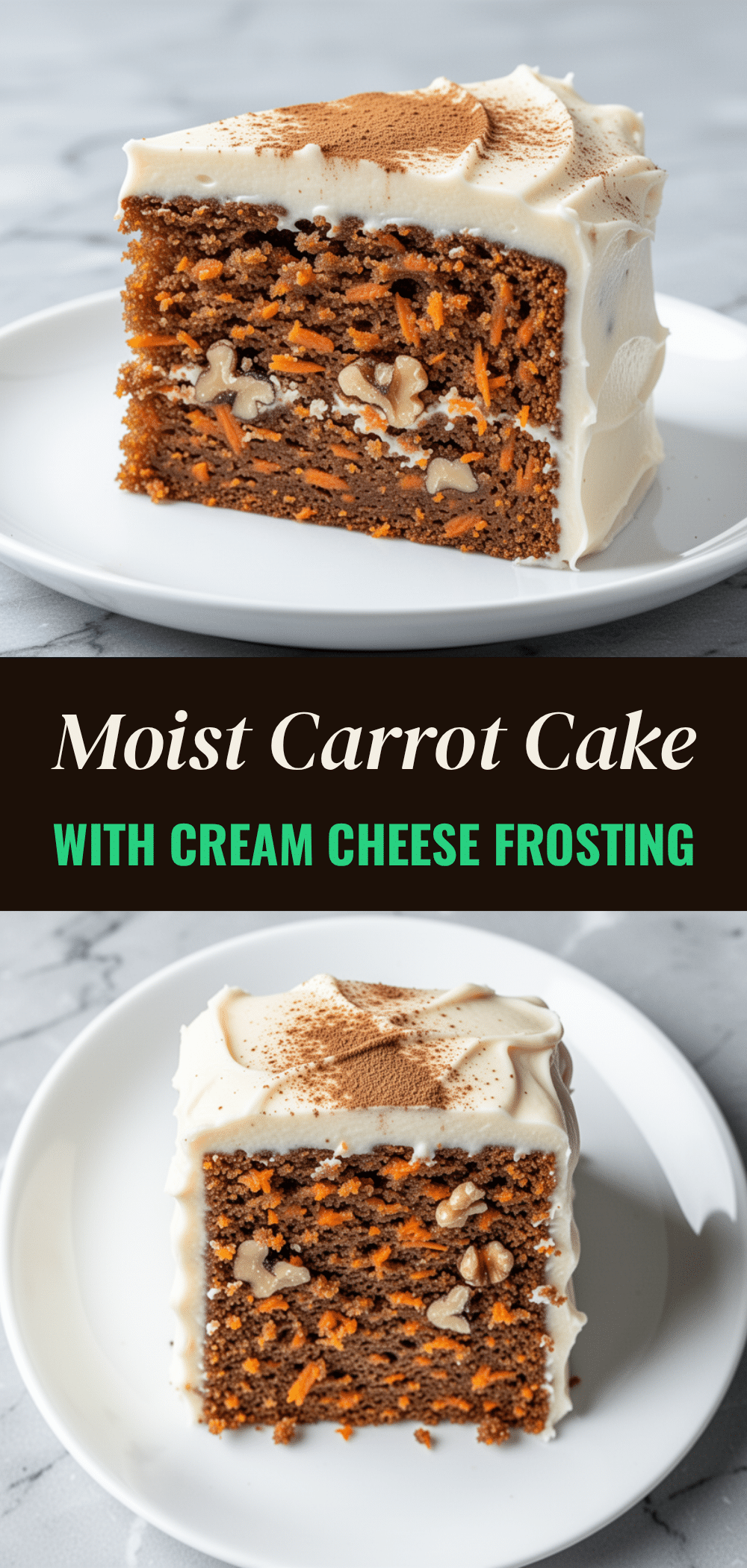
Moist Carrot Cake: Best Homemade Recipe with Tangy Frosting
- Total Time: 1 hour 5 minutes
- Yield: 12 servings 1x
Description
A deeply textured, aromatic, and incredibly moist homemade carrot cake with a tangy cream cheese frosting that balances sweetness with spice. This reliable recipe yields a tender cake that stays fresh for days and is perfect for any occasion.
Ingredients
- 2 cups (250g) all-purpose flour
- 1 teaspoon baking soda
- ½ teaspoon baking powder
- 1 teaspoon salt
- 2 teaspoons ground cinnamon
- ½ teaspoon nutmeg
- ¼ teaspoon cardamom (optional)
- 1 cup (200g) granulated sugar
- 1 cup (220g) brown sugar
- 1 cup (240ml) vegetable oil
- 3 large eggs, room temperature
- 2 teaspoons vanilla extract
- 3 cups (450g) fresh carrots, grated
- 1 cup (120g) walnuts or pecans, chopped and toasted (optional)
- 16 oz (450g) full-fat brick-style cream cheese, softened
- ½ cup (115g) unsalted butter, softened
- 4 cups (480g) powdered sugar, sifted
- 1 teaspoon vanilla extract
- 1 teaspoon lemon juice
- ¼ teaspoon salt
Instructions
- Preheat oven to 350°F (175°C). Grease and flour two 9-inch round cake pans, or line bottoms with parchment paper.
- In a medium bowl, whisk together flour, baking soda, baking powder, salt, cinnamon, nutmeg, and cardamom. Set aside.
- In a large bowl, beat granulated sugar, brown sugar, and vegetable oil for 2-3 minutes until pale and fluffy. Add eggs one at a time, beating well after each addition. Stir in vanilla extract.
- Gradually add dry ingredients to wet mixture using low speed or a spatula. Mix just until combined; do not overmix.
- Gently fold in grated carrots and chopped nuts until distributed.
- Divide batter evenly between prepared pans. Bake for 30-35 minutes, or until a toothpick inserted in the center comes out clean.
- Let cakes cool in pans for 10 minutes, then turn out onto a wire rack to cool completely.
- While cakes cool, beat cream cheese and butter until smooth. Add vanilla, lemon juice, and salt.
- Gradually add sifted powdered sugar, beating on low then medium-high until light, fluffy, and thick.
- Place one cake layer on a serving plate, spread frosting on top, add second layer, and frost top and sides.
- Refrigerate for at least 30 minutes before slicing to set the frosting.
Notes
Grate fresh carrots yourself for best moisture and texture. Ensure cream cheese and butter are at room temperature to avoid lumpy frosting. Sift powdered sugar for smooth frosting. The cake tastes better the next day as flavors meld. Store in the refrigerator for up to 5 days. Do not freeze the frosted cake as the frosting may become grainy.
- Prep Time: 30 minutes
- Cook Time: 35 minutes
- Category: Dessert
- Cuisine: American
Nutrition
- Serving Size: 1 slice
- Calories: 480
- Sugar: 42
- Sodium: 320
- Fat: 26
- Saturated Fat: 12
- Carbohydrates: 58
- Fiber: 2
- Protein: 6
Keywords: carrot cake, homemade carrot cake, moist carrot cake, cream cheese frosting, baking, dessert recipe, tangy frosting