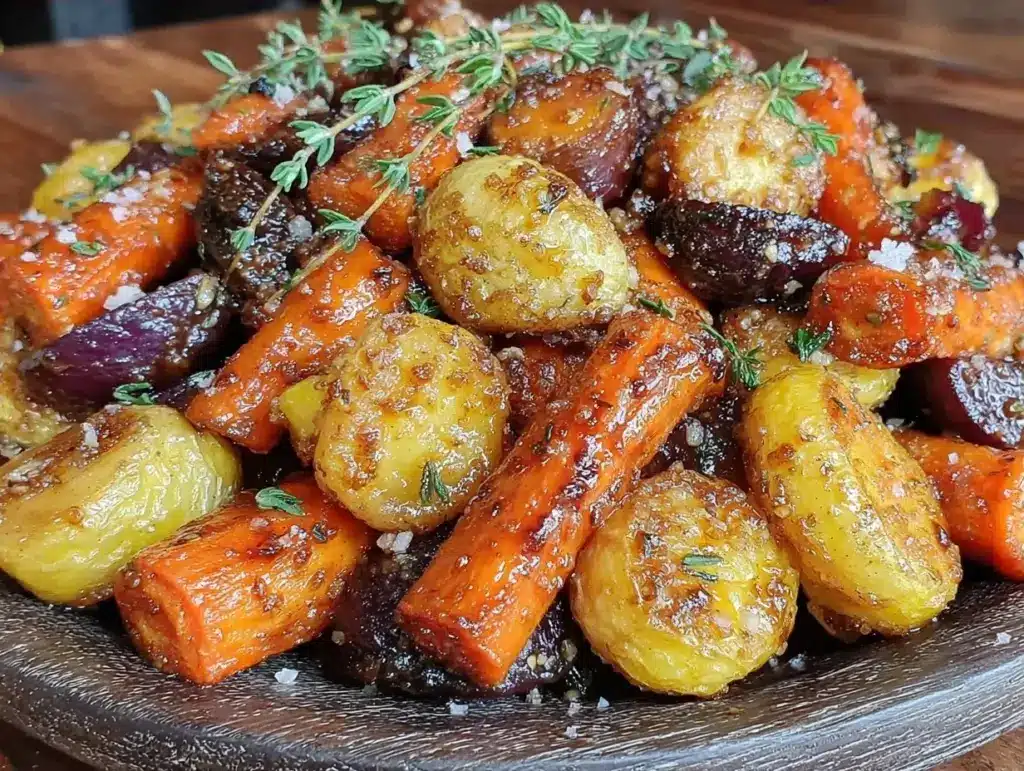
I used to think roasted vegetables were just the sad, boring garnish on Thanksgiving plates. You know the ones—the carrots that tasted like wet cardboard and the Brussels sprouts that were clearly steamed in the microwave before being tossed onto the platter. I avoided them entirely. I was the kid who picked everything off the turkey and left the rest.
Then, about five years ago, my sister-in-law made a batch of maple balsamic roasted root vegetables for Thanksgiving. I took one bite and immediately stopped talking. It wasn’t just “good veggies.” It was sweet, tangy, caramelized perfection. The edges were crisp, the centers were tender, and that balsamic-maple glaze tied everything together in a way I’d never tasted before.
Since then, this has been the one side dish I refuse to let anyone else make. Why? Because it’s impossible to mess up. Seriously. You don’t need to be a chef. You don’t need fancy techniques. If you can chop a potato and toss it in a bowl, you can make this. It’s forgiving, it’s cheap, and it turns the most humble ingredients into the star of the show. I’ve made this for Thanksgiving, Christmas, and just random Tuesday dinners because I’m addicted to the flavor. This recipe has completely changed how I look at root vegetables.
Here’s the thing about Thanksgiving sides: they’re supposed to be complicated. People spend hours on stuffing or hours brining turkeys. But this maple balsamic roasted root vegetables recipe? It’s the easiest thing on the table. It’s the “I set it and forget it” dish that delivers restaurant-quality results with zero stress. And honestly, if you’re overwhelmed by holiday prep, this is the one dish you can delegate to a friend because it really is that simple.
Why You’ll Love This Recipe
I’ve made this maple balsamic roasted root vegetables dish at least a dozen times, and it never fails to get compliments. It’s not just because it tastes amazing (though it does). It’s because it solves so many problems that come with holiday cooking.
- Zero Active Stress — Once these are in the oven, you’re done. No stirring, no monitoring, no last-minute panic. While other sides are demanding your attention, this is just happily roasting away. I can clean the kitchen or help with the turkey while these do their thing.
- Pantry-Friendly Ingredients — You probably have most of this already. Root veggies, maple syrup, balsamic vinegar, olive oil, and basic spices. If you have a vegetable drawer in your fridge, you’re halfway there. It’s not like some recipes that require exotic ingredients you have to drive 20 minutes to find.
- Beginner-Proof — This is the recipe I give to people who are terrified of cooking. You literally just chop things, toss them, and put them in the oven. If you burn the toast, you can make this. It’s hard to over-roast root vegetables unless you literally leave them in for three hours. They’re forgiving like that.
- Make-Ahead Friendly — You can chop all the vegetables the night before. Store them in a bag or container in the fridge. In the morning, you just dump them on the pan and toss with the glaze. This saves you so much time on the actual day of the meal.
- Flavor That Scales — The maple and balsamic combo is sweet and tangy, which appeals to everyone. Kids who usually hate vegetables will eat these because they taste like candy (but healthy!). Adults love the depth of flavor. It’s a crowd-pleaser that doesn’t require any modifications.
This is my go-to when I want something that feels special but requires almost no effort. It’s the ultimate “set it and forget it” side dish that makes you look like a pro without the stress.
Ingredients You’ll Need
Here’s the best part: this recipe uses ingredients you likely already have. It’s minimal, straightforward, and doesn’t require a trip to three different specialty stores. I’m particular about a few things, but mostly, this is about keeping it simple.
For the Vegetables
Carrots (3 medium, peeled and chopped) — I use orange carrots for color and sweetness. Baby carrots work if you’re in a rush, but chopping larger ones gives you better texture. Peel them if they’re old; if they’re fresh and firm, you can skip peeling, but I always peel for this.
Sweet Potatoes (2 medium, peeled and cubed) — These add natural sweetness and creamy texture. Look for firm ones without soft spots. Garnet or Jewel varieties are best for roasting because they stay moist.
Parsnips (2 medium, peeled and chopped) — These are like carrots but with a nutty, earthy flavor. If you can’t find them, just use extra carrots. But trust me, parsnips add a depth of flavor that makes this recipe shine.
Red Onion (1 large, chopped) — This adds a savory backbone to the sweetness. Red onion holds up well to roasting and caramelizes beautifully. Yellow onion works too, but red looks prettier on the plate.
Beets (2 medium, peeled and cubed) — Optional but recommended. Beets add a gorgeous color and earthy sweetness. If you’re worried about staining your hands, wear gloves while peeling them. They’re messy but worth it.
For the Glaze
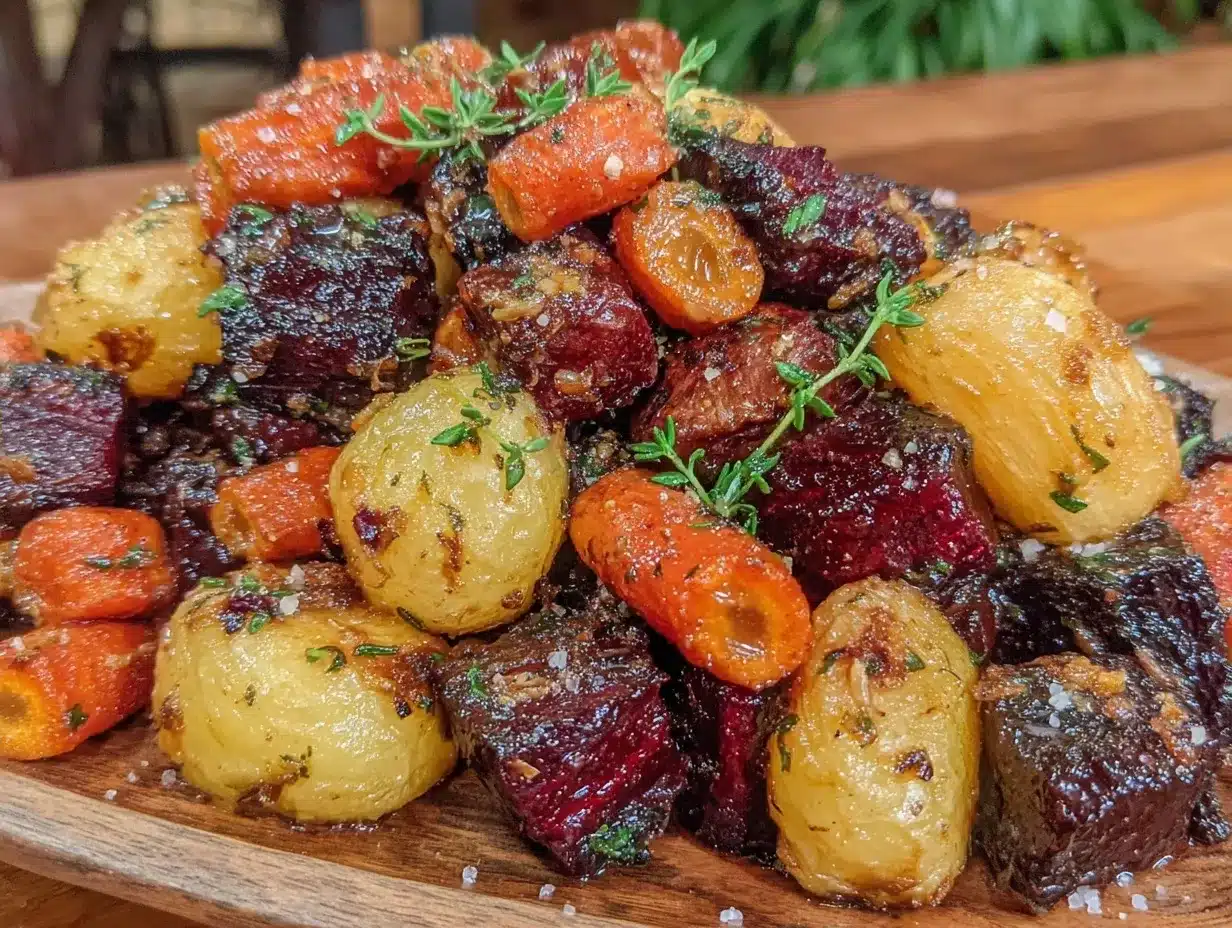
Maple Syrup (3 tablespoons) — Use real maple syrup, not pancake syrup. Grade A or Grade B both work. Grade B is stronger and more robust, which I prefer for roasting. It’s the sweet element that balances the vinegar.
Balsamic Vinegar (2 tablespoons) — Regular balsamic is fine. You don’t need expensive aged vinegar for this. It adds the tang that cuts through the sweetness. If you don’t have balsamic, apple cider vinegar works, but balsamic is traditional.
Extra Virgin Olive Oil (2 tablespoons) — This helps the veggies roast and get crispy. Use a good quality oil here—it makes a difference in flavor. Don’t skimp on the oil; root veggies need it to caramelize properly.
Dijon Mustard (1 teaspoon) — This is the secret ingredient. It adds a subtle sharpness that ties everything together. You won’t taste the mustard directly, but it enhances the other flavors. If you don’t have Dijon, whole grain mustard works too.
For Seasoning
Fresh Thyme (1 tablespoon, leaves stripped) — Fresh thyme is key here. Dried thyme works in a pinch, but fresh has a brighter, more aromatic flavor. If you don’t have fresh, use 1 teaspoon dried thyme.
Salt (1 teaspoon, or to taste) — Kosher salt is best because it’s easier to control. Sea salt works too. Be careful with salt if your veggies are already seasoned.
Black Pepper (½ teaspoon, freshly cracked) — Adds a little heat and depth. Freshly cracked is better than pre-ground.
Optional Add-ins — I sometimes add chopped pecans or walnuts in the last 10 minutes of roasting for crunch. Or toss in some rosemary sprigs for extra herbal flavor. But the base recipe is perfect on its own.
Equipment Needed
You don’t need fancy equipment for this. Here’s what I actually use.
Large Sheet Pan — I use a standard 18×13 inch baking sheet. If you have a half-sheet pan, that’s perfect. You need enough surface area so the veggies aren’t crowded. Crowded veggies steam instead of roast, and we want crispy edges.
Large Mixing Bowl — Something big enough to toss all the veggies with the glaze. I use a glass bowl because it’s easy to see and clean.
Sharp Knife — For chopping the root vegetables. A chef’s knife is ideal. Dull knives make chopping difficult and dangerous. Learn to keep your knife sharp—it changes everything.
Peeler — For peeling carrots, parsnips, and beets. A Y-peeler is easier to handle than a straight peeler, but either works.
Pastry Brush — Optional, but nice for brushing the glaze evenly. I usually just pour it on and toss, but a brush helps if you’re being precise.
Aluminum Foil — For easy cleanup. Line your sheet pan with foil to avoid scrubbing later. I always line my pans for roasted veggies.
Spatula — For flipping the veggies halfway through. A metal spatula works best because it slides under the veggies easily.
How to Make It: Step-by-Step
Alright, let’s make this! I’m walking you through exactly how I do it, including the little tricks I’ve picked up. This is foolproof.
Step 1: Prep Your Oven and Pan (5 minutes)
Preheat your oven to 400°F (200°C). This is the ideal temperature for roasting root vegetables. It’s hot enough to caramelize the sugars but not so hot that they burn before cooking through. Line your large sheet pan with aluminum foil for easy cleanup. I like to grease the foil lightly with olive oil to prevent sticking.
Step 2: Chop the Vegetables (10-15 minutes)
Peel and chop all your root vegetables into uniform pieces. This is important. If some pieces are huge and others are tiny, they’ll cook at different rates. Aim for 1-inch cubes or slices. Consistent size means even cooking. I chop carrots into rounds, sweet potatoes into cubes, parsnips into chunks, and beets into small cubes. The red onion can be chopped into large wedges.
Step 3: Make the Glaze (2 minutes)
In a small bowl, whisk together the maple syrup, balsamic vinegar, olive oil, Dijon mustard, salt, and pepper. The mixture should be smooth and well combined. It’ll look a bit like a thin sauce. Taste it—it should be sweet and tangy. Adjust if needed, but this ratio usually works perfectly.
Step 4: Toss the Veggies (3 minutes)
Place all the chopped vegetables in your large mixing bowl. Pour the glaze over the veggies. Toss everything together until every piece is evenly coated. You want each carrot, potato, and onion piece to have a thin layer of the glaze. Don’t be shy with the tossing—get in there with your hands if you need to. It’s messy but effective.
Step 5: Arrange on the Pan (2 minutes)
Spread the vegetables in a single layer on your prepared sheet pan. This is crucial. Do not overcrowd the pan. If the veggies are piled on top of each other, they’ll steam instead of roast. Give them space. If you have a lot of veggies, use two pans. I’ve learned this the hard way—crowded veggies are soggy veggies. We want crispy.
Step 6: Roast (30-40 minutes)
Place the pan in the preheated oven. Roast for 30 minutes. Then, remove the pan and flip the veggies with a spatula. This ensures even browning on all sides. Return to the oven and roast for another 10-15 minutes, or until the veggies are tender when pierced with a fork and the edges are caramelized and crisp.
Step 7: Garnish and Serve
Remove from the oven. If you’re adding nuts, toss them in now and return to the oven for 2-3 minutes to toast. Sprinkle with fresh thyme leaves if you didn’t add them earlier. Serve immediately while hot. They’re best fresh out of the oven, but they’re still good if you let them sit for a bit.
Expert Tips & Tricks
Here’s everything I’ve learned from making this dozens of times. These tips will save you from my mistakes.
Uniform Cuts Are Non-Negotiable
I know it’s tempting to chop things quickly, but uniform pieces ensure even cooking. If you have big chunks and tiny bits, the tiny bits will burn before the big ones are cooked through. Take the extra 5 minutes to chop consistently. Your future self will thank you.
Don’t Skip the Flip
Flipping the veggies halfway through is the secret to even browning. If you don’t flip them, one side will be golden and the other side will be pale. It’s a small step that makes a huge difference in texture and flavor.
Use Real Maple Syrup
Not that pancake syrup stuff with high fructose corn syrup. Real maple syrup has a complex flavor that stands up to roasting. It caramelizes beautifully. Pancake syrup will just make the veggies sticky and overly sweet without the depth.
Beet Handling
Beets can stain everything. Wear gloves when peeling and chopping them. If you don’t have gloves, wash your hands immediately after. Also, beets take longer to cook than carrots, so cut them smaller to ensure they’re tender by the time everything else is done.
Check for Doneness
Pierce a piece of sweet potato with a fork. If it goes through easily, they’re done. If there’s resistance, give them 5 more minutes. Root vegetables vary in size and density, so trust your fork more than the clock.
Optional Crunch
I love adding chopped pecans or walnuts in the last 5 minutes of roasting. They toast in the oven and add a great crunch. It’s a nice textural contrast to the soft veggies. I usually sprinkle them over the top after roasting if I’m worried about burning.
Variations & Substitutions
Once you’ve nailed the basic version, here’s how you can mix it up. I’ve tried all of these.
Turnip and Rutabaga Version
Swap parsnips for turnips and rutabaga. They have a slightly peppery flavor that pairs well with the maple. Rutabaga is sweeter than turnip, so use a mix for balance. This is a great way to use what’s in season.
Savory Herb Twist
Add 1 teaspoon of dried rosemary and 1 teaspoon of dried sage to the glaze. These herbs go beautifully with root vegetables and add a rustic, earthy flavor. I do this for Christmas dinner.
Spicy Kick
Add ½ teaspoon of cayenne pepper or red pepper flakes to the glaze. It adds a subtle heat that balances the sweetness. It’s surprising but delicious. I make this for friends who like a little spice.
Honey Swap
If you don’t have maple syrup, use honey. It’s sweeter and less complex, but it still works. Use 2 tablespoons of honey instead of 3 of maple syrup because honey is sweeter.
Gluten-Free
This recipe is naturally gluten-free. Just make sure your balsamic vinegar and Dijon mustard are certified gluten-free (most are, but check labels if you’re sensitive).
Vegan
This recipe is already vegan. No modifications needed. Just ensure your maple syrup and balsamic vinegar are vegan-friendly (some balsamic vinegars have added sugar that might not be vegan, but most are fine).
Lower Sugar
Reduce the maple syrup to 1 tablespoon and add a pinch of cinnamon to compensate. It’s less sweet but still flavorful. I make this when I’m watching my sugar intake.
Serving & Storage
How to Serve
I usually serve these straight from the sheet pan at the dinner table. It looks rustic and warm. But here are other ways I’ve enjoyed them:
- As a Side Dish — Perfect with roasted chicken, turkey, or pork. They pair well with almost any main protein.
- As a Salad Base — Let them cool and toss with arugula and goat cheese for a warm salad. It’s surprisingly good.
- With Gravy — Pour a little gravy over them. It’s like a deconstructed shepherd’s pie. Comfort food at its finest.
Storage Instructions
Refrigerator: Store leftovers in an airtight container for up to 4 days. The veggies will soften a bit in the fridge, which is normal. They’re still good cold, but reheating is better.
Reheating: Best method: Reheat in the oven at 350°F for 10-15 minutes. This restores the crispiness. Microwave works but makes them soggy. If you must microwave, do it in short bursts and let them sit for a minute to crisp up.
Freezing: Honestly, this doesn’t freeze well. The texture of root vegetables changes when frozen and thawed. They become mushy. Make it fresh or store in the fridge for up to 4 days.
Pro Tip: If you’re meal prepping, roast the veggies on Sunday and reheat them throughout the week. They make great lunches. Just add a fresh sprinkle of herbs when reheating.
Nutrition Information
I’m not a nutritionist, but here’s the breakdown if you’re tracking. This is per serving (based on 6 servings).
| Nutrient | Amount |
|---|---|
| Calories | 180 |
| Protein | 3g |
| Carbs | 32g |
| Fiber | 6g |
| Sugar | 18g |
| Fat | 5g |
| Sodium | 220mg |
What’s Good: High in fiber from the root vegetables. Good source of vitamins A and C. Low in fat. Natural sugars from the veggies and maple syrup.
What to Know: Higher in sugar due to the maple syrup. Contains natural sugars from the vegetables. Moderate sodium. Can be lower sugar by reducing maple syrup.
My Take: Look, this is a vegetable dish with maple syrup. It’s not a diet food, but it’s way better than processed sides. It’s packed with nutrients and fiber. When I want to make it lighter, I reduce the maple syrup and add more herbs. But usually? I just enjoy a reasonable portion and appreciate the flavor.
Final Thoughts
So that’s my go-to maple balsamic roasted root vegetables! I’ve probably talked your ear off at this point, but when you make a recipe this often, you have a lot to say about it.
This has saved Thanksgiving dinners more times than I can count. It’s my answer to “what’s for dinner” when I’m tired, don’t want takeout, and still want something that tastes really good. My kids are happy, my husband’s happy, and I’m happy because I’m not stressed about cooking.
Make it yours! Try different add-ins, swap in your favorite vegetables, adjust the sweetness. The best recipes are the ones you adapt to your family’s tastes. If you’re looking for more easy, forgiving recipes, check out my maple dijon roasted chicken thighs or my creamy roasted butternut squash soup for more fall favorites.
If you make this, drop a comment and let me know what you think! I love hearing how recipes turn out in your kitchen. And if something doesn’t work, tell me that too—I’m here to help troubleshoot.
Happy cooking! And I hope your kitchen smells half as good as mine does right now.
Frequently Asked Questions
Can I use frozen root vegetables?
You can, but the texture won’t be as good. Frozen veggies release more water and can get soggy. Fresh is always better for roasting. If you must use frozen, thaw them first and pat them dry before tossing with the glaze. It’s not ideal, but it works in a pinch.
Why did my veggies turn out soggy?
Usually means you overcrowded the pan. The veggies need space to roast, not steam. Use two pans if necessary. Also, make sure your oven is preheated properly. If the oven isn’t hot enough when you put the veggies in, they’ll steam instead of roast.
Can I make this ahead for Thanksgiving?
Yes! Chop the vegetables the night before and store them in a container in the fridge. In the morning, toss them with the glaze and put them in the oven. This saves you so much time on the actual day. I do this every year.
Why did my sauce get too dark?
The maple syrup and balsamic vinegar can burn if the oven is too hot or if they roast for too long. Keep an eye on them after 30 minutes. If they’re getting too dark, cover them loosely with foil. 400°F is the sweet spot—don’t go higher.
Can I use agave instead of maple syrup?
You can, but the flavor will be different. Agave is sweeter and less complex. Use 2 tablespoons of agave instead of 3 of maple syrup. It still works, but you lose that distinct maple flavor. I prefer real maple syrup.
How do I reheat leftovers without them getting dry?
Reheat in the oven at 350°F for 10-15 minutes. This restores the crispiness. Microwave works but makes them soggy. If you must microwave, do it in short bursts and let them sit for a minute. The oven is always the best method.
Can I double this recipe?
Absolutely! Double everything and use two sheet pans. The cooking times stay the same. Just make sure you have enough oven space. I do this when I’m feeding a crowd. Just rotate the pans halfway through for even cooking.
Pin This Recipe!
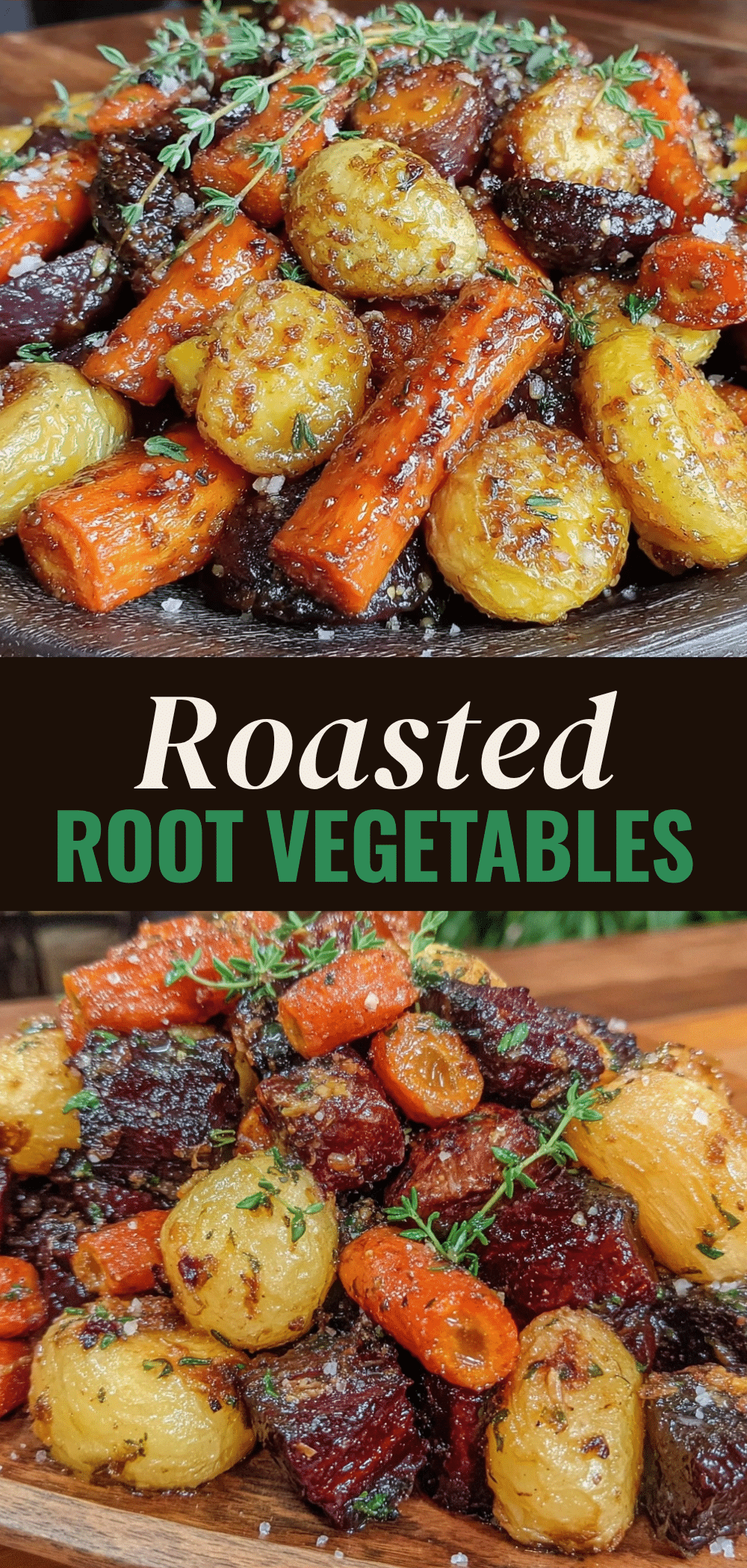
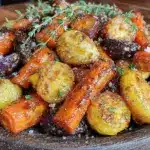
Maple Balsamic Roasted Root Vegetables
- Total Time: 55 minutes
- Yield: 6 servings 1x
Description
A simple, forgiving, and delicious side dish featuring root vegetables roasted with a sweet and tangy maple-balsamic glaze. Perfect for Thanksgiving or any weeknight dinner.
Ingredients
- 3 medium carrots, peeled and chopped
- 2 medium sweet potatoes, peeled and cubed
- 2 medium parsnips, peeled and chopped
- 1 large red onion, chopped
- 2 medium beets, peeled and cubed (optional)
- 3 tablespoons real maple syrup
- 2 tablespoons balsamic vinegar
- 2 tablespoons extra virgin olive oil
- 1 teaspoon Dijon mustard
- 1 tablespoon fresh thyme leaves
- 1 teaspoon salt (or to taste)
- 1/2 teaspoon freshly cracked black pepper
Instructions
- Preheat oven to 400°F (200°C). Line a large 18×13 inch sheet pan with aluminum foil and lightly grease with olive oil.
- Peel and chop all root vegetables into uniform 1-inch pieces to ensure even cooking. Chop the red onion into large wedges.
- In a small bowl, whisk together maple syrup, balsamic vinegar, olive oil, Dijon mustard, salt, and pepper until smooth.
- Place chopped vegetables in a large mixing bowl. Pour the glaze over the veggies and toss until every piece is evenly coated.
- Spread vegetables in a single layer on the prepared sheet pan. Do not overcrowd; use two pans if necessary to allow space for roasting.
- Roast for 30 minutes. Remove pan and flip vegetables with a spatula to ensure even browning.
- Return to oven and roast for another 10-15 minutes, or until vegetables are tender when pierced with a fork and edges are caramelized.
- If adding nuts, toss them in during the last 5 minutes of roasting. Garnish with fresh thyme and serve immediately.
Notes
Ensure vegetables are cut into uniform sizes for even cooking. Do not overcrowd the pan, as this causes steaming instead of roasting. Use real maple syrup, not pancake syrup, for best flavor. Beets can stain hands, so wear gloves when peeling. This recipe is naturally gluten-free and vegan.
- Prep Time: 15 minutes
- Cook Time: 40 minutes
- Category: Side Dish
- Cuisine: American
Nutrition
- Serving Size: Approximately 1 cup
- Calories: 180
- Sugar: 18
- Sodium: 220
- Fat: 5
- Saturated Fat: 0.5
- Carbohydrates: 32
- Fiber: 6
- Protein: 3
Keywords: roasted root vegetables, maple balsamic, Thanksgiving side dish, easy vegetarian recipe, healthy sides, gluten-free, vegan