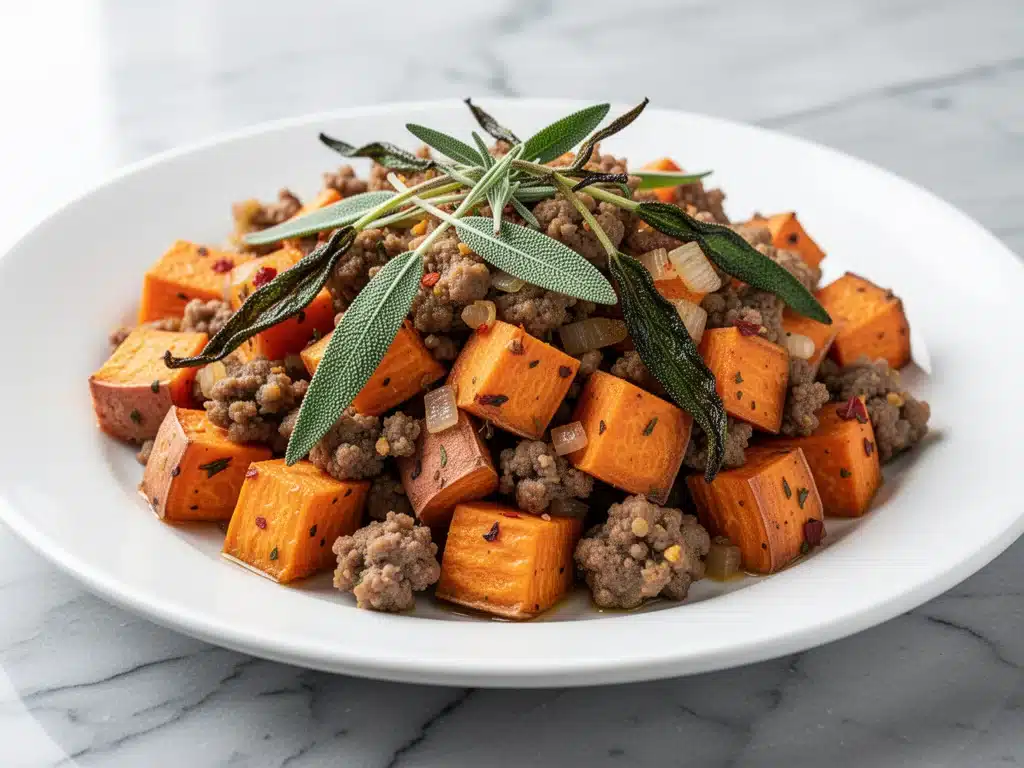
There was a specific Saturday in October about three years ago when I woke up with a craving that felt almost spiritual. It wasn’t for pancakes. It wasn’t for waffles. It was for something salty, something sweet, something that tasted like the leaves were falling outside my window. I had a half-empty fridge and a bag of sweet potatoes that had been sitting in the pantry for a week, slowly turning into something I wasn’t quite sure I wanted to eat anymore.
So I threw together what I thought would be a mediocre breakfast. I diced the potatoes, crumbled up some leftover sausage from the night before, and tossed it all into a skillet. I was halfway through cooking when I realized I was out of salt. Then I realized I was out of pepper. I was about to call it a day and go back to sleep when I spotted a bunch of fresh sage in the herb garden by the back door. It was frost-bitten, honestly, but I picked it anyway, fried the leaves in butter until they were crispy, and threw them on top.
That single bite changed everything. The crunch of the sage against the soft, caramelized sweet potato? The heat of the sausage mixing with the natural sweetness of the root vegetable? It was perfect. I made it that Sunday. And the Sunday after that. Now, if I’m being honest, I make this fall sweet potato sausage breakfast hash at least once every two weeks during the cooler months. It’s become my go-to brunch centerpiece, my “I need to impress in-laws” meal, and my lazy Saturday morning comfort food.
It’s not complicated. It’s not fancy. But it tastes like autumn in a bowl. And once you try it, you’ll understand why I’m obsessed. Let me walk you through exactly how to make it, including the little tricks that keep the potatoes crispy and the eggs perfectly runny.
Why You’ll Love This Recipe
I’ve tried a lot of breakfast hash recipes over the years. Some are too greasy. Some turn into a mushy potato mess. Some require ingredients I can’t pronounce. This one? It just works. Here’s why this sweet potato and sausage hash has earned a permanent spot in my weekly rotation:
It’s a Complete Meal in One Pan — Seriously, if you can use one skillet, you can make this. I love that I don’t have to dirty a dozen dishes to feed my family. The potatoes cook in the sausage fat, the eggs cook in the same pan, and the sage fries right on top. Cleanup takes two minutes. That’s the best part.
It’s Naturally Gluten-Free — I have friends who are gluten-sensitive, and this recipe is naturally safe for them. Sweet potatoes, sausage (check the label for fillers, but most is fine), eggs, and herbs. No flour, no breadcrumbs, no hidden gluten. It’s one of those meals where everyone at the table eats the same thing without me needing to make a separate plate.
The Flavor Profile Is Unbeatable — Sweet meets savory in the best way possible. The earthiness of the sage cuts through the richness of the sausage, and the caramelized edges of the potatoes add a texture that’s impossible to resist. It’s complex, but it’s also familiar. It tastes like home.
It’s Great for Meal Prep (Sort Of) — I’ll be honest: the eggs are best fresh. But the hash base—the potatoes and sausage—can be pre-cooked and reheated. If you’re feeding a crowd or meal-prepping for the week, you can make the base ahead of time and just fry the eggs when you’re ready to eat. It saves so much morning stress.
It Uses Seasonal Ingredients — This is peak fall food. Sweet potatoes are cheap, abundant, and delicious right now. Sage is in its prime. Sausage is hearty. It’s a recipe that embraces the season rather than fighting against it. It feels intentional, like you put thought into your breakfast, even if you’re still half-asleep.
This is my answer to “what’s for brunch?” when I want something better than cereal but less effort than a full soufflé. It’s reliable, delicious, and always gets compliments.
Ingredients You’ll Need
Here’s the best part: you probably have most of this already. This isn’t a recipe that requires a special trip to a specialty store. It’s pantry-friendly with a few fresh additions. I’m particular about a couple of things here, and I’ll tell you exactly why.
Sweet Potatoes (3 medium, about 1.5 lbs / 680g) — I use Garnet or Jewel sweet potatoes. They’re orange, sweet, and hold their shape well when cooked. Avoid the white ones; they’re too starchy and turn mushy. Peel them or leave the skin on if you like the texture. I usually peel mine for a softer bite, but it’s up to you.
Breakfast Sausage (1 pound / 450g) — I prefer pork sausage links or bulk patties. If you’re using links, remove the casings. If you’re using patties, crumble them up. I like a mild or Italian sausage for this. If you want heat, go with spicy sausage. Just avoid turkey sausage unless you don’t mind it being dry—pork has the fat needed to crisp up the potatoes.
Yellow Onion (1 medium, diced / about 200g) — This adds sweetness and depth. I use yellow onion because it caramelizes nicely. White onion is too sharp. Red onion is too pretty but gets weird when cooked. Yellow is the workhorse here.
Garlic (3 cloves, minced / about 1 tablespoon) — Fresh garlic only. No jarred stuff here. The raw bite mellows out as it cooks, leaving a fragrant base. Don’t skip it. It’s the backbone of the flavor.
Fresh Sage Leaves (1 large bunch / about 20-25 leaves) — This is the star. Look for bunches with bright green, unblemished leaves. If you can’t find fresh, you can use dried, but the texture won’t be the same. Fresh sage fried in butter is magical. It’s worth the trip to the store.
Butter (2 tablespoons) — Unsalted is fine, but I use salted because it adds flavor. You need this for frying the sage and helping the potatoes brown. Olive oil works too, but butter gives that rich, savory taste.
Eggs (6 large) — I fry them directly in the hash. You can scramble them in if you prefer, but fried eggs with runny yolks that mix into the potatoes? That’s the way to go. Room temperature eggs crack easier, but cold is fine too.
Salt and Black Pepper — To taste. I use kosher salt because it’s easier to control. Freshly cracked black pepper adds a nice heat.
Red Pepper Flakes (Optional, ½ teaspoon) — If you like a little kick, sprinkle these on top. It balances the sweetness of the potatoes nicely.
Parsley (Optional, 1 tablespoon chopped) — For garnish. It adds a pop of color and freshness. I always have it on hand.
Pro Tip: If you’re buying pre-made sausage, check the label for added sugars or fillers. Some brands add maple syrup or corn syrup, which can make the hash too sweet. I like simple, savory sausage for this.
Equipment Needed
You don’t need fancy equipment for this. Here’s what I actually use.
12-Inch Cast Iron Skillet — I swear by cast iron for this. It holds heat well and gives you that perfect crispy edge on the potatoes. Stainless steel works too, but you need to be more careful about sticking. Non-stick is fine, but you won’t get the same crust.
Sharp Knife — For dicing potatoes and onions. A dull knife is dangerous and makes uneven cuts. Uniform pieces cook evenly. I use my chef’s knife for everything.
Wooden Spoon or Spatula — For stirring. Silicone works too. Metal can scratch your pan if you’re not using cast iron.
Paper Towels — To blot the sausage if it’s extra greasy. You don’t want a pool of oil at the bottom of the pan.
Measuring Spoons — For the salt and pepper. I eyeball it, but if you’re new to cooking, measure.
Small Skillet (Optional) — If you’re frying the sage separately, a small pan works best. But you can do it in the big one if you have room.
How to Make It: Step-by-Step
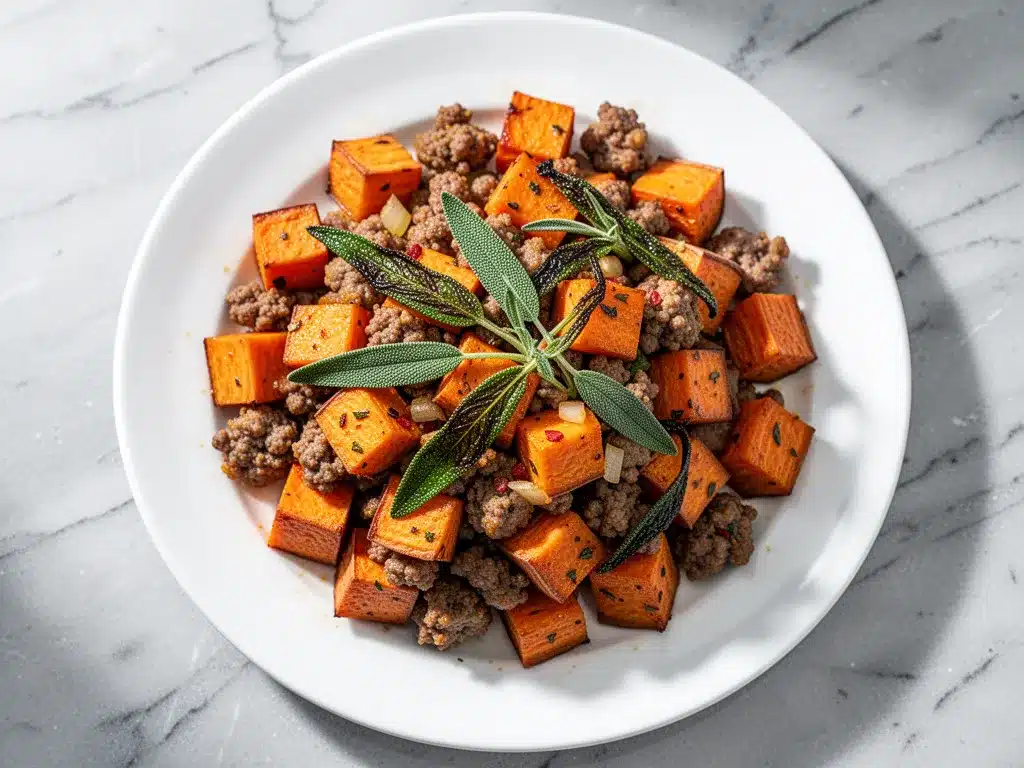
Alright, let’s make this! I’m walking you through exactly how I do it, including the little tricks I’ve picked up over the years.
Step 1: Prep Your Ingredients (10 minutes)
Before you turn on the stove, get everything ready. Dice the sweet potatoes into ½-inch cubes. Smaller than that, and they’ll fall apart. Larger than that, and they won’t cook through. Dice the onion. Mince the garlic. Pat the sausage dry if it’s wet. Have your sage leaves washed and dried—wet sage splatters when it hits the butter.
Step 2: Cook the Sausage (5 minutes)
Heat your skillet over medium heat. Add the sausage. Break it up with your spoon as it cooks. Cook until it’s browned and crispy, about 5-7 minutes. If there’s a lot of excess grease, drain some of it out, leaving about 1 tablespoon. You want some fat for the potatoes, but not a swimming pool.
Step 3: Add the Potatoes and Onions (15 minutes)
Add the diced sweet potatoes and onions to the skillet. Spread them out in an even layer. Season with salt and pepper. Let them cook undisturbed for 3-4 minutes. This is crucial. You want them to get some color. Then, stir and repeat. Cook for 10-12 more minutes, stirring occasionally, until the potatoes are tender and crispy on the edges. You can poke a potato with a fork; if it goes through easily, they’re done.
Step 4: Add the Garlic (1 minute)
Add the minced garlic to the skillet. Stir it in with the potatoes. Cook for just 30-60 seconds. Garlic burns fast. You just want it fragrant. If you let it brown, it’ll taste bitter.
Step 5: Fry the Sage (2 minutes)
Push the hash to one side of the pan, or use a small separate skillet. Add the butter. Once it’s melted and foaming, add the sage leaves. Fry them for 30-60 seconds until they’re crispy and dark green. They’ll curl up. Remove them and place on a paper towel. Don’t overcook them; they’ll burn quickly.
Step 6: Add the Eggs (5 minutes)
Create small wells in the hash with your spoon. Crack an egg into each well. Sprinkle a little salt on the eggs. Cover the skillet with a lid. Let them cook on medium-low heat for 3-5 minutes, until the whites are set but the yolks are still runny. If you like hard yolks, cook longer. I like mine jammy.
Step 7: Serve
Remove from heat. Top with the crispy sage leaves. Sprinkle with red pepper flakes and fresh parsley if you’re feeling fancy. Serve immediately. The eggs will cool down fast, so don’t wait.
Expert Tips & Tricks
Here’s everything I’ve learned from making this dozens of times. These tips will save you from my mistakes.
Cut the Potatoes Uniformly
I can’t stress this enough. If some cubes are small and some are big, the small ones will turn to mush before the big ones are cooked. Use a ruler if you have to. ½-inch is the sweet spot.
Don’t Crowd the Pan
If you’re making a huge batch, you might need to cook in two batches. Overcrowding the pan steams the potatoes instead of frying them. You want crispiness, not steam.
Use the Lid
When frying the eggs, the lid traps heat and cooks the tops without flipping. It’s the secret to perfect sunny-side-up eggs in a hash.
Sage is Delicate
Fresh sage leaves are thin. They crisp up in seconds and burn in seconds. Watch them like a hawk. If they start to smoke, take them out immediately.
Leftover Sausage Works
Got leftover sausage from dinner? Chop it up and use it here. It adds a great flavor boost. Just make sure it’s cooked through.
Common Mistakes
Mistake: Potatoes are raw in the middle.
Fix: Cook them longer on medium-low heat. High heat burns the outside before the inside is done. Patience is key.
Mistake: Eggs are overcooked.
Fix: Check them early. Eggs continue cooking even after you remove them from heat. Take them off when the whites are just set.
Variations & Substitutions
Once you’ve nailed the basic version, here’s how you can mix it up. I’ve tried all of these.
Vegetarian Version
Skip the sausage. Use a plant-based sausage crumble or just add more mushrooms. Sauté 8oz of sliced mushrooms with the onions for a meaty texture. It’s delicious and hearty.
Spicy Version
Use spicy Italian sausage. Add diced jalapeños with the onions. Sprinkle extra red pepper flakes on top. For my heat-seekers.
Herb Garden Twist
Swap sage for thyme or rosemary. Thyme pairs beautifully with sweet potatoes. Rosemary is stronger, so use less. Both are great with the sausage.
Hash Browns Instead of Cubes
Use shredded sweet potatoes for a hash brown texture. It cooks faster but gets less crispy. I like the cubes better, but it’s a fun alternative.
Gluten-Free Check
Most sausage is gluten-free, but check the label. Some brands use wheat fillers. Stick to simple, pure pork sausage to be safe.
Serving & Storage
How to Serve:
I serve this straight from the skillet. It’s rustic and warm. Pair it with a simple green salad or some toast. It’s filling enough that you don’t need much else. For brunch, I serve it with fresh fruit and coffee.
Leftovers:
Store the hash (without eggs) in an airtight container in the fridge for up to 3 days. Reheat in a skillet with a splash of water to steam it back to life. The eggs don’t store well; fry fresh ones when reheating.
Freezing:
I don’t recommend freezing this. The potatoes get mushy when thawed. Make it fresh. It’s worth the effort.
Nutrition Information
I’m not a nutritionist, but here’s the breakdown if you’re tracking.
Per Serving (based on 6 servings):
- Calories: 320
- Protein: 14g
- Carbs: 35g
- Fiber: 5g
- Fat: 16g
- Sodium: 450mg
This is a hearty meal. The sweet potatoes provide complex carbs and fiber. The sausage adds protein and fat. It’s balanced, but it’s not a light snack. Enjoy it as a proper breakfast or brunch.
Final Thoughts
So that’s my fall sweet potato sausage breakfast hash! I’ve probably talked your ear off at this point, but when you make a recipe this often, you have a lot to say about it.
This has saved my weekends. It’s my answer to “what’s for brunch?” when I want something special but don’t want to spend hours in the kitchen. My family loves it, my friends ask for the recipe, and I’m happy because it’s easy and delicious.
Make it yours! Try different herbs, swap the sausage, add different veggies. The best recipes are the ones you adapt. If you make this, drop a comment and let me know what you think! I love hearing how recipes turn out in your kitchen.
Happy cooking! And I hope your kitchen smells half as good as mine does right now.
Frequently Asked Questions
Can I use butternut squash instead of sweet potatoes?
Yes, butternut squash works well. It’s slightly drier and less sweet, so you might want to add a pinch of sugar or maple syrup if you like it sweeter. Cook it the same way, but it might take a minute longer to soften.
Why did my potatoes stick to the pan?
Usually means the pan wasn’t hot enough when you added them, or you stirred too soon. Let them cook undisturbed for a few minutes to form a crust. They’ll release naturally when they’re ready. Also, make sure you have enough fat in the pan.
Can I make this ahead of time?
You can prep the potatoes and sausage ahead of time and store them in the fridge. When you’re ready to eat, just cook them in the skillet. Add the eggs fresh. It saves morning prep time without sacrificing quality.
What kind of sausage is best?
I prefer pork sausage with sage or fennel. It pairs naturally with sweet potatoes. Chicken sausage works but is leaner and less flavorful. Turkey sausage can be dry. Stick to pork for the best results.
Can I use dried sage instead of fresh?
You can, but the texture won’t be the same. Dried sage is brittle and doesn’t get crispy when fried. Fresh sage leaves become crisp chips that add a wonderful texture contrast. If you must use dried, crumble it over the hash at the end.
How do I reheat leftovers?
Reheat in a skillet over medium-low heat with a splash of water. Cover and steam for a few minutes. The microwave works but makes the potatoes soggy. Skillet reheating keeps the texture better.
Pin This Recipe!
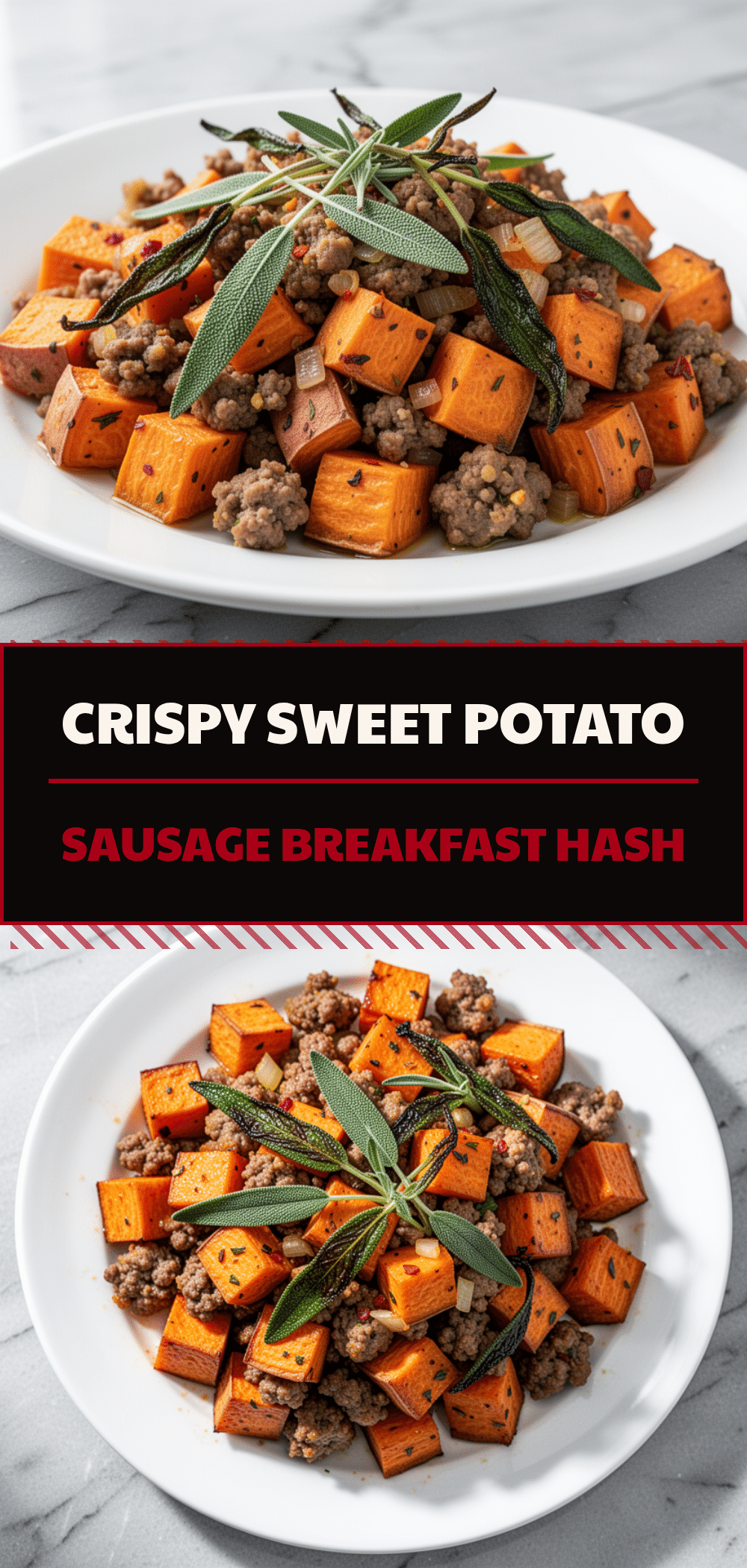
Fall Sweet Potato Sausage Breakfast Hash: 5 Easy Crispy Sage Recipe
- Total Time: 40 minutes
- Yield: 6 servings 1x
Description
A hearty, one-pan breakfast hash featuring caramelized sweet potatoes, savory sausage, and crispy fried sage leaves, topped with perfectly runny fried eggs.
Ingredients
- 3 medium sweet potatoes (about 1.5 lbs / 680g), diced into ½-inch cubes
- 1 pound (450g) breakfast sausage (pork links or bulk patties)
- 1 medium yellow onion, diced
- 3 cloves garlic, minced
- 1 large bunch fresh sage leaves (about 20–25 leaves)
- 2 tablespoons butter
- 6 large eggs
- Kosher salt and freshly cracked black pepper, to taste
- ½ teaspoon red pepper flakes (optional)
- 1 tablespoon chopped parsley (optional, for garnish)
Instructions
- Prep ingredients: Dice sweet potatoes and onion, mince garlic, and wash/dry sage leaves.
- Heat a 12-inch skillet over medium heat. Add sausage and break it up, cooking until browned and crispy (5-7 minutes). Drain excess grease, leaving about 1 tablespoon.
- Add diced sweet potatoes and onions to the skillet. Spread in an even layer and season with salt and pepper. Cook undisturbed for 3-4 minutes to develop color, then stir and continue cooking for 10-12 minutes until tender and crispy.
- Add minced garlic to the skillet and stir for 30-60 seconds until fragrant.
- Push hash to one side or use a small skillet. Melt butter and fry sage leaves for 30-60 seconds until crispy and dark green. Remove and place on a paper towel.
- Create small wells in the hash. Crack an egg into each well and sprinkle with salt. Cover the skillet and cook on medium-low heat for 3-5 minutes until whites are set and yolks are runny.
- Remove from heat. Top with crispy sage leaves, red pepper flakes, and parsley. Serve immediately.
Notes
Cut potatoes uniformly for even cooking. Do not crowd the pan to ensure crispiness. Use the lid when frying eggs to cook the tops without flipping. Fresh sage is preferred for texture; dried sage does not crisp up well. Leftovers (hash base without eggs) can be stored in the fridge for up to 3 days.
- Prep Time: 10 minutes
- Cook Time: 30 minutes
- Category: Breakfast
- Cuisine: American
Nutrition
- Serving Size: 1 serving (approx. 1
- Calories: 320
- Sugar: 8
- Sodium: 450
- Fat: 16
- Saturated Fat: 5
- Carbohydrates: 35
- Fiber: 5
- Protein: 14
Keywords: sweet potato hash, breakfast hash, sausage recipe, crispy sage, fall brunch, one pan meal, gluten-free breakfast, easy morning meal