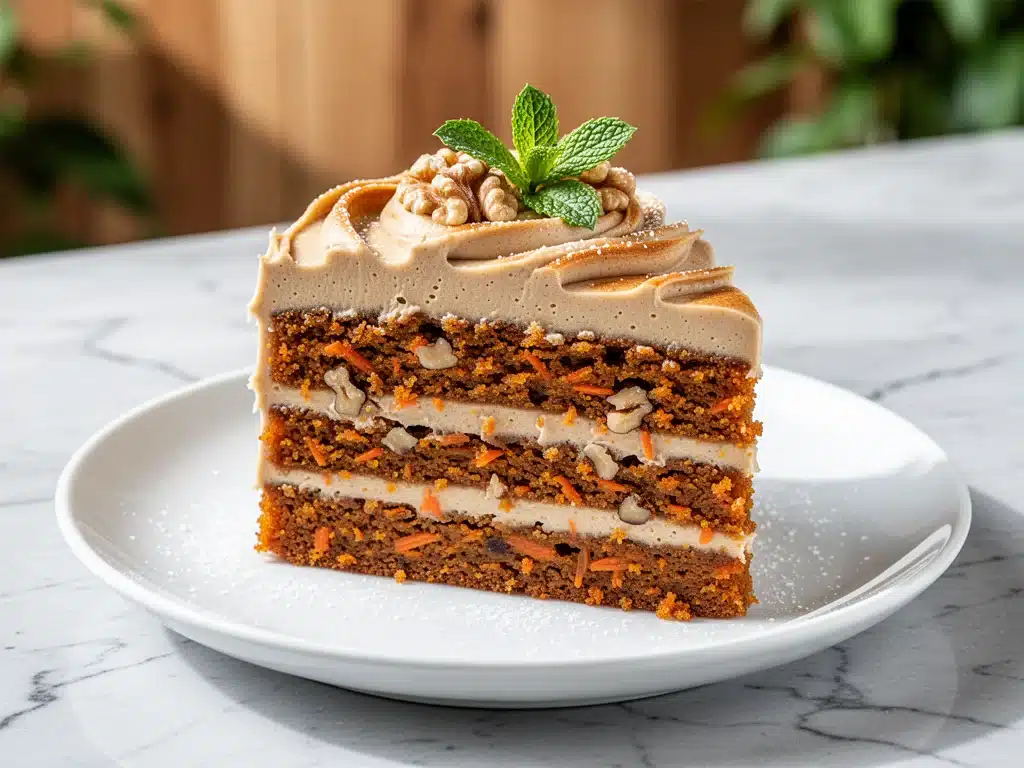
There’s a specific kind of disappointment that comes from cutting into a carrot cake that looks perfect on the outside but turns out dry and sandy on the inside. I’ve been there. It happens when you over-mix the batter or, worse, when the frosting is just a sweet, cloying layer of sugar that fights against the spices in the cake. For years, I stuck to the standard cream cheese frosting because, well, it’s what everyone expects. But honestly? It’s heavy. It sits in your stomach like a brick, and it masks the beautiful, warm flavors of cinnamon, nutmeg, and ginger that make carrot cake special in the first place.
That changed last autumn when I decided to try something different. I was craving that deep, nutty aroma that only browned butter can provide. I had seen brown butter used in cookies and brownies, but I never thought to put it in a cake frosting until I stumbled across a technique that completely flipped my perspective. The result was this classic carrot cake with brown butter frosting. It’s not just different; it’s better. The frosting has this sophisticated, toasty depth that pairs perfectly with the moist, spiced cake and the crunch of walnuts. It’s lighter than cream cheese frosting but infinitely more flavorful.
I’ve tested this recipe at least a dozen times since that first breakthrough. I’ve tweaked the spice ratios, adjusted the browning time on the butter to avoid bitterness, and figured out the exact balance of sweetness so it doesn’t overpower the carrots. The verdict? This is now my go-to dessert for everything from casual Tuesday nights to holiday gatherings. If you’ve been looking for a carrot cake recipe that actually feels special without requiring a degree in pastry science, you’ve found it. It’s the kind of dessert that disappears fast, leaving everyone asking for the recipe before the plates are even cleared.
Why You’ll Love This Recipe
There are plenty of carrot cake recipes out there, so why make this one? It’s because this version solves the two biggest problems people have with carrot cake: dryness and overly sweet frosting. Here’s why this classic carrot cake with brown butter frosting keeps me coming back to the kitchen:
Moistness Guaranteed — This isn’t a dry, crumbly cake. By using oil instead of butter in the batter, the cake stays incredibly moist for days. I’ve made this on Sunday and eaten leftovers on Wednesday, and it’s still tender. I actually prefer it the next day, as the spices have time to meld.
Frosting That Doesn’t Suck — Cream cheese frosting is fine, but brown butter frosting is on another level. It’s nutty, rich, and has a caramel-like depth that makes every bite feel indulgent but not heavy. It’s lighter on the palate, so you can have a generous slice without feeling sluggish afterward.
Perfect Spice Balance — Many recipes dump in too much cinnamon, making the cake taste like a snickerdoodle. I’ve dialed in the ratio of cinnamon, nutmeg, and ginger so you get that warm, cozy flavor without it being overpowering. It tastes like autumn in every bite.
Texture Contrast — The addition of toasted walnuts (and optional raisins, if you’re into that) adds a crucial crunch that contrasts with the soft cake and creamy frosting. It keeps the mouthfeel interesting. If you’re a fan of moist carrot cake variants, you’ll appreciate how this version elevates the texture game.
Make-Ahead Friendly — This cake actually improves with time. I often bake the layers a day ahead, wrap them tightly, and frost them the next day. It makes hosting so much easier. You’re not rushing to frost a warm cake; everything is chill and ready to go.
Simple Ingredients — You don’t need exotic spices or hard-to-find flours. Everything is from your standard pantry. Flour, sugar, oil, eggs, carrots, and brown butter. That’s it. No fancy equipment, no stress.
This is the recipe I make when I want to impress but also want to keep my sanity intact. It’s reliable, delicious, and consistently gets compliments from everyone, from picky eaters to dessert snobs.
Ingredients You’ll Need
Let’s talk about what goes into this cake. I’m going to break it down into two parts: the cake itself and the brown butter frosting. I’m particular about a few things here, so pay close attention to the details.
For the Cake
Vegetable oil (1 cup / 240ml) — Use a neutral oil like vegetable, canola, or light olive oil. Do not use extra virgin olive oil; it will overpower the spices. Oil keeps the cake moist longer than butter does.
Granulated sugar (1 ½ cups / 300g) — White sugar provides the right amount of sweetness and moisture. Do not substitute with brown sugar unless you want a denser, molasses-heavy cake.
Large eggs (4 large) — Room temperature eggs are best. They emulsify better with the oil and sugar, creating a lighter batter. If you’re in a rush, just drop them in warm water for 5 minutes.
Vanilla extract (2 teaspoons) — Use pure vanilla, not imitation. It adds that background warmth that ties all the spices together.
All-purpose flour (2 cups / 250g) — Spoon and level your flour. Don’t scoop it directly from the bag, or you’ll pack it down and end up with a dry cake. I use Gold Medal AP flour; it’s reliable and affordable.
Baking soda (2 teaspoons) — This is what helps the cake rise. Make sure it’s fresh! If your baking soda is old, it won’t work, and you’ll end up with a dense puck.
Baking powder (1 teaspoon) — Just a little boost for extra lift.
Ground cinnamon (2 teaspoons) — The star spice. Use fresh ground if you can; it makes a huge difference.
Ground nutmeg (½ teaspoon) — Warm and earthy. Don’t skip it; it adds complexity.
Ground ginger (½ teaspoon) — Adds a little zing. If you hate ginger, reduce to ¼ teaspoon, but don’t omit it entirely.
Salt (1 teaspoon) — Essential for balancing the sweetness. Don’t skimp.
Grated carrots (3 cups / about 4-5 medium carrots) — This is crucial. Use a box grater or food processor to grate them fine. Do not use pre-shredded carrots from the store; they are too dry and don’t blend into the batter well. Freshly grated carrots release moisture as they bake.
Walnuts (1 cup, chopped) — Toasting them first enhances their flavor, but raw works too. I like the crunch. You can swap for pecans if you prefer.
Raisins (½ cup, optional) — I usually skip these, but if you like the chewy sweetness, add them in.
For the Brown Butter Frosting
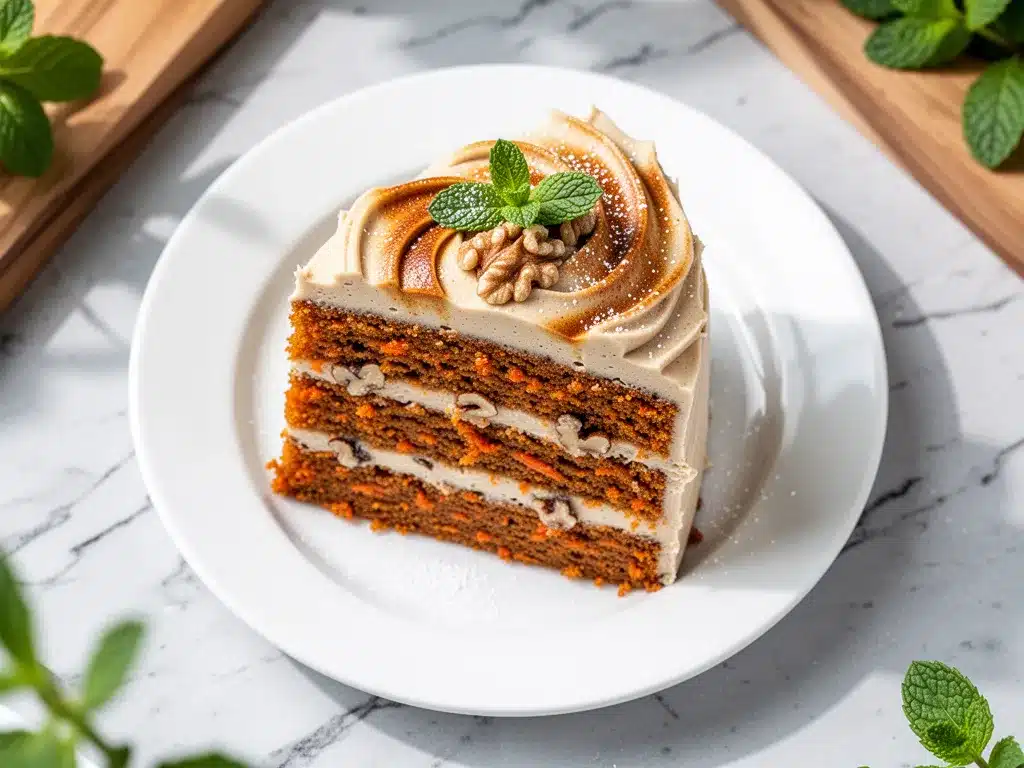
Unsalted butter (1 cup / 2 sticks / 226g) — High quality matters here since it’s the main flavor. I use Kerrygold or Land O’Lakes.
Confectioners’ sugar (4-5 cups / 480-600g) — Sift this! It prevents lumps in your frosting. I usually use about 4 cups for a lighter frosting and 5 cups if you want it stiffer for piping.
Heavy cream (3-4 tablespoons) — Adjust for consistency. Cold cream works best to keep the frosting from melting.
Vanilla extract (1 teaspoon) — Just a touch to complement the brown butter.
Salt (½ teaspoon) — A pinch of salt cuts the sweetness and highlights the nutty butter.
Pro Tip: If you want to add a bit of crunch to the frosting, stir in ½ cup of toasted chopped walnuts. It’s optional, but it adds a lovely texture similar to maple pecan sticky buns.
Equipment Needed
You don’t need a fancy kitchen for this. Here’s what I actually use:
Two 9-inch round cake pans — Grease them well and line the bottoms with parchment paper. This is non-negotiable for easy removal. I use Baker’s Joy spray with flour in it for extra insurance.
Large mixing bowls — One for wet ingredients, one for dry. I use glass bowls because they’re easy to clean and I can see through them.
Box grater or food processor — For the carrots. A food processor with the shredding disk is fastest, but a box grater gives you more control over the texture.
Medium saucepan — For browning the butter. Light-colored stainless steel is best so you can see the color change clearly. If you use a dark pan, you might burn the butter before you realize it.
Whisk — Essential for breaking up the brown butter solids and ensuring even cooling.
Electric mixer or stand mixer — For the frosting. Mixing 5 cups of sugar by hand is a workout you don’t want. I use a hand mixer for speed and control.
Cooling rack — Let the cake cool completely before frosting. Warm cake will melt the frosting instantly.
Parchment paper — For lining pans. It’s cheap and saves you from disaster.
How to Make It: Step-by-Step
Alright, let’s get baking. I’m walking you through exactly how I do it, including the little tricks I’ve picked up over the years.
Step 1: Prep Your Pans and Oven (5 minutes)
Preheat your oven to 350°F (175°C). Grease two 9-inch round cake pans with butter or non-stick spray. Line the bottoms with parchment circles. This ensures the cake doesn’t stick and you can get it out cleanly. Dust the pans lightly with flour if you’re worried, but the parchment is your best friend.
Step 2: Brown the Butter (10 minutes)
This is the most important step. Cut the butter into cubes and put them in a medium saucepan over medium heat. Stir constantly with a whisk. The butter will melt, then foam up, then start to crackle. Watch it closely. You’re looking for the foam to settle and the milk solids at the bottom to turn a deep golden brown. It will smell nutty, like hazelnuts or browned toast. This takes about 5-7 minutes. Once it’s brown, immediately pour it into a heatproof bowl to stop the cooking. If you leave it in the pan, the residual heat will burn it. Let it cool until it’s just warm to the touch, not hot.
Step 3: Mix the Wet Ingredients (3 minutes)
In a large bowl, whisk together the vegetable oil, granulated sugar, and eggs until well combined. Add the vanilla extract and whisk again. The mixture should look smooth and slightly pale. Don’t overmix; you just want it emulsified.
Step 4: Combine Dry Ingredients (2 minutes)
In a separate medium bowl, whisk together the flour, baking soda, baking powder, cinnamon, nutmeg, ginger, and salt. Sifting isn’t strictly necessary if you whisk well, but it helps remove any clumps of baking soda.
Step 5: Make the Batter (3 minutes)
Gradually add the dry ingredients to the wet ingredients, mixing on low speed or stirring by hand until just combined. Do not overmix at this stage, or the cake will be tough. Fold in the grated carrots and walnuts (and raisins if using) with a spatula. The batter will be thick and orange. This is normal.
Step 6: Bake the Cake (30-35 minutes)
Pour the batter evenly into the prepared pans. Bake at 350°F for 30-35 minutes. The cake is done when a toothpick inserted into the center comes out clean or with just a few moist crumbs. Do not overbake, or the cake will be dry. If the tops start browning too quickly, tent them with foil halfway through.
Step 7: Cool Completely (1 hour)
Let the cakes cool in the pans for 10 minutes, then turn them out onto a wire rack to cool completely. This step requires patience. If you try to frost warm cake, the frosting will slide right off. I usually let them cool for at least an hour, sometimes longer.
Step 8: Make the Frosting (10 minutes)
Once the brown butter is cool (but still soft), beat it in a large bowl until creamy. Add the vanilla and salt. Gradually add the sifted confectioners’ sugar, one cup at a time, beating on low speed. Once all the sugar is in, increase to medium-high speed and beat for 2 minutes. Add heavy cream, one tablespoon at a time, until you reach your desired consistency. If you want it thick for piping, use less cream. If you want it fluffy and spreadable, use more. Beat on high for another minute until light and fluffy.
Step 9: Assemble and Decorate
Place one cake layer on your serving plate. Spread a generous layer of frosting on top. Place the second layer on top. Frost the top and sides. I usually do a “naked” cake look with some texture, but a fully frosted cake is classic too. Garnish with extra chopped walnuts or a dusting of cinnamon if you want to get fancy.
Troubleshooting: If your frosting is too thick, add more cream. If it’s too thin, add more sugar. If the brown butter tasted bitter, your cake will be bitter. Next time, take it off the heat sooner.
Expert Tips & Tricks
Here’s everything I’ve learned from making this dozens of times. These tips will save you from my mistakes.
Toast Your Nuts — Before chopping your walnuts, toast them in a dry skillet for 3-5 minutes until fragrant. This brings out their flavor and makes them less likely to go rancid. It’s a small step that makes a big difference.
Don’t Skimp on the Brown Butter — The whole point of this recipe is the brown butter. Don’t skip this step or substitute regular butter. The nutty flavor is what sets this apart from every other carrot cake. But be careful: if you burn the butter, you have to start over. It’s better to under-brown slightly than over-brown.
Grate Your Own Carrots — I cannot stress this enough. Pre-shredded carrots are coated in potato starch to prevent clumping, which absorbs moisture from your cake. Freshly grated carrots release their own juices, keeping the cake moist. It takes 5 minutes, but it’s worth it.
Room Temperature Ingredients — Make sure your eggs and butter (for the frosting) are at room temperature. Cold ingredients don’t emulsify well, leading to a grainy or separated frosting.
Cool Completely — I know it’s tempting to dig in, but wait. Warm cake + cold frosting = melted mess. Use this time to clean up the kitchen or prep your serving plates.
Storage is Key — Carrot cake with cream cheese frosting needs refrigeration. But this brown butter frosting? It’s stable at room temperature for a day, but I recommend refrigerating it anyway because of the fresh carrots. Bring it to room temperature 30 minutes before serving for the best texture.
Variations & Substitutions
Once you’ve nailed the basic version, here’s how you can mix it up. I’ve tried all of these.
Pecan Version — Swap walnuts for pecans. I love the sweeter, richer flavor of pecans. It’s a classic combination.
Coconut Addition — Add 1 cup of shredded coconut to the batter. It adds a tropical twist and extra moisture. Toasted coconut is best.
Cream Cheese Swirl — If you miss cream cheese, you can add a layer of cream cheese frosting between the layers. But keep the top layer brown butter for that nutty finish.
Gluten-Free — Use a 1:1 gluten-free flour blend. The texture will be slightly different, but it still works. I’ve used Bob’s Red Mill and it’s fine.
Dairy-Free Frosting — This is tricky because brown butter is dairy. You can use a high-quality plant-based butter, but the flavor won’t be the same. Honestly, if you’re dairy-free, I’d stick to a coconut cream frosting.
Mini Cakes — You can bake this in muffin tins for 20-25 minutes. Great for parties or portion control.
If you’re a fan of other fall desserts, you might also enjoy these brown butter pumpkin snickerdoodles for a cookie version of the same flavor profile.
Serving & Storage
How to Serve: This cake is beautiful on its own, but I like to serve it with a cup of coffee or tea. The bitterness of the coffee pairs perfectly with the sweet, nutty frosting. I also like to add a dollop of whipped cream on the side for people who want extra richness.
Side Dishes: Since this is a dessert, it doesn’t need sides. But if you’re having a brunch or afternoon tea, pair it with apple cider donut cake or simple fruit tarts for a spread.
Refrigerator: Store in an airtight container in the fridge for up to 5 days. The cake stays moist, and the frosting holds up well. Let it sit at room temperature for 20 minutes before eating for the best flavor.
Freezer: You can freeze unfrosted cake layers wrapped tightly in plastic wrap and foil for up to 3 months. Thaw overnight in the fridge before frosting. Frosted cake freezes okay, but the texture might change slightly. I usually freeze the layers and frost fresh.
Pro Tip: If you’re making this for a party, bake the layers a day ahead. Wrap them tightly and freeze them. Thaw them the day of the party, frost, and you’re done. No stress.
Nutrition Information
I’m not a nutritionist, but here’s the breakdown if you’re tracking. This is a rich dessert, so portion control is key.
Per Serving (based on 12 slices):
- Calories: 480
- Protein: 5g
- Carbs: 52g
- Fiber: 2g
- Sugar: 38g
- Fat: 28g
- Saturated Fat: 12g
- Sodium: 320mg
What’s Good: Carrots provide some vitamins, and walnuts offer healthy fats and protein. It’s a more balanced dessert than a plain chocolate cake.
What to Know: It’s high in sugar and saturated fat due to the butter and sugar content. Treat it as a special occasion treat, not a daily snack.
Final Thoughts
So that’s my take on the classic carrot cake with brown butter frosting. I’ve probably talked your ear off at this point, but when you make a recipe this often, you have a lot to say about it. This cake has saved my dessert game more times than I can count. It’s my answer to “what do I bring to the potluck?” or “what should I bake for my family?” when I want something that feels elevated but is actually easy to make.
Make it yours! Try different nuts, add coconut, or adjust the spices to your taste. The best recipes are the ones you adapt to your family’s preferences. If you make this, drop a comment and let me know what you think! I love hearing how recipes turn out in your kitchen. And if something doesn’t work, tell me that too—I’m here to help troubleshoot.
Happy baking! And I hope your kitchen smells half as good as mine does right now.
Frequently Asked Questions
Can I use oil instead of butter in the cake?
Yes, this recipe uses oil in the batter to keep it moist. Oil is actually better than butter for carrot cake because it doesn’t solidify when cold, so the cake stays soft. Don’t use butter in the batter; it will make the cake denser and drier.
Why did my brown butter taste bitter?
It was likely over-browned. Butter goes from perfect to burnt very quickly. If it tastes bitter, you have to discard it and start over. Next time, take it off the heat when it’s a lighter golden color. The residual heat will continue to brown it slightly.
Can I make this cake ahead of time?
Absolutely. Bake the layers a day ahead, let them cool, wrap them tightly in plastic wrap, and store them at room temperature or in the fridge. Frost them the day you serve. This actually helps the cake settle and makes it easier to frost.
How do I store leftover carrot cake?
Store it in an airtight container in the refrigerator for up to 5 days. Bring it to room temperature before serving for the best texture and flavor. It does not freeze well frosted, but the unfrosted layers freeze beautifully.
Can I use raisins in this recipe?
Yes, but I personally prefer to skip them. They can make the cake soggy if you don’t plump them up first. If you want to use them, soak them in warm water for 10 minutes, then drain and pat dry before adding to the batter.
What kind of nuts are best?
Walnuts are traditional and provide a nice crunch. Pecans are sweeter and pair well with the brown butter. You can also use a mix of both. Just make sure to chop them finely so they distribute evenly throughout the cake.
Can I double this recipe?
Yes, you can double the recipe and bake it in two 9-inch pans, or use a 9×13 pan for a sheet cake. If using a 9×13 pan, the baking time will increase by about 10 minutes. Keep an eye on it.
Pin This Recipe!
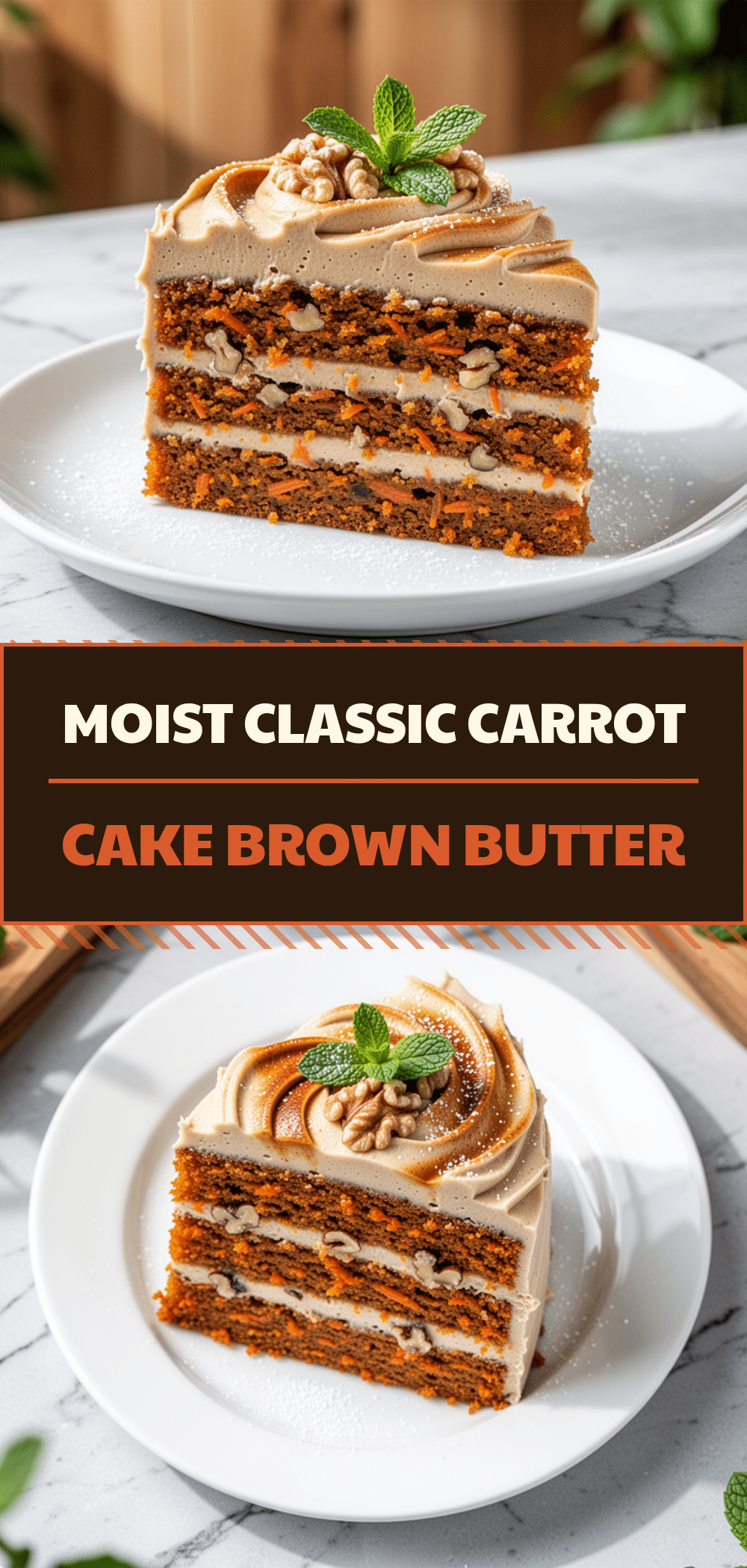
Classic Carrot Cake with Brown Butter Frosting
- Total Time: 1 hour 5 minutes
- Yield: 12 servings 1x
Description
A moist, spiced carrot cake topped with a sophisticated, nutty brown butter frosting that is lighter than traditional cream cheese frosting but infinitely more flavorful.
Ingredients
- 1 cup vegetable oil
- 1 ½ cups granulated sugar
- 4 large eggs, room temperature
- 2 teaspoons vanilla extract
- 2 cups all-purpose flour
- 2 teaspoons baking soda
- 1 teaspoon baking powder
- 2 teaspoons ground cinnamon
- ½ teaspoon ground nutmeg
- ½ teaspoon ground ginger
- 1 teaspoon salt
- 3 cups freshly grated carrots
- 1 cup chopped walnuts
- ½ cup raisins (optional)
- 1 cup unsalted butter (for frosting)
- 4–5 cups confectioners’ sugar, sifted (for frosting)
- 3–4 tablespoons heavy cream (for frosting)
- 1 teaspoon vanilla extract (for frosting)
- ½ teaspoon salt (for frosting)
Instructions
- Preheat oven to 350°F (175°C). Grease two 9-inch round cake pans and line bottoms with parchment paper.
- Brown the butter: Melt butter in a medium saucepan over medium heat, stirring constantly until foam settles and milk solids turn deep golden brown and nutty (5-7 minutes). Immediately pour into a heatproof bowl to stop cooking and let cool until just warm.
- In a large bowl, whisk together vegetable oil, granulated sugar, and eggs until smooth. Add vanilla extract and whisk again.
- In a separate medium bowl, whisk together flour, baking soda, baking powder, cinnamon, nutmeg, ginger, and salt.
- Gradually add dry ingredients to wet ingredients, mixing until just combined. Fold in grated carrots and walnuts (and raisins if using).
- Pour batter evenly into prepared pans. Bake for 30-35 minutes or until a toothpick inserted into the center comes out clean. Tent with foil if tops brown too quickly.
- Let cakes cool in pans for 10 minutes, then turn out onto a wire rack to cool completely.
- Make frosting: Beat cooled brown butter until creamy. Add vanilla and salt. Gradually add confectioners’ sugar, beating on low speed. Increase to medium-high and beat for 2 minutes. Add heavy cream one tablespoon at a time until desired consistency is reached. Beat on high for another minute until light and fluffy.
- Assemble: Place one cake layer on serving plate, spread frosting on top, add second layer, and frost top and sides. Garnish with extra walnuts or cinnamon if desired.
Notes
Use freshly grated carrots, not pre-shredded, for best moisture. Ensure brown butter is cooled but still soft before making frosting. Cake improves in flavor after sitting overnight. Store in refrigerator for up to 5 days.
- Prep Time: 30 minutes
- Cook Time: 35 minutes
- Category: Dessert
- Cuisine: American
Nutrition
- Serving Size: 1 slice
- Calories: 480
- Sugar: 38
- Sodium: 320
- Fat: 28
- Saturated Fat: 12
- Carbohydrates: 52
- Fiber: 2
- Protein: 5
Keywords: carrot cake, brown butter frosting, moist carrot cake, walnut cake, fall dessert, homemade cake, baking recipe