It was 7:30 PM on a Tuesday, and I was staring at my phone with the delivery app open, debating between the usual Thai takeout or something healthier. I was tired. My kids were arguing over who got the bigger slice of pizza crust. The house was a mess, and the last thing I wanted to do was cook. But I also knew that ordering out every night was going to hit my wallet—and my waistline—hard.
So I closed the app, walked to the pantry, and started throwing things together. I had rice noodles. I had shrimp. I had that weird jar of tamarind paste sitting in the back of my spice rack that I’d been meaning to use for six months. I threw together a sauce, boiled some noodles, and panicked when the wok smoked up the kitchen. But then, I added the peanuts, the lime, and that crucial splash of fish sauce, and suddenly, the smell changed. It wasn’t just “dinner.” It smelled like the bustling street food stalls in Bangkok.
That was three years ago. Since then, I’ve made this Restaurant-Style Pad Thai with Tangy Tamarind Sauce probably fifty times. And I’m not saying that to brag. I’m saying it because it’s the only reason I haven’t given up on home cooking on busy weeknights. It’s faster than waiting for a delivery driver to find my house. It’s healthier. And honestly? It tastes better than 90% of the Thai restaurants in my city.
Here’s the thing about Pad Thai: people think it’s complicated. They think you need a wok, a blowtorch, and a degree in culinary arts. But the secret isn’t the technique. It’s the sauce. Once you nail that balance of sweet, sour, salty, and spicy, you can make magic with whatever protein and veggies you have on hand. This isn’t just a recipe; it’s my weekly salvation. And once you try it, you’ll be adding it to your rotation too.
Why You’ll Love This Pad Thai Recipe
There are a lot of reasons I keep coming back to this dish, but they all boil down to one thing: it just works. No stress, no weird ingredients you can’t find, and absolutely no takeout bags cluttering the counter.
- Lightning Fast — Seriously. From the moment I take the rice noodles out of the package to the moment we’re eating, it’s 20 minutes. That’s it. I’ve timed it. I even make this when I’m running late from work.
- One-Wok Wonder — You only need one pan. One. That means one thing to wash. For a mom of three, this is basically a religious experience. I don’t care if it’s “restaurant quality” if I have to scrub five pans to get it there.
- Customizable for Picky Eaters — My son hates tofu? No problem, we use chicken. My daughter is allergic to peanuts? We skip them or use sunflower seeds. This recipe bends to your family’s needs without losing flavor. It’s the ultimate crowd-pleaser.
- Uses What You Have — You probably have half the ingredients for this already. Rice noodles, eggs, green onions, peanuts. The sauce uses pantry staples like tamarind, soy sauce, and sugar. It’s a “clean out the fridge” meal that tastes gourmet.
- Actually Healthy(ish) — It’s lighter than fried rice or creamy curries. You get protein from the shrimp or chicken, carbs from the noodles, and veggies from the bean sprouts. It feels like a treat, but it’s not a heavy, sluggish dinner.
This is my go-to when I need dinner to just work. It’s reliable, delicious, and makes my kitchen smell incredible without taking over my entire evening. Plus, the leftovers? Amazing cold or reheated. I’ve packed this for lunch at least ten times, and my coworkers still ask for the recipe.
Ingredients You’ll Need for the Best Pad Thai
Here’s the best part: you don’t need a trip to a specialty Asian market for most of this. I’m particular about three ingredients here—the noodles, the tamarind, and the fish sauce—and I’ll tell you exactly why they matter. But for everything else, your local grocery store will do just fine.
For the Noodles
Rice noodles (flat, 6mm wide) (8 oz / 225g) — This is non-negotiable. Look for “medium” or “flat” rice noodles. They’re often in the Asian aisle or the international section. Don’t use the vermicelli (thin) noodles; they get mushy too fast. Don’t use the wide rice sticks (like for Pho); they’re too thick. You want that perfect chewy bite. I buy a 1-pound bag and freeze the rest because they keep forever.
For the Tangy Tamarind Sauce
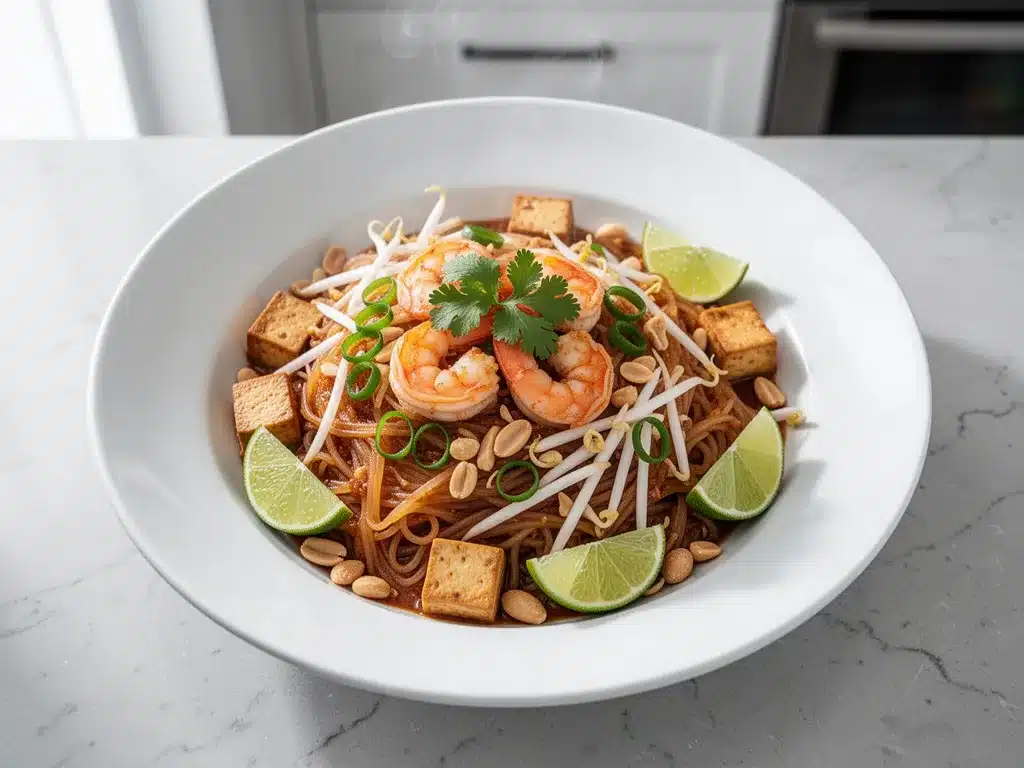
Tamarind paste (3 tablespoons / 45g) — This is the heart of the flavor. It’s sour, fruity, and deeply complex. Look for it in the spice aisle or near the Asian ingredients. If you can’t find it, some brands sell tamarind concentrate in bottles, which works too. Avoid “tamarind candy” or blocks that need soaking unless you’re feeling adventurous.
Fish sauce (2 tablespoons / 30ml) — Yes, it smells strong. No, it won’t make your dish taste like fish. It adds saltiness and umami. I use Red Boat brand because it’s pure and high quality. If you’re vegetarian, use soy sauce or a vegan fish sauce, but the flavor profile will change slightly.
Brown sugar (2 tablespoons / 25g) — I love the molasses notes it adds. White sugar works, but brown sugar gives it that caramel-like depth that matches the tamarind perfectly.
Lime juice (2 tablespoons / 30ml) — Fresh squeezed. Always. Bottled lime juice tastes like cleaning product in this context. Squeeze two limes and strain it. It brightens up the heavy sauce.
Soy sauce (1 tablespoon / 15ml) — Adds extra salt and color. I use regular Kikkoman, but coconut aminos work for a lower-sodium option.
For the Stir-Fry
Shrimp or Chicken (1 lb / 450g) — I usually use a mix. Shrimp cooks fast and adds luxury. Chicken breast is cheaper and leaner. Cut shrimp in half if they’re large so they cook evenly. Slice chicken thinly against the grain.
Eggs (2 large) — Scrambled into the noodles. Classic Pad Thai move. I crack them directly into the wok while the noodles are cooking.
Bean sprouts (2 cups / 100g) — Fresh is best. They add crunch and freshness. If you can’t find fresh, bagged sprouts work, but rinse them well.
Green onions (3 stalks, chopped) — The whites go in early for flavor, the greens go on top for garnish. Don’t skip the greens; they look pretty and taste fresh.
Garlic and Ginger (3 cloves garlic, 1 teaspoon ginger, minced) — Fresh garlic and ginger are essential. Jarred ginger is too weak here. Mince them finely so they distribute evenly.
Crushed peanuts (½ cup / 50g) — For garnish. Salted or unsalted, your choice. I like a mix of crushed and whole for texture. Cashews work if you’re allergic to peanuts, but it’s not traditional.
Vegetable oil (2 tablespoons) — For frying. Peanut oil is ideal because it has a high smoke point and complements the peanuts, but canola or avocado oil works fine.
Equipment Needed
You don’t need fancy equipment for this. Here’s what I actually use.
Large Wok or Skillet — A 12-inch wok is ideal because the curved sides help toss the noodles. But a large non-stick skillet or even a cast-iron pan works perfectly. I use a well-seasoned carbon steel wok, but my non-stick skillet is easier to clean.
Large Pot — For boiling the rice noodles. Any big pot will do. I use a 6-quart stockpot.
Colander — For rinsing the cooked noodles. Or just use a sieve.
Sharp Knife — For slicing chicken and chopping green onions. Dull knives are dangerous and frustrating. Keep it sharp.
Wooden Spoon or Spatula — For stirring. Silicone is fine too. Metal can scratch non-stick pans.
Mixing Bowl — For mixing the sauce beforehand. Having it ready goes a long way.
Small Bowl — For holding the crushed peanuts for garnish.
Optional but nice:
- Tongs — For tossing the noodles. Makes it easier than a spoon.
- Lime juicer — If you squeeze a lot of limes, this tool saves your hands.
How to Make It: Step-by-Step
Alright, let’s make this! I’m walking you through exactly how I do it, including the little tricks I’ve picked up over the years.
Step 1: Prep the Noodles (5 minutes)
This is the most important step. Bring a large pot of water to a boil. Turn off the heat. Add the rice noodles and let them soak for 5-7 minutes. Do NOT boil the noodles! Boiling makes them mushy. You want them pliable and tender but still firm. Drain them and rinse under cold water to stop the cooking. Toss them with a teaspoon of oil to prevent sticking. Set aside. This might seem weird, but it’s the secret to perfect texture.
Step 2: Make the Sauce (2 minutes)
In a small bowl, whisk together the tamarind paste, fish sauce, brown sugar, lime juice, and soy sauce. Stir until the sugar is dissolved. Taste it. It should be a balance of sour, sweet, and salty. If it’s too sour, add more sugar. Too salty? Add a splash of lime or water. Adjust to your liking. This sauce is the soul of the dish.
Step 3: Cook the Protein (3-4 minutes)
Heat the vegetable oil in your wok or skillet over medium-high heat. Add the shrimp or chicken. Season with a pinch of salt. Cook until just done—about 2-3 minutes for shrimp, 3-4 for chicken. Don’t overcook it! Remove the protein from the pan and set it aside on a plate. Leaving it in the pan while you cook the veggies can make it rubbery.
Step 4: Aromatics and Eggs (2 minutes)
In the same pan, add a little more oil if needed. Add the garlic and ginger. Stir-fry for 30 seconds until fragrant. Push the aromatics to the side and crack the eggs into the empty space. Scramble them quickly, breaking them into small curds. Once the eggs are cooked but still soft, mix them with the garlic and ginger.
Step 5: Combine Everything (3-4 minutes)
Add the soaked noodles to the pan. Pour the sauce over the noodles. Use tongs or a spatula to toss everything together. The noodles will absorb the sauce quickly. Add the cooked protein back in. Toss for 1-2 minutes until everything is heated through and coated in sauce. If the noodles seem dry, add a splash of water. If they’re too wet, let them cook a bit longer to evaporate.
Step 6: Add the Crunch (1 minute)
Turn off the heat. Add half of the bean sprouts and the green onion whites. Toss one last time. The residual heat will wilt the sprouts slightly but keep them crunchy.
Step 7: Serve
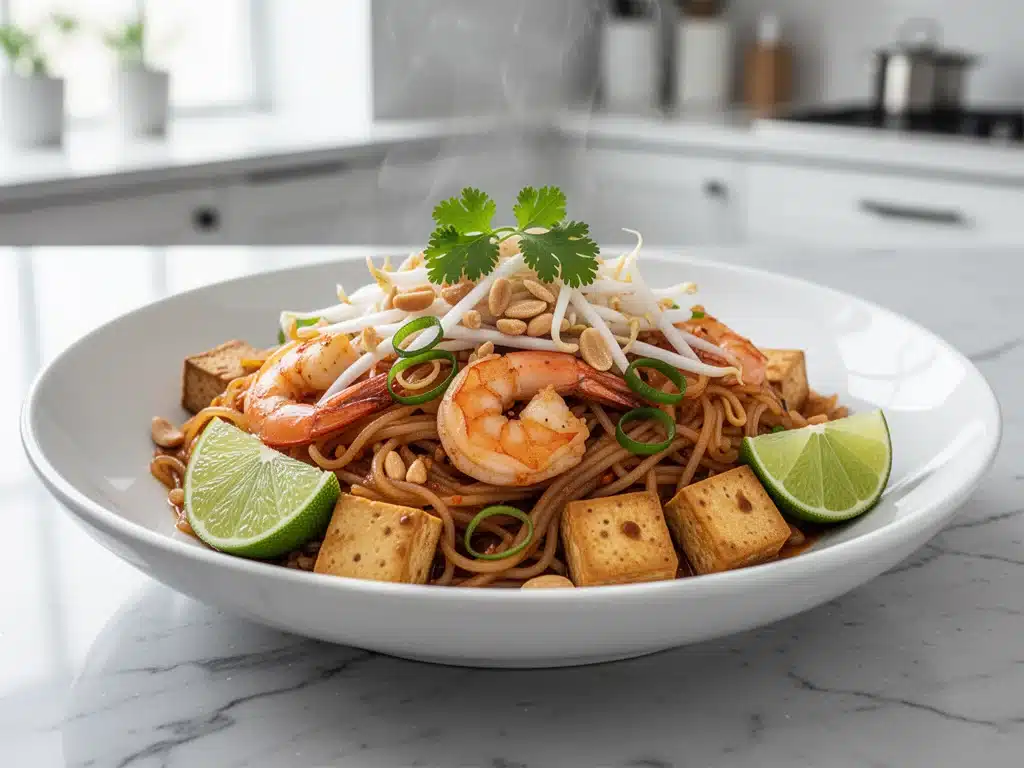
Plate the Pad Thai immediately. Top with the remaining bean sprouts, crushed peanuts, and green onion greens. Serve with lime wedges on the side. Squeeze fresh lime over the top before eating. It’s that simple.
Total Time: About 20 minutes (5 minutes prep, 15 minutes cooking)
Expert Tips & Tricks
Here’s everything I’ve learned from making this dozens of times. These tips will save you from my mistakes.
Don’t Boil the Noodles
I cannot stress this enough. Soaking them in hot water is the key. If you boil them, they turn to mush. If you don’t soak them long enough, they’re too hard. Aim for a chewy, al dente texture. They’ll finish cooking in the wok.
High Heat is Your Friend
Pad Thai is a stir-fry. You want that “wok hei” or breath of the wok flavor. Keep the heat medium-high. Don’t crowd the pan. If you’re cooking for a crowd, cook in batches. Overcrowding steams the food instead of frying it.
Balance is Key
The sauce needs to be bold. When you taste it before adding it to the pan, it should taste slightly too strong. The noodles and protein will dilute the flavor. If the sauce tastes perfect on its own, it’ll be bland on the noodles.
Room Temperature Ingredients
If your sauce ingredients are cold, they can cool down the pan too quickly. Let your lime juice and fish sauce sit out for a few minutes while you prep. It helps maintain the cooking temperature.
Common Mistakes (and how to avoid them)
- Mistake: Noodles are clumpy Fix: Toss them with oil after rinsing. Don’t let them sit in a pile without moving.
- Mistake: Sauce is too thin Fix: Cook it longer. The liquid needs to reduce and coat the noodles. If it’s too thick, add a splash of water.
- Mistake: Protein is rubbery Fix: Don’t overcook. Shrimp turns opaque and pink quickly. Remove it as soon as it’s done.
Pro Tricks I’ve Learned
- For Restaurant Finish Add a tablespoon of sesame oil at the very end and swirl it in. It adds a nutty aroma that elevates the dish.
- For Extra Flavor Toast the peanuts in a dry pan before crushing them. It brings out their natural oils and makes them more flavorful.
- For Better Texture Use fresh bean sprouts, not the bagged kind if you can help it. The crunch is incomparable.
Variations & Substitutions
Once you’ve nailed the basic version, here’s how you can mix it up. I’ve tried all of these.
Tofu Pad Thai
Swap the shrimp/chicken for firm tofu. Press the tofu first, then cube it. Pan-fry the tofu until crispy before adding the sauce. It absorbs the tamarind flavor beautifully. This is my favorite vegetarian version.
Vegetable-Loaded
Add sliced carrots, bell peppers, or mushrooms. Sauté the harder veggies (carrots) with the protein, and add softer veggies (peppers) with the noodles. It adds color and nutrition.
Spicy Kick
Add a teaspoon of chili flakes or sriracha to the sauce. Or garnish with sliced fresh chilies. If you like heat, this is the way to go. I add a pinch of red pepper flakes to the aromatics.
Lighter Version
Use less oil and more veggies. Swap half the noodles for zucchini noodles (zoodles) for a low-carb option. It’s not traditional, but it works if you’re watching calories.
Dietary Modifications
- Gluten-Free This recipe is naturally gluten-free if you use tamari instead of soy sauce and ensure your fish sauce is GF. Rice noodles are GF.
- Dairy-Free This recipe is naturally dairy-free.
- Vegan Use tofu, soy sauce, and vegan fish sauce (or just extra soy sauce and sugar). Skip the eggs or use chickpea flour scramble.
Serving & Storage
How to Serve:
I usually serve this straight from the wok at the dinner table—it looks rustic and stays warm. But here are other ways I’ve enjoyed it:
- Side Dishes: Simple cucumber salad, steamed broccoli, or a light green salad with rice vinegar dressing.
- Toppings Bar: When I have guests, I put out: extra peanuts, chili flakes, lime wedges, fresh cilantro, and bean sprouts. Everyone customizes their bowl.
- Wine Pairing: Not a wine expert, but my wine-snob friend says a crisp Riesling or a dry Pinot Grigio works great with the spicy and sour flavors.
Storage Instructions:
Refrigerator:
Store in an airtight container for up to 3 days. The noodles will absorb the sauce and get softer, which some people love. Others prefer it fresh. I usually reheat it the next day and it’s still good.
Reheating:
Best method: Add to a skillet with a splash of water or broth over medium heat. Stir until heated through. The water rehydrates the noodles. Microwave method: Heat in 30-second intervals, stirring between. Add a splash of water. It can get dry, so be careful.
Freezing:
Honestly, this doesn’t freeze well. The bean sprouts get soggy, and the noodles can become mushy when thawed. Make it fresh or store in the fridge for up to 3 days.
Pro tip: If leftovers are drying out, stir in a teaspoon of sesame oil when reheating. Brings back that restaurant aroma.
Nutrition Information
I’m not a nutritionist, but here’s the breakdown if you’re tracking.
Per Serving (based on 4 servings):
| Nutrient | Amount |
|---|---|
| Calories | 450 |
| Protein | 25g |
| Carbs | 55g |
| Fiber | 3g |
| Sugar | 12g |
| Fat | 15g |
| Sodium | 600mg |
What’s Good:
- Decent protein from shrimp/chicken and eggs.
- Contains vegetables from bean sprouts and green onions.
- Can be made lower-carb by reducing noodles.
What to Know:
- Higher in sodium from fish sauce and soy sauce. Use low-sodium versions if needed.
- Contains dairy? No, but contains eggs and shellfish.
- Moderate calories, mostly from carbs and fats.
My Take:
Look, this is comfort food. It’s not a diet recipe. But it’s way better than takeout, costs less, and I know exactly what’s in it. When I want to make it lighter, I double the veggies and use less noodles. But usually? I just eat a reasonable portion and enjoy it.
Final Thoughts
So that’s my go-to Restaurant-Style Pad Thai with Tangy Tamarind Sauce! I’ve probably talked your ear off at this point, but when you make a recipe this often, you have a lot to say about it.
This has saved weeknight dinners more times than I can count. It’s my answer to “what’s for dinner” when I’m tired, don’t want takeout, and still want something that tastes really good. My kids are happy, my husband’s happy, and I’m happy because I’m not stressed about cooking.
Make it yours! Try different add-ins, swap in your favorite vegetables, adjust the spice level. The best recipes are the ones you adapt to your family’s tastes.
If you make this, drop a comment and let me know what you think! I love hearing how recipes turn out in your kitchen. And if something doesn’t work, tell me that too—I’m here to help troubleshoot.
Happy cooking! And I hope your kitchen smells half as good as mine does right now.
Frequently Asked Questions
Q: Can I use glass noodles instead of rice noodles?
A: You can, but the texture will be different. Glass noodles (mung bean noodles) are chewier and don’t absorb the sauce the same way. Rice noodles are soft and silky. For authentic Pad Thai, stick with rice noodles. If you use glass noodles, soak them in warm water for 15 minutes instead of boiling.
Q: What is tamarind paste, and where do I find it?
A: Tamarind paste is made from the pulp of the tamarind tree. It’s sour, sweet, and tangy. It’s the key ingredient that gives Pad Thai its distinctive flavor. You can find it in the spice aisle of most grocery stores, near the international foods, or in Asian markets. Look for a thick, dark paste. Avoid the sweetened tamarind candy.
Q: Can I make this ahead for a dinner party?
A: Sort of. Prep the sauce and chop the veggies ahead of time. Cook the noodles by soaking them in hot water. When it’s time to serve, just stir-fry everything together. It takes 15 minutes. I do this all the time for parties. Just don’t cook the noodles too far in advance, or they’ll stick together.
Q: Why did my noodles stick together?
A: Usually means they weren’t rinsed well after soaking, or they weren’t tossed with oil. Rinse them under cold water to remove excess starch. Toss them with a teaspoon of oil immediately after draining. This prevents clumping.
Q: Can I use bottled lime juice?
A: You can, but fresh is so much better. Bottled lime juice has preservatives that can taste bitter or metallic. Fresh lime juice adds a bright, clean acidity that balances the rich sauce. Squeeze two limes—it takes 2 minutes and makes a huge difference.
Q: How do I reheat leftovers without it getting dry?
A: Add a splash of water or broth to a skillet, add your leftover Pad Thai, and heat gently over medium heat, stirring frequently. The extra liquid rehydrates the noodles. Microwave sort of works but tends to dry it out. If you do microwave, definitely add a splash of water first and heat in short bursts, stirring between.
Q: Can I double this recipe?
A: Absolutely! Double everything and use your biggest wok or skillet. The cooking times stay the same. I do this when I’m meal-prepping or feeding a crowd. Just make sure your pan is big enough for the noodles—you might need to cook in batches if your pan is small.
Pin This Recipe!
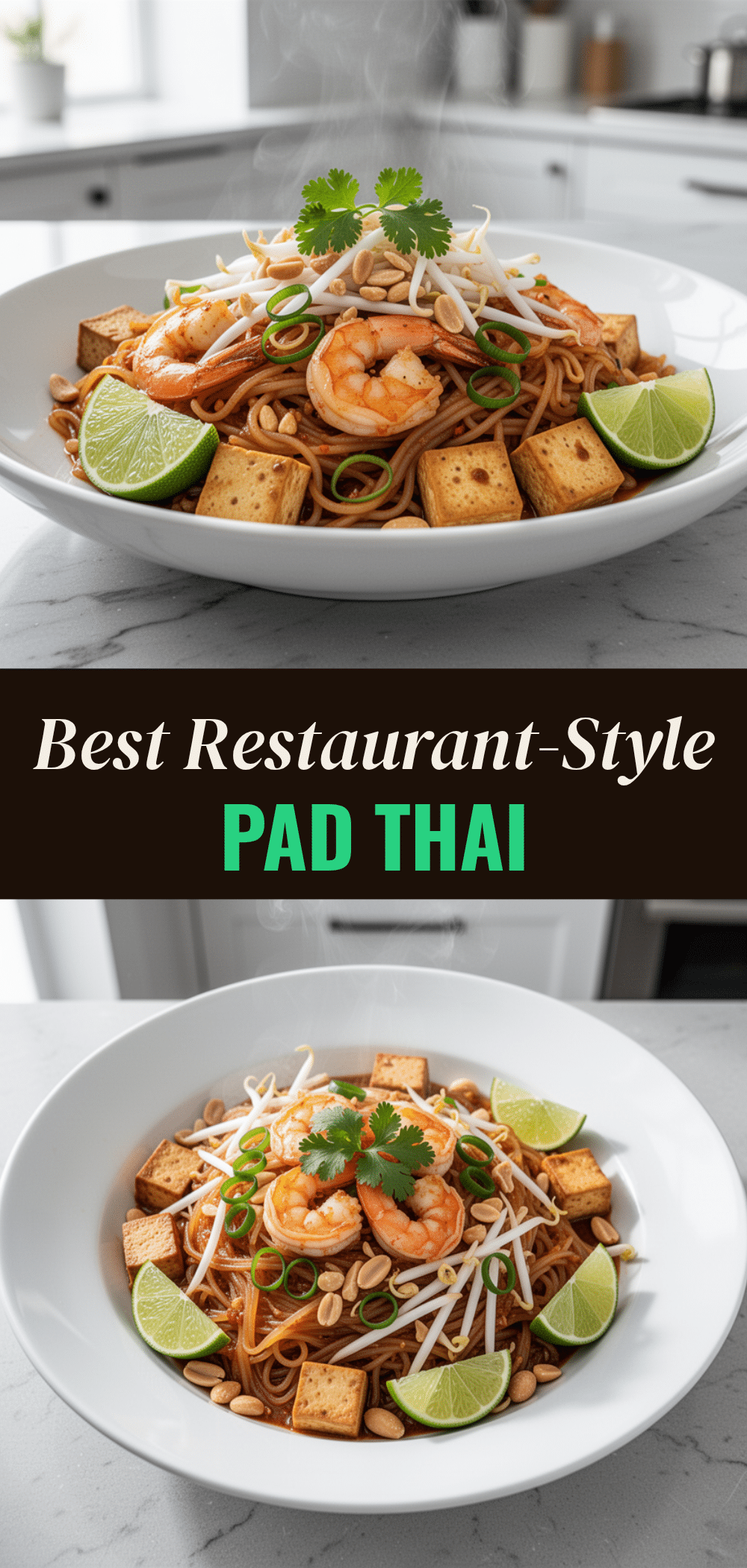
Restaurant-Style Pad Thai: Best Easy Weeknight Recipe
- Total Time: 20 minutes
- Yield: 4 servings 1x
Description
A quick, customizable, and healthier alternative to takeout, this restaurant-style Pad Thai features a tangy tamarind sauce, rice noodles, and your choice of protein, ready in just 20 minutes.
Ingredients
- 8 oz (225g) flat rice noodles (6mm wide)
- 3 tablespoons (45g) tamarind paste
- 2 tablespoons (30ml) fish sauce
- 2 tablespoons (25g) brown sugar
- 2 tablespoons (30ml) fresh lime juice
- 1 tablespoon (15ml) soy sauce
- 1 lb (450g) shrimp or chicken, sliced
- 2 large eggs
- 2 cups (100g) fresh bean sprouts
- 3 stalks green onions, chopped
- 3 cloves garlic, minced
- 1 teaspoon ginger, minced
- ½ cup (50g) crushed peanuts
- 2 tablespoons vegetable oil
Instructions
- Bring a large pot of water to a boil, then turn off the heat. Add rice noodles and soak for 5-7 minutes until pliable but firm. Drain, rinse under cold water, toss with a teaspoon of oil, and set aside.
- In a small bowl, whisk together tamarind paste, fish sauce, brown sugar, lime juice, and soy sauce until the sugar is dissolved. Adjust sweetness or saltiness to taste.
- Heat vegetable oil in a wok or skillet over medium-high heat. Add shrimp or chicken and season with salt. Cook until just done (2-3 minutes for shrimp, 3-4 for chicken), then remove and set aside.
- Add a little more oil to the pan if needed. Add garlic and ginger, stir-frying for 30 seconds until fragrant. Push aromatics to the side and scramble eggs in the empty space until soft. Mix eggs with aromatics.
- Add soaked noodles to the pan and pour the sauce over them. Toss to coat. Return cooked protein to the pan and toss for 1-2 minutes until heated through. Add a splash of water if too dry.
- Turn off the heat. Stir in half of the bean sprouts and green onion whites.
- Plate immediately. Top with remaining bean sprouts, crushed peanuts, and green onion greens. Serve with lime wedges on the side.
Notes
Do not boil the rice noodles; soaking them in hot water prevents them from becoming mushy. Ensure the sauce is bold before adding to the pan, as the noodles will dilute the flavor. For a vegetarian version, swap protein for firm tofu and use soy sauce instead of fish sauce. Leftovers do not freeze well.
- Prep Time: 5 minutes
- Cook Time: 15 minutes
- Category: Main Course
- Cuisine: Thai
Nutrition
- Serving Size: 1 plate
- Calories: 450
- Sugar: 12
- Sodium: 600
- Fat: 15
- Saturated Fat: 3
- Carbohydrates: 55
- Fiber: 3
- Protein: 25
Keywords: Pad Thai, Thai food, weeknight dinner, easy recipe, tamarind sauce, rice noodles, stir fry, healthy takeout alternative