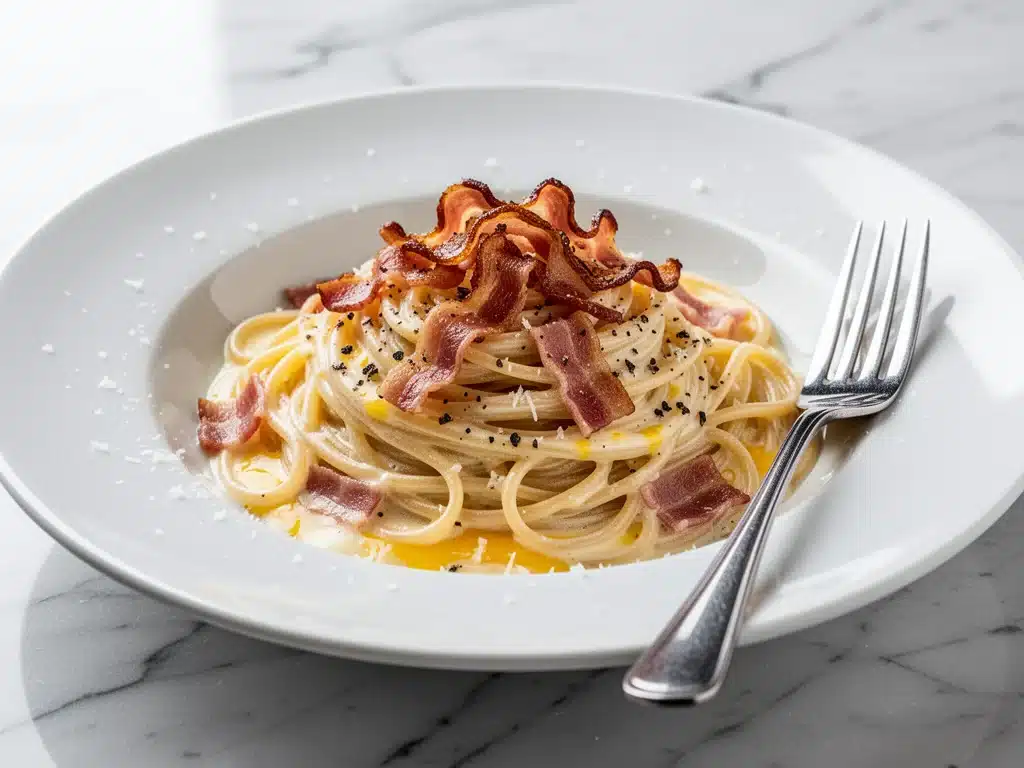
I still remember the first time I made authentic Italian carbonara in a cramped apartment kitchen in Rome. It was a Tuesday, the light was fading through the window, and I was terrified of ruining it. My host mother, a woman who had made this dish a thousand times, watched me with an amused smile as I reached for the cream. That’s when she stopped me. “No cream,” she said firmly, tapping the side of her nose. “Just eggs, cheese, pork, and pepper. The cream is a crutch for people who are afraid of technique.”
I was embarrassed, sure, but that moment changed how I cook forever. I spent the next few weeks experimenting, burning eggs, making scrambled pasta, and generally failing until I finally got it right. And let me tell you, the first time I tasted that silky, glossy sauce clinging to perfectly cooked spaghetti with crispy pancetta? I cried. Not a dramatic movie cry, but a happy, “I actually did it” kind of cry.
This authentic Italian carbonara recipe is the result of years of trial, error, and a lot of delicious mistakes. It’s better than takeout, obviously, because you control the quality of the pork and the freshness of the eggs. But more than that, it’s faster. You can have dinner on the table in 20 minutes. It’s one of those recipes that feels fancy but is actually incredibly simple. If you’ve been intimidated by the “science” of carbonara, I’m here to tell you: you can do this. I’ve made it dozens of times since that night in Rome, and I’ve refined it until it’s foolproof.
Why You’ll Love This Recipe
There are about a dozen reasons I keep coming back to this carbonara, but here are the big ones that make it a weeknight staple for me.
It’s Actually Authentic — No cream. No peas. No garlic (unless you want to, but purists will judge). Just eggs, Pecorino Romano, guanciale (or pancetta), and black pepper. This is how it’s supposed to be made in Italy. It’s a lesson in how few ingredients can create something complex and rich.
Crispy Pancetta is Non-Negotiable — I’m particular about the pork. You need that crispy, salty contrast to the soft pasta. I’ve tested different cooking methods, and rendering the fat slowly over medium heat gives you the perfect crunch without burning the meat. It’s the texture that makes this dish sing.
Ready in 20 Minutes — This is the ultimate weeknight savior. You chop, you boil water, you mix eggs, you toss. It’s faster than waiting for a delivery driver, and it tastes infinitely better. I make this on nights when I’m tired but still want to feel like a good cook.
Technique-Driven, Not Ingredient-Driven — You don’t need fancy equipment or hard-to-find items. Just a good skillet, a whisk, and some spaghetti. The magic is in the method—specifically, how you temper the eggs. Once you learn this, you’ll feel like a pro.
This recipe has saved me from takeout fatigue more times than I can count. It’s my go-to when I want something comforting, rich, and deeply satisfying without spending hours in the kitchen.
Ingredients You’ll Need
Here’s the best part: you probably have most of this already. Authentic carbonara relies on high-quality ingredients because there’s nowhere to hide. If your ingredients are mediocre, the dish will be mediocre. So let’s be specific.
For the Pasta
Spaghetti (1 pound / 450g) — I use Buitoni or De Cecco. Both cook evenly and have the right bite. You can use rigatoni or fettuccine if you prefer, but spaghetti is traditional. The shape matters because it holds the sauce well.
Water (lots of it) — You need a big pot. The pasta needs room to swim. Don’t crowd it.
Salt (1 tablespoon) — Your pasta water should taste like the ocean. This is the only chance to salt the pasta itself. Undersalted pasta tastes bland no matter how good your sauce is.
For the Sauce
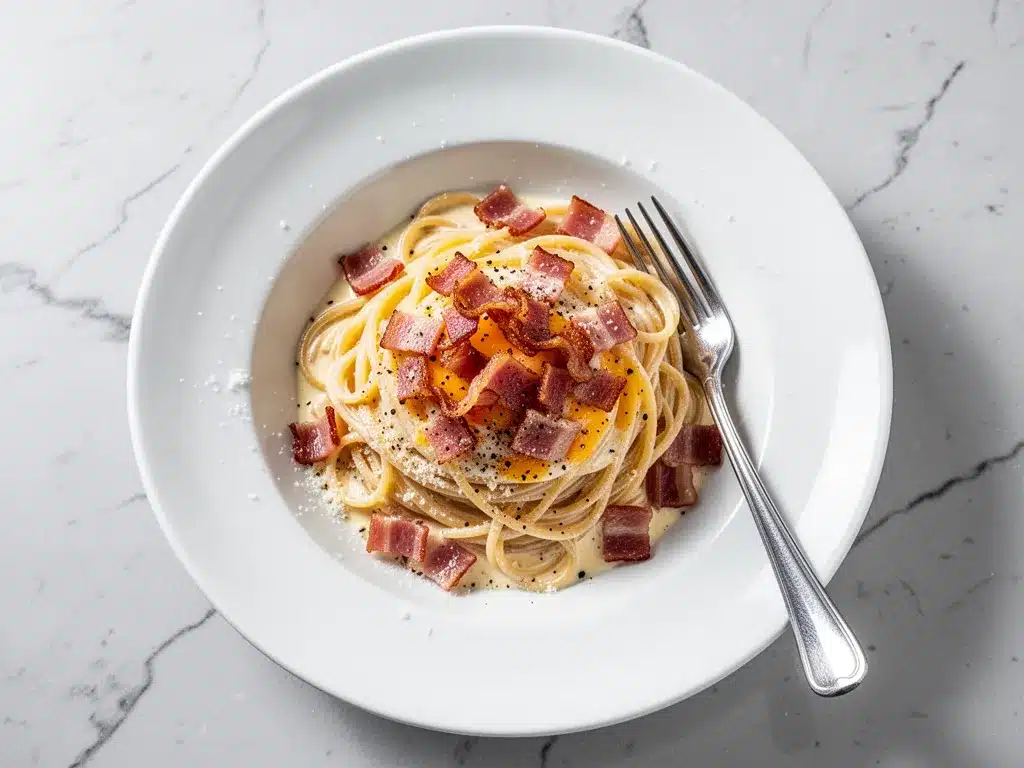
Egg Yolks (4 large yolks) — I use only yolks for a richer, creamier sauce. Some people use whole eggs, but yolks give that luxurious texture. If you want to use whites, go ahead, but the sauce will be lighter. I prefer the richness.
Pecorino Romano (1 cup / 100g, freshly grated) — This is a sheep’s milk cheese, salty and sharp. Do not use Parmesan if you want it authentic. Parmesan is sweeter and milder. Pecorino cuts through the richness of the eggs and pork. Grate it yourself. Pre-grated cheese has anti-caking agents that make the sauce grainy.
Black Pepper (1 teaspoon, freshly cracked) — Use coarse grind. You want to taste the pepper. Toasting it in the pan first releases its oils and makes it more aromatic. This is crucial.
For the Pork
Pancetta (8 ounces / 225g) — I use smoked pancetta for a deeper flavor, but unsmoked is more traditional in Rome. If you can find guanciale (cured pork jowl), use that! It’s the authentic choice. But pancetta works beautifully and is easier to find. Cut it into small cubes or strips. You want those crispy bits.
Optional: Olive Oil (1 teaspoon) — Only if your pancetta is very lean. Most pancetta has enough fat to render on its own.
Personal Tip: I always buy the block of Pecorino and grate it with a microplane. It melts into the sauce so much better than the coarse grates from a box grater. It’s worth the extra two minutes.
Equipment Needed
You don’t need fancy equipment for this. Here’s what I actually use.
Large Skillet or Dutch Oven — I use a 12-inch stainless steel skillet. It needs to be big enough to toss the pasta with the pancetta and sauce. Non-stick works too, but stainless steel gives you better browning on the pork.
Large Pot — For boiling the pasta. A 6-quart pot is ideal. You need enough water so the pasta doesn’t stick.
Whisk — Essential for mixing the egg and cheese mixture smoothly. No lumps allowed.
Tongs — For turning the pasta and tossing it with the sauce. Forks work, but tongs are faster and less messy.
Microplane or Fine Grater — For the Pecorino. As I said, grate it yourself.
Measuring Cups and Spoons — Standard stuff. Dollar store versions work fine.
Optional: Pasta Water Cup — I keep a small mug near the stove to scoop out starchy pasta water. This liquid gold is the secret to a silky sauce.
How to Make It: Step-by-Step
Alright, let’s make this! I’m walking you through exactly how I do it, including the little tricks I’ve picked up over the years.
Step 1: Prep Your Ingredients (5 minutes)
Before you turn on the stove, get everything ready. Cut the pancetta into small cubes. Grate the Pecorino. Crack the egg yolks into a bowl and whisk them with the cheese and a generous amount of black pepper. The mixture should be thick and paste-like. Set this aside. I know it seems fussy, but once the pasta is cooked, things move fast. You don’t want to be chopping while the pasta is boiling.
Step 2: Render the Pancetta (8 minutes)
Place the cold skillet over medium heat. Add the pancetta. There’s no need for oil if you’re using fatty pancetta. Let it cook slowly, stirring occasionally. You want the fat to render out and the meat to turn golden and crispy. This takes about 8-10 minutes. Do not rush this step. If the heat is too high, the pork will burn before it crisps. Once it’s crispy, remove it from the pan with a slotted spoon, leaving the rendered fat in the skillet. Set the pork aside on a plate.
Step 3: Toast the Pepper (1 minute)
While the pancetta is cooking, you can toast the pepper. Add the cracked black pepper to the hot fat in the skillet. Stir for 30 seconds to 1 minute. You’ll smell it get incredibly fragrant. This releases the essential oils and makes the pepper flavor pop. Be careful not to burn it. Remove the skillet from heat and set it aside. This step is often skipped, but it makes a huge difference.
Step 4: Cook the Pasta (10 minutes)
Bring a large pot of salted water to a boil. Add the spaghetti and cook according to package directions until al dente. This usually takes 8-10 minutes. IMPORTANT: Before draining, scoop out 1 cup of pasta water and set it aside. This starchy water is magic for the sauce. Drain the pasta, but don’t rinse it. Rinsing removes the starch that helps the sauce cling.
Step 5: Temper the Eggs (2 minutes)
This is the most critical step. Take your skillet with the rendered fat and pepper off the heat. Let it cool for 30 seconds so it’s hot but not scorching. Pour a small ladle of the hot fat into the egg and cheese mixture, whisking constantly. This warms the eggs gradually so they don’t scramble when they hit the hot pasta. Do this slowly and carefully.
Step 6: Combine and Toss (3 minutes)
Add the drained pasta to the skillet with the pepper-infused fat. Toss well to coat. Now, pour the tempered egg and cheese mixture over the hot pasta. Toss vigorously and continuously. The residual heat from the pasta and the skillet will cook the eggs gently, creating a creamy sauce. If the sauce is too thick, add a splash of the reserved pasta water. Keep tossing until the sauce is glossy and coats every strand of pasta. Stir in the crispy pancetta at the very end.
Step 7: Serve Immediately
Carbonara waits for no one. Plate it immediately, topped with extra Pecorino and a fresh crack of black pepper. Eat it now. It gets cold fast and the sauce will continue to thicken as it sits.
Expert Tips & Tricks
Here’s everything I’ve learned from making this dozens of times. These tips will save you from my mistakes.
Control the Heat
The biggest mistake people make is adding the eggs to a hot pan. The pan must be off the heat. If the pan is too hot, you’ll get scrambled eggs. If it’s too cool, the sauce won’t thicken. Aim for warm, not hot. The residual heat from the pasta is enough.
Save That Pasta Water
I cannot stress this enough. That starchy water is what makes the sauce cling to the pasta. I forgot it once and the sauce was just okay instead of amazing. Now I set out a measuring cup before I even start cooking so I don’t forget.
Don’t Skimp on Salt
Your pasta water should taste like seawater. Undersalted pasta tastes bland no matter how good your sauce is. I use about 1 tablespoon salt per pound of pasta.
Fresh Pecorino Only
Pre-grated Pecorino has anti-caking agents that make the sauce grainy. Grate your own from a block—takes 3 minutes and makes a huge difference. My husband can tell when I’ve been lazy and used pre-grated.
Room Temperature Eggs
Cold eggs can make the sauce separate. I take mine out of the fridge 15 minutes before cooking. If I forget, I can microwave them for 15 seconds in the shell. It helps them temper more evenly.
Common Mistakes (and how to avoid them)
- Mistake: Sauce is too watery — Fix: Let it toss longer. The starch from the pasta will thicken it. Also, make sure you’re not adding too much pasta water at the end.
- Mistake: Scrambled eggs — Fix: The pan was too hot. Always remove from heat before adding eggs. Next time, let the pan cool for a full minute after removing the pork.
- Mistake: Everything is too salty — Fix: Pecorino is very salty. Taste before adding extra salt to the pasta water. Use low-sodium broth if you’re making a variation with broth.
Pro Tricks I’ve Learned:
- For Restaurant-Quality Finish — Add a teaspoon of cold butter at the very end and swirl it in. Makes the sauce glossy and rich.
- For Extra Flavor — Toast the garlic in the fat before adding the pancetta. Remove the garlic before adding the pork, but leave the infused fat. Adds a subtle depth.
- For Better Texture — Toss the pasta with a tiny bit of olive oil after draining (before adding to sauce). Prevents sticking.
Variations & Substitutions
Once you’ve nailed the basic version, here’s how you can mix it up. I’ve tried all of these.
Guanciale Version
Swap pancetta for guanciale. It’s richer and has a more intense pork flavor. It’s harder to find, but worth seeking out at Italian markets. If you use guanciale, you don’t need to add any salt to the egg mixture.
Pork Belly
If you can’t find pancetta or guanciale, use thick-cut pork belly. Cut it into small cubes and render it slowly. It’s fattier, so you might not need any rendered fat left in the pan.
Veggie-Loaded
Toss in 2 cups fresh spinach and 1 cup halved cherry tomatoes in the last minute. The spinach wilts right in. This is how I get my kids to eat vegetables. It’s not traditional, but it’s delicious.
Lighter Version
Use half-and-half instead of heavy cream (wait, no cream!). Use only egg whites and reduce Pecorino to ½ cup. It’s thinner but still good. I make this when I’m trying to be “healthy.” (Spoiler: It’s still not diet food, but it’s lighter.)
Mushroom Lover’s
Sauté 8oz sliced mushrooms with the onions. Cook until golden brown. Adds earthiness and makes it feel fancier. Great with a splash of white wine.
Lemon Garlic
Add zest of 1 lemon and 2 tablespoons lemon juice at the end. Brightens everything up. Great for summer.
Dietary Modifications:
- Gluten-Free — Use gluten-free pasta. Everything else is naturally gluten-free. I’ve used Barilla gluten-free and it works great.
- Dairy-Free — Replace Pecorino with nutritional yeast (use ½ cup) and use olive oil instead of pork fat. It’s different but still tasty. My lactose-intolerant friend requests this version.
- Lower-Carb — Use zucchini noodles instead of pasta. Reduce sauce ingredients by half. I won’t lie—it’s not the same, but it works if you’re watching carbs.
Serving & Storage
How to Serve:
I usually serve this straight from the skillet at the dinner table—it looks rustic and stays warm. But here are other ways I’ve enjoyed it:
- Garlic Bread — Obviously.
- Simple Green Salad — With balsamic vinaigrette to cut the richness.
- Roasted Broccoli — Or green beans.
- Caesar Salad — When I’m feeling fancy.
Toppings Bar:
When I have guests, I put out: extra Pecorino, red pepper flakes, fresh basil, lemon wedges, crispy bacon bits. Everyone customizes their bowl.
Wine Pairing:
Not a wine expert, but my wine-snob friend says Pinot Grigio or Chardonnay works great with this. Something crisp and acidic to cut the fat.
Storage Instructions:
Refrigerator:
Store in an airtight container for up to 2 days. The sauce will thicken in the fridge—totally normal.
Reheating:
Best method: Add to a skillet with a splash of milk or cream over low heat. Stir until heated through and creamy again. Microwave method: Heat in 30-second intervals, stirring between. Add a splash of milk if it’s too thick. Never works: Trying to reheat in the pot you cooked it in. It always burns on the bottom. Ask me how I know.
Freezing:
Honestly, this doesn’t freeze well because of the dairy. The sauce separates when thawed. Make it fresh or store in the fridge for up to 2 days.
Nutrition Information
I’m not a nutritionist, but here’s the breakdown if you’re tracking.
Per Serving (based on 4 servings):
| Calories | 650 |
| Protein | 25g |
| Carbs | 70g |
| Fiber | 3g |
| Fat | 28g |
| Saturated Fat | 12g |
| Cholesterol | 220mg |
| Sodium | 800mg |
What’s Good:
Decent protein from eggs and pork. Calcium from the cheese.
What to Know:
Higher in calories from eggs and cheese. Contains dairy and gluten. Moderate sodium.
My Take:
Look, this is comfort food with eggs and cheese. It’s not a diet recipe. But it’s way better than takeout, costs less, and I know exactly what’s in it. When I want to make it lighter, I use the half-and-half version and load up on vegetables. But usually? I just eat a reasonable portion and enjoy it.
Final Thoughts
So that’s my go-to authentic Italian carbonara! I’ve probably talked your ear off at this point, but when you make a recipe this often, you have a lot to say about it.
This has saved weeknight dinners more times than I can count. It’s my answer to “what’s for dinner” when I’m tired, don’t want takeout, and still want something that tastes really good. My kids are happy, my husband’s happy, and I’m happy because I’m not stressed about cooking.
Make it yours! Try different add-ins, swap in your favorite vegetables, adjust the garlic (though more is always better in my opinion). The best recipes are the ones you adapt to your family’s tastes.
If you make this, drop a comment and let me know what you think! I love hearing how recipes turn out in your kitchen. And if something doesn’t work, tell me that too—I’m here to help troubleshoot.
Happy cooking! And I hope your kitchen smells half as good as mine does right now.
Frequently Asked Questions
Q: Can I use milk instead of heavy cream?
A: You can, but the sauce will be much thinner and less rich. If you want to try it, use whole milk (not skim) and add 2 tablespoons of flour to thicken it. Whisk the flour into the milk before adding to the pan. I’ve done this when I ran out of cream—it works okay, just not as good as the real thing. Half-and-half is a better middle ground.
Q: My sauce came out watery—what happened?
A: Usually means you didn’t let it simmer long enough to thicken, or you added too much pasta water at the end. Let the cream mixture simmer for a full 3-4 minutes before adding cheese. If it’s already watery, turn up the heat and let it reduce for another few minutes. The cheese will also thicken it up.
Q: Can I make this ahead for a dinner party?
A: Sort of. Make the sauce up to 2 days ahead and store in the fridge. Cook the pasta fresh right before serving (takes 10 minutes). Reheat the sauce gently and toss with hot pasta. It won’t be quite as good as fresh, but it’s close and saves you stress during the party. I do this all the time.
Q: Why did my sauce get grainy/lumpy?
A: The heat was too high when you added the cheese, which made it seize up. Pecorino needs gentle heat. Always remove the pan from the burner before adding cheese, then stir it in off heat. If it’s already grainy, try whisking in a splash of warm cream—sometimes you can save it.
Q: Can I use jarred garlic?
A: You can, but fresh tastes so much better in this recipe. Jarred garlic has a weird metallic taste that really shows up in cream sauces. If you must use it, use half the amount because it’s stronger. But honestly, mincing 6 cloves takes like 2 minutes. Buy pre-peeled garlic cloves if you want to save time.
Q: How do I reheat leftovers without it getting dry?
A: Add a splash of milk or cream to a skillet, add your leftover pasta, and heat gently over low heat, stirring frequently. The extra liquid brings back the creamy texture. Microwave sort of works but tends to dry it out. If you do microwave, definitely add a splash of milk first and heat in short bursts, stirring between.
Q: Can I double this recipe?
A: Absolutely! Double everything and use your biggest pot. The cooking times stay the same. I do this when I’m meal-prepping or feeding a crowd. Just make sure your skillet is big enough for the sauce—you might need to use two pans or a very large skillet.
Pin This Recipe!
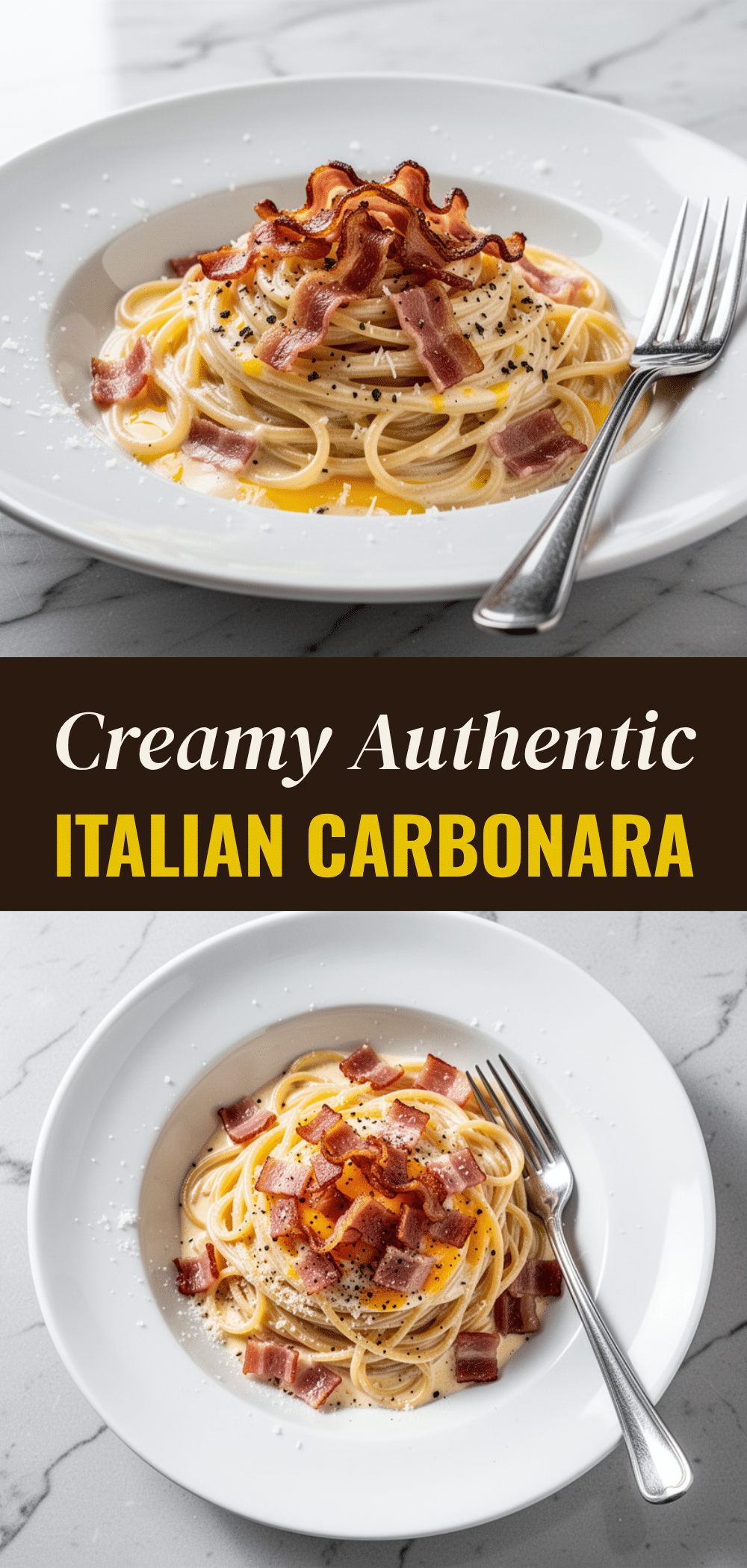
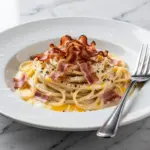
Authentic Italian Carbonara: 5-Step Best Homemade Crispy Pancetta
- Total Time: 20 minutes
- Yield: 4 servings 1x
Description
A foolproof, authentic Italian carbonara recipe that uses no cream, relying instead on eggs, Pecorino Romano, crispy pancetta, and black pepper for a silky, rich sauce ready in just 20 minutes.
Ingredients
- 1 pound (450g) Spaghetti
- 8 ounces (225g) Pancetta (smoked or unsmoked), cut into small cubes
- 4 large Egg Yolks
- 1 cup (100g) Pecorino Romano, freshly grated
- 1 teaspoon Black Pepper, freshly cracked
- 1 tablespoon Salt (for pasta water)
- 1 teaspoon Olive Oil (optional, if pancetta is lean)
- Reserved Pasta Water (approx. 1 cup)
Instructions
- Prep ingredients: Cut pancetta into cubes, grate Pecorino, and whisk egg yolks with cheese and black pepper until thick and paste-like. Set aside.
- Render pancetta: Place pancetta in a cold large skillet over medium heat. Cook slowly for 8-10 minutes until golden and crispy, stirring occasionally. Remove pancetta with a slotted spoon, leaving rendered fat in the pan.
- Toast pepper: Add cracked black pepper to the hot fat in the skillet. Stir for 30-60 seconds until fragrant, then remove skillet from heat.
- Cook pasta: Bring a large pot of heavily salted water to a boil. Cook spaghetti until al dente (8-10 minutes). Before draining, reserve 1 cup of starchy pasta water. Drain pasta without rinsing.
- Temper eggs: Pour a small ladle of hot fat from the skillet into the egg mixture while whisking constantly to warm the eggs gradually.
- Combine: Add drained pasta to the skillet with the pepper-infused fat. Toss to coat. Pour the tempered egg mixture over the pasta and toss vigorously. The residual heat will cook the eggs into a creamy sauce. Add pasta water splash if needed to reach desired consistency.
- Serve: Stir in the crispy pancetta. Plate immediately and top with extra Pecorino and black pepper.
Notes
Do not use cream for authentic carbonara. Ensure the pan is off the heat when adding the egg mixture to prevent scrambling. Use freshly grated Pecorino Romano, not pre-grated, to avoid a grainy sauce. Pasta water is essential for emulsifying the sauce.
- Prep Time: 5 minutes
- Cook Time: 15 minutes
- Category: Main Course
- Cuisine: Italian
Nutrition
- Serving Size: 1 plate per person
- Calories: 650
- Sugar: 2
- Sodium: 800
- Fat: 28
- Saturated Fat: 12
- Carbohydrates: 70
- Fiber: 3
- Protein: 25
Keywords: Italian carbonara, authentic carbonara, pancetta pasta, egg pasta, quick dinner, weeknight meals, no cream carbonara, crispy pancetta