Last Tuesday, I was standing in my kitchen at 6:45 PM, feeling that specific kind of panic that comes from realizing you bought salmon for dinner but forgot to thaw it until the fridge light flickered on. I was exhausted. My brain was fried. I wanted something fancy, but I didn’t have the mental energy to chop vegetables or manage three different pans.
So I did what I always do when I’m desperate: I threw the salmon in the pan, slathered it with maple syrup, and turned the heat up just a little too high. I went to grab a fork to check the doneness, and I heard it. That violent sizzle. The smell hit me before I even looked down—sweet, smoky, and slightly charred. I was ready to scrape the blackened bits into the trash and order pizza.
But then I took a bite.
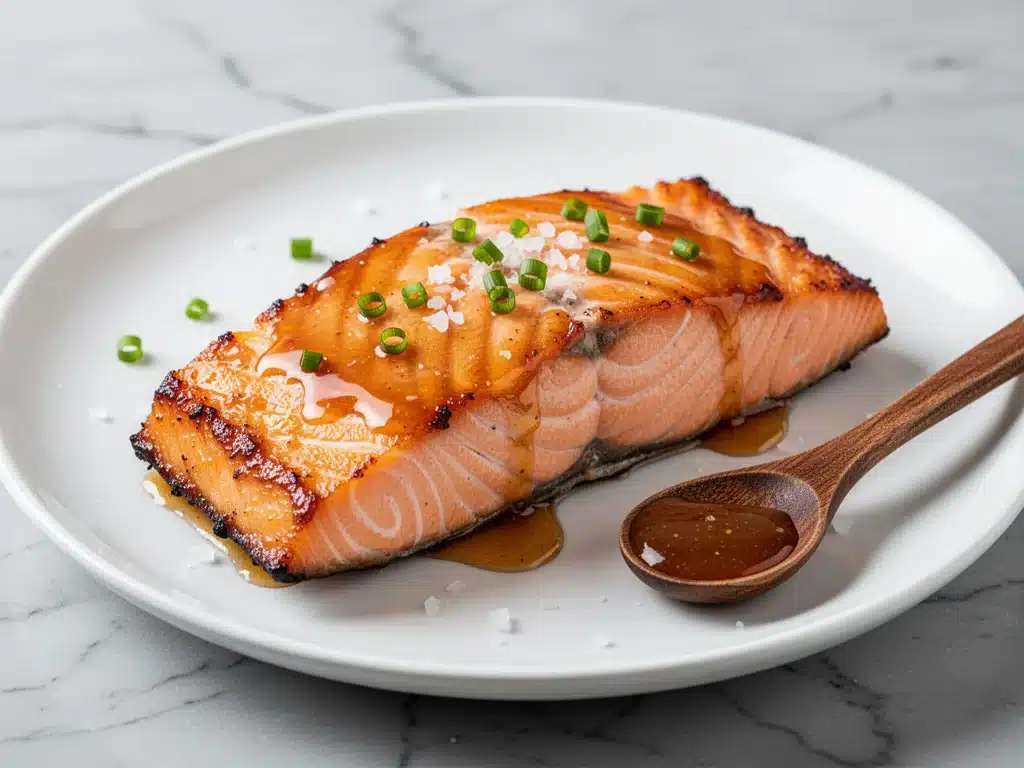
It was incredible. The edges were crispy, almost like bacon, with a deep caramelized crust that contrasted perfectly with the tender, flaky fish inside. The maple wasn’t just sweet; it was complex and rich. I ate the whole thing right out of the pan, standing over the stove, while the rest of my family stared at me like I’d lost my mind. That was the night I discovered that my “mistake” was actually the best way to cook salmon. This maple glazed salmon recipe has been on our dinner table at least twice a month ever since.
It’s stupidly simple, it takes about 15 minutes from start to finish, and it tastes like something you’d get at a high-end restaurant. But here’s the truth: the secret isn’t in the ingredients. It’s in the technique. Specifically, getting those crispy caramelized edges without turning the inside into rubber. I’ve tested this method with every cut of salmon I could find, and I’m finally ready to share the exact steps that make this work every single time.
Why This Maple Glazed Salmon Is Your New Weeknight Hero
I know what you’re thinking. “Another salmon recipe?” But hear me out. Most salmon recipes fail because they’re either too complicated or they result in sad, gray fish. This maple glazed salmon fixes both problems. It’s the kind of dish that makes you feel like a gourmet chef even when you’re wearing sweatpants and haven’t showered yet.
Here’s why this is the only salmon recipe you need to bookmark:
- Actually Crispy, Not Just “Cooked” — Most people boil their salmon in its own juices. This method uses high heat to create a lacquered, crispy crust. The texture is what makes it addictive. I’ve served this to my fish-snob sister-in-law, and she actually asked for the recipe.
- 15 Minutes Flat — And I mean 15 minutes. Not 30, not 45. If you can open a jar of maple syrup and turn on your stove, you can make this. It’s perfect for those nights when you get home late and just want to eat.
- Pantry-Friendly Ingredients — You probably have everything you need already. Salmon, maple syrup, soy sauce, garlic, ginger. That’s it. No obscure spices you’ll use once and forget.
- One-Pan Cleanup — Okay, technically you might use a small bowl for the glaze, but the fish cooks in one skillet. I love a easy cleanup as much as the next person. This means less time scrubbing and more time relaxing.
- Kid-Approved — The sweet glaze masks the “fishy” taste that some kids (and adults!) hate. My picky eater actually asks for “the sweet fish” now. Yes, I’m serious.
This is my go-to when I need dinner to just work. No complicated techniques, no weird ingredients, just reliable, delicious food that makes everyone happy. It’s healthy enough to feel good about, but indulgent enough to feel like a treat.
Ingredients You’ll Need
Here’s the best part: you probably have most of this already. This maple glazed salmon relies on a simple balance of sweet, salty, and savory. I’m particular about two ingredients here, and I’ll tell you exactly why.
For the Salmon
Salmon fillets (4 pieces, about 6oz each / 170g each) — I use center-cut fillets because they cook evenly. Wild-caught is better for flavor, but farmed is fine if it’s sustainable. Make sure they’re roughly the same thickness so they cook at the same rate. If they’re super thin, reduce the cook time by a minute.
Maple syrup (1/4 cup / 60ml) — This is the star. Use real maple syrup, not “pancake syrup” or “maple-flavored corn syrup.” Real maple syrup has depth and complexity. Grade A Dark Amber or Grade B is perfect. It’s worth the extra few dollars at the store.
Soy sauce (2 tablespoons / 30ml) — Provides the salt and umami. I use low-sodium soy sauce so I can control the saltiness. If you’re gluten-free, use tamari. Regular soy sauce has wheat, but it’s what gives that classic Asian-inspired flavor.
Garlic (3 cloves, minced / about 1 tablespoon) — Fresh only. No jarred garlic in this recipe. It tastes metallic and ruins the delicate flavor of the fish. Mince it finely so it doesn’t burn.
Fresh ginger (1 teaspoon, grated / about 5g) — This adds a bright, spicy kick that cuts through the sweetness. Grate it on a microplane. If you can’t find fresh ginger, 1/4 teaspoon of ground ginger works, but fresh is much better.
Red pepper flakes (1/2 teaspoon) — Optional, but recommended. Just a pinch adds a little warmth without making it spicy-hot. It balances the sweet maple perfectly.
Cooking oil (1 tablespoon / 15ml) — I use avocado oil or canola oil because they have high smoke points. Olive oil burns too easily at the high heat needed for crispy edges. Don’t use butter here; it will burn before the salmon is done.
For Garnish
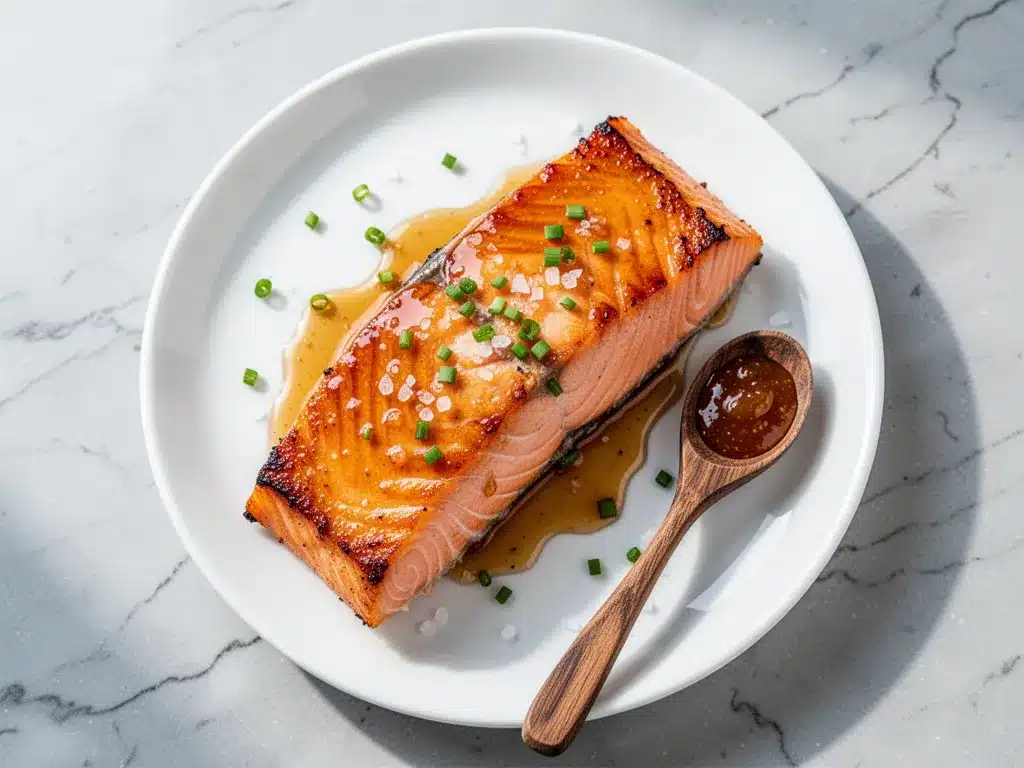
Green onions (2 stalks, sliced thinly) — Adds a fresh, oniony crunch and pops of color. Essential for presentation.
Sesame seeds (1 teaspoon, toasted) — Adds nuttiness and texture. Toast them in a dry pan for 30 seconds if you have time, but raw is fine too.
Lime wedges (for serving) — A squeeze of lime right before eating brightens everything up. It’s the secret weapon I always add.
Equipment Needed
You don’t need fancy equipment for this. Here’s what I actually use.
Large skillet — I prefer a 12-inch cast iron skillet or stainless steel pan. Cast iron is amazing for getting that crispy crust because it holds heat well. Non-stick works too, but you won’t get quite as good of a sear.
Small bowl — For mixing the glaze. A ramekin or small glass bowl works.
Pastry brush or spoon — To brush the glaze onto the salmon. A silicone brush is easiest, but a spoon works fine.
Sharp knife — For slicing the green onions and trimming any loose bits off the salmon.
Paper towels — Crucial for drying the salmon. I can’t stress this enough.
How to Make It: Step-by-Step
Alright, let’s make this! I’m walking you through exactly how I do it, including the little tricks I’ve picked up over the years.
Step 1: Prep the Salmon (2 minutes)
Take the salmon out of the fridge and pat it completely dry with paper towels. I mean completely dry. Moisture is the enemy of crispiness. If the surface is wet, it will steam instead of sear. If the fillets are very thick, you can trim off any uneven edges so they cook uniformly.
Season both sides generously with salt and black pepper. Don’t be shy with the salt; it helps draw out moisture and seasons the fish throughout.
Step 2: Make the Glaze (1 minute)
In a small bowl, whisk together the maple syrup, soy sauce, minced garlic, grated ginger, and red pepper flakes. It should look like a thin, amber-colored liquid. Taste it—it should be sweet and salty with a hint of spice. If it’s too sweet, add a splash more soy sauce. If it’s too salty, add a teaspoon more maple syrup.
Step 3: Heat the Pan (2 minutes)
Place your skillet over medium-high heat. Add the cooking oil and let it heat up until it shimmers. You’ll know it’s ready when you can see slight ripples in the oil, but before it smokes. If you’re using cast iron, this might take a minute longer. Be patient; a hot pan is non-negotiable for crispy edges.
Step 4: Sear the Salmon (4-5 minutes)
Place the salmon fillets in the pan skin-side down (if they have skin) or presentation-side down. Press them down gently with a spatula to ensure full contact with the pan. You should hear a loud sizzle. If it’s quiet, your pan isn’t hot enough.
Cook undisturbed for 4-5 minutes. Do not touch them! This is where the magic happens. The bottom will turn golden brown and crispy. You’ll see the edges start to turn opaque from the bottom up.
Step 5: Flip and Glaze (3-4 minutes)
Flip the salmon carefully. Now, brush a generous layer of the maple glaze over the top of each fillet. Let it cook for another 3-4 minutes. The glaze will bubble and caramelize against the hot pan. Keep an eye on it; maple syrup burns quickly. You want it sticky and lacquered, not black and charred.
If the edges look like they’re getting too dark, you can reduce the heat to medium for the last minute. But honestly, I like them a little dark. It adds flavor.
Step 6: Rest and Serve (1 minute)
Remove the salmon from the pan and let it rest on a plate for 1-2 minutes. This allows the juices to redistribute. While it rests, brush on a little more glaze if you have any left. Garnish with sliced green onions and toasted sesame seeds. Serve immediately with lime wedges on the side.
That’s it. 15 minutes, and you have a restaurant-quality dinner.
Expert Tips & Tricks
Here’s everything I’ve learned from making this dozens of times. These tips will save you from my mistakes.
The Dryness Rule
I cannot emphasize this enough: dry salmon = crispy salmon. If you skip the paper towel step, you’ll get steamed fish. It’s a common mistake, and it ruins the whole dish. Pat it dry, then pat it dry again.
Don’t Crowd the Pan
If you’re cooking for four people but your pan is small, cook in batches. Crowding the pan lowers the temperature and causes steaming. You want each fillet to have room to breathe. Two fillets in a 12-inch pan is ideal. If you have to do two batches, that’s fine. The second batch cooks even faster.
The Glaze Timing
Some recipes tell you to put the glaze on at the beginning. Don’t do that. The sugar in the maple syrup will burn before the fish is cooked through. Always add the glaze after flipping, or brush it on in the last minute of cooking. This ensures a sticky, caramelized finish without the bitterness of burnt sugar.
Check for Doneness
Salmon continues to cook after it’s off the heat. Remove it when it’s still slightly translucent in the very center. It should flake easily with a fork but still be moist. Overcooked salmon is dry and sad. If you’re unsure, check the internal temperature; 145°F (63°C) is the USDA guideline, but I pull it at 135°F (57°C) for medium-rare, which is much tastier.
Variations & Substitutions
Once you’ve nailed the basic version, here’s how you can mix it up. I’ve tried all of these.
Teriyaki Style
Swap the soy sauce for teriyaki sauce and reduce the maple syrup by half. Add a teaspoon of cornstarch to the glaze to make it thicker. This gives it a stickier, glossier finish.
Honey Garlic
Replace the maple syrup with honey and add an extra clove of garlic. Honey caramelizes faster, so keep the heat lower. This version is sweeter and milder.
Spicy Maple
Add a tablespoon of sriracha or chili garlic sauce to the glaze. This is my favorite when I want a kick. It balances the sweetness with serious heat.
Gluten-Free
Simply use tamari instead of soy sauce. Everything else is naturally gluten-free. Make sure your maple syrup is certified gluten-free if you’re sensitive, though pure maple syrup usually is.
Dairy-Free
This recipe is naturally dairy-free, so no changes needed. It’s perfect for dairy-intolerant friends.
Serving & Storage
How to Serve: I usually serve this straight from the skillet at the dinner table—it looks rustic and stays warm. But here are other ways I’ve enjoyed it:
- Over Rice: Fluffy jasmine rice or brown rice soaks up the extra glaze.
- With Quinoa: For a healthier, protein-packed base.
- In a Bowl: Layer with cucumber slices, avocado, and edamame for a salmon poke bowl vibe.
- With Roasted Veggies: Broccoli or asparagus roasted alongside the salmon works great.
Storage Instructions:
Refrigerator: Store leftovers in an airtight container for up to 3 days. The salmon will keep, but the glaze might soften the crust. That’s normal.
Reheating: Best method: Reheat in a skillet over low heat with a splash of water to steam it gently. This restores the moisture. Microwave method: Heat in 30-second intervals, but it will get rubbery if you overdo it. Avoid the microwave if you care about texture.
Freezing: I don’t recommend freezing cooked salmon. It becomes dry and mushy upon thawing. Freeze the raw salmon and glaze separately if you want to meal prep, but cook it fresh for best results.
Nutrition Information
I’m not a nutritionist, but here’s the breakdown if you’re tracking.
Per serving (based on 4 servings):
- Calories: 320
- Protein: 34g
- Carbs: 18g
- Fiber: 0g
- Sugar: 16g
- Fat: 12g
- Saturated Fat: 2g
- Cholesterol: 85mg
- Sodium: 680mg
What’s Good: High in protein and omega-3 fatty acids. Low in carbs (unless you count the sugar in the glaze). Salmon is a nutritional powerhouse.
What to Know: The sodium content is moderate due to the soy sauce. Use low-sodium soy sauce to reduce it. The sugar comes from the maple syrup, but it’s natural sugar with some vitamins.
My Take: Look, this is a healthy dinner with a sweet twist. It’s not a diet recipe, but it’s way better than takeout, costs less, and I know exactly what’s in it. When I want to make it lighter, I use less syrup and load up on vegetables. But usually? I just eat a reasonable portion and enjoy it.
Final Thoughts
So that’s my maple glazed salmon! I’ve probably talked your ear off at this point, but when you make a recipe this often, you have a lot to say about it. This has saved weeknight dinners more times than I can count. It’s my answer to “what’s for dinner” when I’m tired, don’t want takeout, and still want something that tastes really good. My kids are happy, my husband’s happy, and I’m happy because I’m not stressed about cooking.
Make it yours! Try different add-ins, swap in your favorite vegetables, adjust the spice level. The best recipes are the ones you adapt to your family’s tastes. If you make this, drop a comment and let me know what you think! I love hearing how recipes turn out in your kitchen. And if something doesn’t work, tell me that too—I’m here to help troubleshoot.
Happy cooking! And I hope your kitchen smells half as good as mine does right now.
Frequently Asked Questions
Q: Can I use frozen salmon?
A: You can, but you must thaw it completely first. Pat it dry thoroughly. If you cook it frozen, it will release too much water and steam instead of sear. I recommend thawing it in the fridge overnight.
Q: Why is my glaze burning?
A: Maple syrup has a high sugar content and burns easily. If your pan is too hot, the glaze will char before the fish is done. Keep the heat at medium-high, not high. If you see smoke, reduce the heat immediately. You can also add a splash of water to the glaze to dilute the sugar slightly.
Q: Can I make this in the oven?
A: Yes! Preheat your oven to 400°F (200°C). Place the salmon on a lined baking sheet, brush with glaze, and bake for 12-15 minutes. You won’t get the crispy edges, but it’s easier and less messy. Broil for the last 2 minutes to caramelize the top.
Q: What side dishes go well with this?
A: Jasmine rice, stir-fried vegetables, roasted broccoli, or a simple green salad with sesame dressing. I also love it with mashed sweet potatoes.
Q: Is this recipe healthy?
A: Salmon is one of the healthiest fish you can eat, packed with protein and omega-3s. The maple syrup adds sugar, but it’s natural. Overall, it’s a balanced meal, especially if you serve it with vegetables.
Q: Can I double the glaze?
A: Absolutely. Double the ingredients and use half for cooking, half for serving or dipping. It’s great for drizzling over rice or vegetables.
Q: How do I know when the salmon is done?
A: It should flake easily with a fork and be opaque throughout, with a slight translucency in the center if you like it medium. The internal temperature should reach 145°F (63°C), though I prefer 135°F (57°C).
Pin This Recipe!
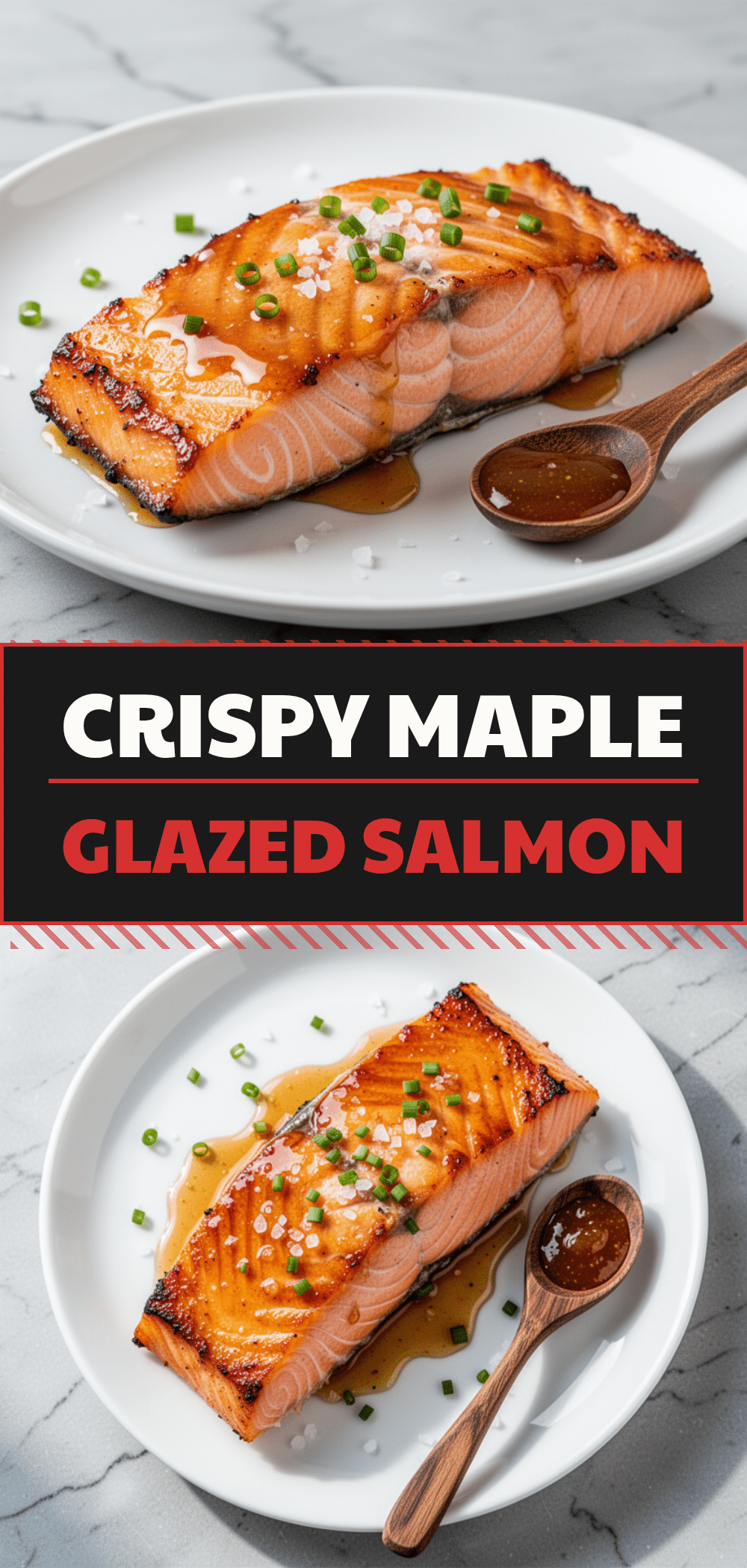
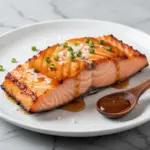
Maple Glazed Salmon: 15-Min Easy Weeknight Dinner
- Total Time: 15 minutes
- Yield: 4 servings 1x
Description
A quick and easy weeknight dinner featuring salmon fillets with a crispy, caramelized maple glaze. This one-pan recipe takes only 15 minutes and uses simple pantry ingredients for a restaurant-quality meal.
Ingredients
- 4 salmon fillets (about 6oz / 170g each, center-cut)
- 1/4 cup (60ml) real maple syrup (Grade A Dark Amber or Grade B)
- 2 tablespoons (30ml) soy sauce (or tamari for gluten-free)
- 3 cloves garlic, minced
- 1 teaspoon fresh ginger, grated
- 1/2 teaspoon red pepper flakes
- 1 tablespoon cooking oil (avocado or canola)
- Salt and black pepper, for seasoning
- 2 green onions, sliced thinly (for garnish)
- 1 teaspoon sesame seeds, toasted (for garnish)
- Lime wedges (for serving)
Instructions
- Pat the salmon fillets completely dry with paper towels and season both sides generously with salt and black pepper.
- In a small bowl, whisk together the maple syrup, soy sauce, minced garlic, grated ginger, and red pepper flakes to create the glaze.
- Heat a large skillet (preferably cast iron or stainless steel) over medium-high heat. Add the cooking oil and let it heat until it shimmers.
- Place the salmon fillets in the pan skin-side down (or presentation-side down). Press gently to ensure contact. Cook undisturbed for 4-5 minutes until the bottom is golden brown and crispy.
- Flip the salmon carefully. Brush a generous layer of the maple glaze over the top of each fillet.
- Cook for another 3-4 minutes, allowing the glaze to bubble and caramelize. Reduce heat to medium if the edges get too dark. Remove when the internal temperature reaches 135°F-145°F.
- Let the salmon rest on a plate for 1-2 minutes. Garnish with sliced green onions and toasted sesame seeds. Serve immediately with lime wedges.
Notes
Ensure the salmon is completely dry before cooking to achieve a crispy crust. Do not add the glaze at the beginning as the sugar will burn; add it after flipping. If the pan is crowded, cook in batches to prevent steaming. For a gluten-free version, substitute soy sauce with tamari.
- Prep Time: 2 minutes
- Cook Time: 13 minutes
- Category: Main Course
- Cuisine: Asian-Inspired
Nutrition
- Serving Size: 1 salmon fillet with
- Calories: 320
- Sugar: 16
- Sodium: 680
- Fat: 12
- Saturated Fat: 2
- Carbohydrates: 18
- Protein: 34
Keywords: maple glazed salmon, quick dinner, weeknight meals, one-pan salmon, crispy salmon, healthy seafood, 15 minute recipes